

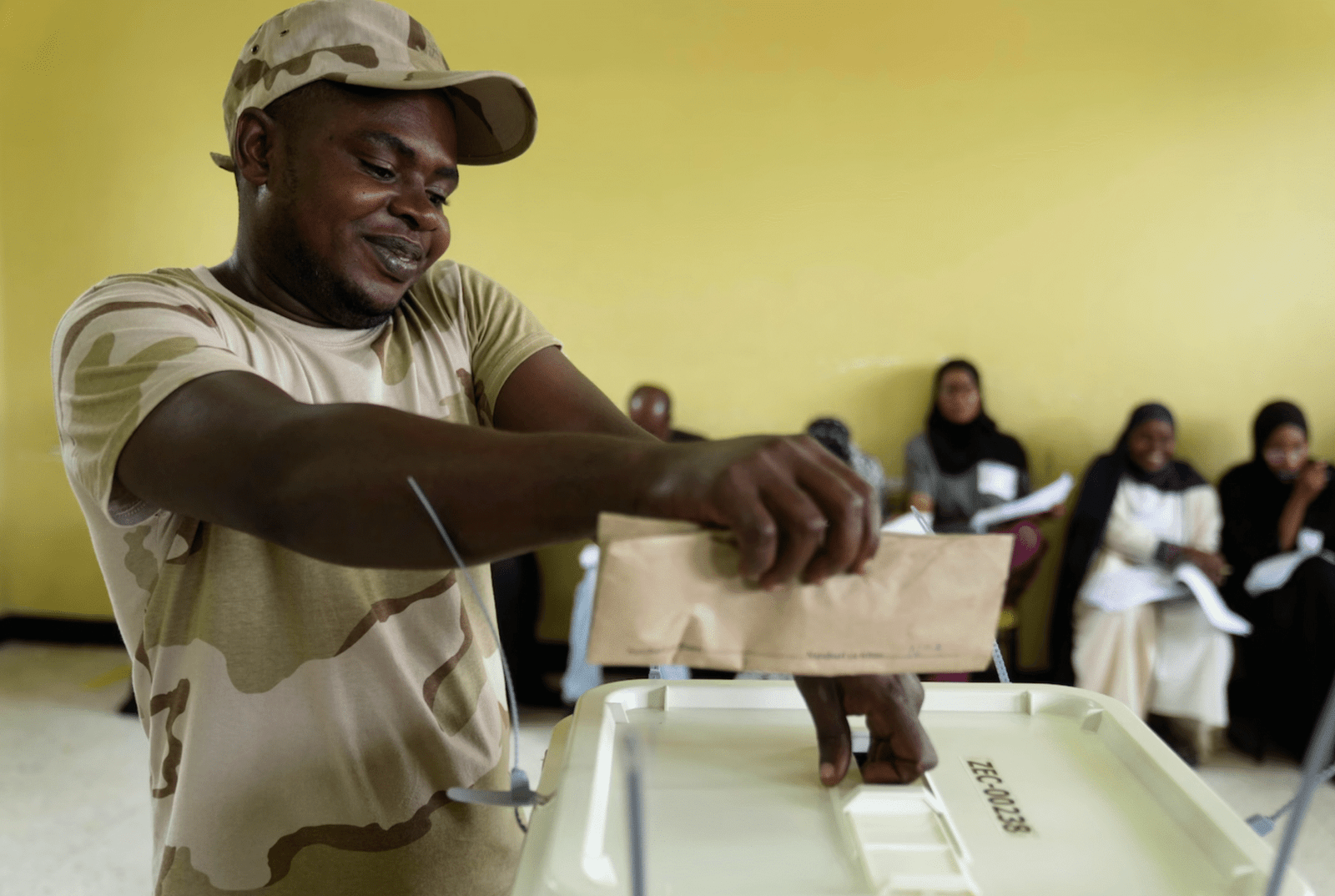
There were few voters at polling stations in Tanzania’s biggest city early Wednesday as the main challengers to President Samia Suluhu Hassan were either jailed or barred from running.
The government and police made repeated threats that protests would not be tolerated, and stationed tanks around the commercial capital Dar es Salaam on Wednesday to prevent any unrest.
But the heightened security may have backfired, with voters worried about showing up.
Polling stations in some of the city’s busiest areas were virtually empty an hour after opening, AFP journalists saw, despite being busy at that time during previous elections.
“We are going to mobilise people from the streets and their homes to come and vote,” an official from the ruling Revolution Party (Chama Cha Mapinduzi: CCM) in Temeke district of Dar es Salaam told AFP, on condition of anonymity.
“We need to rescue the situation because some are hesitating,” the official added.
A food vendor, who gave only her first name Saada, 40, said she was too scared too vote.
“I could not go out today because of fear of violence,” she told AFP.
Amnesty International has denounced a “wave of terror” ahead of the election including “enforced disappearance and torture… and extrajudicial killings of opposition figures and activists”.
- Democracy at risk in Tanzania amid X ban and one-sided poll
- Mutunga, Karua take Tanzania to court over dramatic denial of entry
- Former CJ Mutunga denied entry to Tanzania ahead of Lissu’s trial
President Hassan, 65, is determined to cement her position with an emphatic victory that will silence critics within her own party, analysts say.
Her main challenger, Tundu Lissu, is on trial for treason, facing a potential death penalty. His party, Chadema, is barred from running.
The only other serious candidate, Luhaga Mpina of ACT-Wazalendo, was disqualified on technicalities.
Hassan was elevated from vice-president in 2021 on the death of her iron-fisted predecessor, John Magufuli, but faced opposition as the country’s first female leader.
She was initially feted by democratic campaigners for easing restrictions on the opposition and media, but hopes soon faded.
Human Rights Watch said “the authorities have suppressed the political opposition and critics of the ruling party, stifled the media, and failed to ensure the electoral commission’s independence”.
There are fears that even members of the ruling party are being targeted.
– AFP
Email your news TIPS to Editor@nairobilawmonthly.com, and to advertise with us, call +254715061658 anytime of the day
