
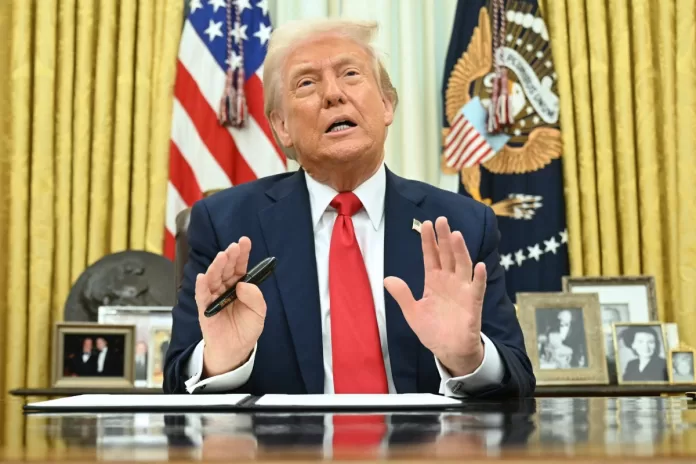
As the ink dries on President Donald Trump’s January 2026 executive order to withdraw the United States from sixty-six international organizations, the tremors of this seismic shift are being felt acutely in Nairobi, a city often regarded as a key hub of the Global South.
For years, Kenya has strategically positioned itself as a regional hub for multilateralism, although this is now being threatened by the US decision. It is essentially a direct challenge to the economic and social scaffolding that has supported development for decades.
The sudden departure from thirty-one United Nations entities, including crucial bodies like the United Nations Framework Convention on Climate Change (UNFCCC), threatens to leave a void in both funding and technical expertise that President Ruto’s administration may struggle to fill.
As the host of the UN Environment Programme (UNEP) and UN-Habitat, Kenya also finds its status as a global environmental arbiter increasingly precarious when its most powerful partner chooses to walk away from the table.
The impact on the environmental and agricultural landscape remains perhaps the most immediate concern. The US exit from the UN Framework Convention on Climate Change and the Intergovernmental Panel on Climate Change jeopardizes funding for vital climate adaptation projects, from reforestation to renewable energy transitions.
At a time when Kenya is confronting unpredictable rains and extended droughts, the loss of US-backed multilateral support leaves farmers and communities more exposed to the effects of global warming. It also weakens the momentum behind regional initiatives, many championed from Nairobi, that aim to build climate resilience across the Horn of Africa.
Socially, the repercussions are equally daunting as the United States severs ties with the UN Population Fund (UNFPA) and the UN Entity for Gender Equality and the Empowerment of Women. These organizations play a foundational role in the economy by providing maternal healthcare, family planning services, and programs designed to combat gender-based violence.
The withdrawal of the world’s largest donor from these entities suggests an impending austerity in essential social services that often reach the most vulnerable women in rural outposts. Without this international backing, the burden of these programs will fall squarely on the National Treasury, which is already under significant pressure from high debt-servicing costs.
The vacuum left by US influence in human rights and gender equity may also alter the domestic political discourse, potentially emboldening conservative factions that have long viewed these international standards with skepticism.
Economically and strategically, the American withdrawal creates a vacuum that other global powers, most notably China, are poised to fill. By exiting organizations like the UN Conference on Trade and Development (UNCTAD), the US is effectively ceding its influence in shaping the rules of international commerce and development in emerging markets.
This creates a complex geopolitical trade-off for the economy. While the Trump administration emphasizes bilateral deals over multilateral cooperation, the government may find itself forced to deepen its reliance on Beijing or Brussels to maintain its infrastructure and technological growth.
Additionally, by prioritizing tax sovereignty and exempting US tech giants from global minimum taxes, the Trump administration has effectively blocked the Kenya Revenue Authority from billions in projected windfall revenue.
With the US placing its interests first, the nature of the Kenya–US relationship is shifting from one of shared global responsibility to one defined by transactional, isolated interests. This shift comes at a time when the United Nations was moving forward with plans to expand its presence in Kenya by establishing new headquarters in the country.
In the end, the true cost of this withdrawal will be measured in the resilience of institutions and the economy as a whole, as they navigate a world where the traditional champion of the international order has decided to go it alone.
Email your news TIPS to Editor@nairobilawmonthly.com, and to advertise with us, call +254715061658 anytime of the day
