

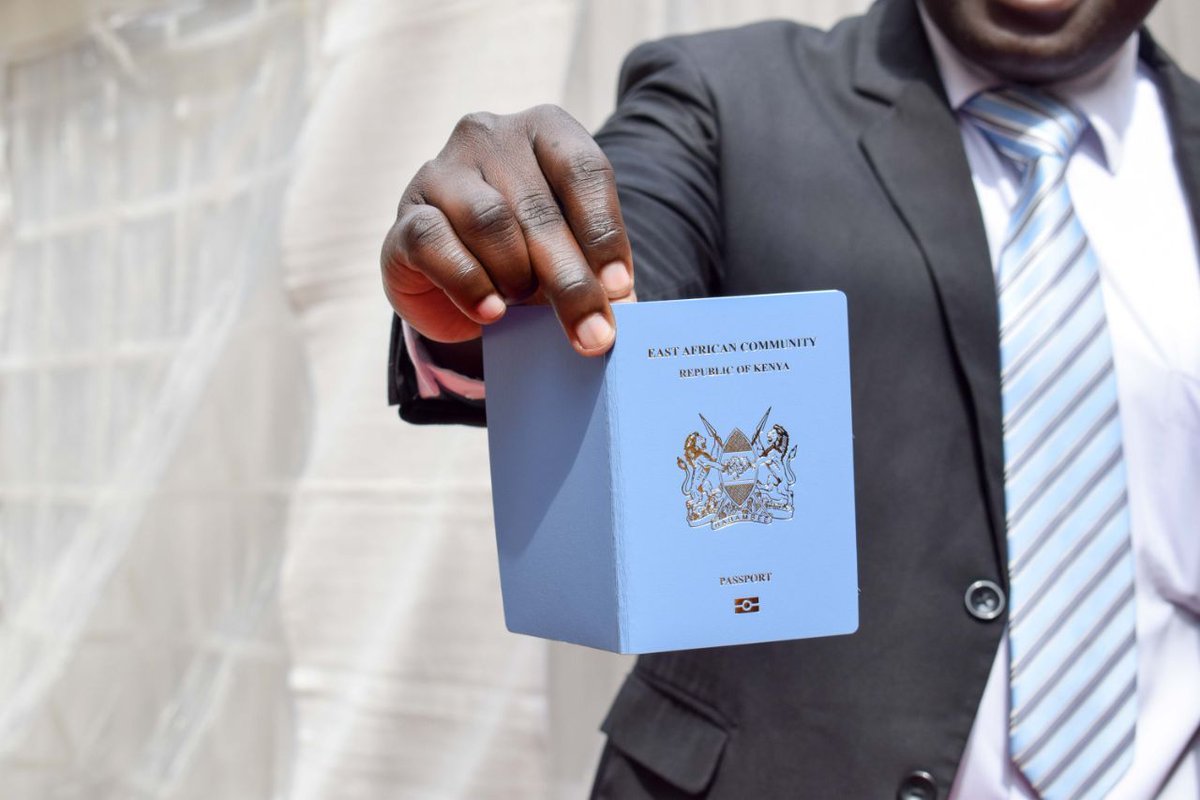
Since 2014 when the Arton Capital Passport Index was launched, national conversations about mobility, diplomacy, and the perceived strength of a nation on the global stage have always followed suit.
For Kenya, the January 2026 index has painted the nation as a strong regional player, although when it comes to the global stage, there is a lot more ground to cover.
The index, which focuses on a passport’s power rank, a measure of how much global travel freedom a passport offers, clearly indicates the work cut out for President William Ruto and his administration to elevate the nation to the heights of a country like Singapore. According to the Arton Capital Passport Index 2026, the economy holds a global passport power rank of 68th in the world.
It is associated with a Mobility Score of 78, which includes 37 visa-free destinations, 38 visa-on-arrival countries, and 3 eTA options. This position places Kenya’s passport firmly in the middle tier of global travel documents. Globally, the UAE continues to lead the rank with a Mobility Score of 179, Singapore follows, as Spain comes third to make the top 3 most powerful passports.
- Kenyan passport most powerful in East Africa riding on visa-free travel policy
- Government to issue new 1 million passports this year
Within Africa, the country’s performance is respectable, but it is far from the continent’s leader. The top spot in Africa goes to the Seychelles (Global Rank 21) as in the previous year, followed by Mauritius (Global Rank 26), and South Africa (Global Rank 47). Other nations that outperform Kenya include Morocco, Botswana, Namibia, Lesotho, Eswatini, Namibia, and Malawi in that order.
Kenya’s rank of 68th globally makes it the 11th most powerful in Africa. This regional positioning highlights that while Kenya is a significant hub in East Africa, the Southern African and island nations have generally been more successful in negotiating broader visa exemptions for their citizens.
The difference between Kenya and Singapore in the 2026 rankings is perhaps the most telling metric of the challenge at hand. Singapore’s passport is ranked the 2nd most powerful in the world with a staggering Mobility Score of 175. This grants its citizens near-unrestricted access to the globe, a privilege built on decades of political stability, economic prowess, and robust diplomatic relations.
When compared to Kenya’s Mobility Score of 78, the gap is vast, a difference of 97 destinations where a Singaporean can travel with ease, while a Kenyan might face bureaucratic hurdles and visa application processes.
The government’s work must involve rigorous efforts to enhance national security and economic transparency to build the international trust necessary for visa waivers from major economic powers in Europe and North America. This is an all-encompassing challenge that ties together foreign policy, internal governance, and national image.
To reach the levels of Singapore, and not only in terms of passport power, will require strategic and long-term commitment to diplomacy and internal stability. The administration must work to ensure that the country’s reputation as a stable, reliable partner is consistently upheld on the global stage.
Only through sustained effort, effective governance, and successful bilateral agreements will the Kenyan passport’s power grow, and eventually the economy, closing the significant gap that currently exists between the East African nation and the Asian powerhouse.
Email your news TIPS to Editor@nairobilawmonthly.com, and to advertise with us, call +254715061658 anytime of the day
