

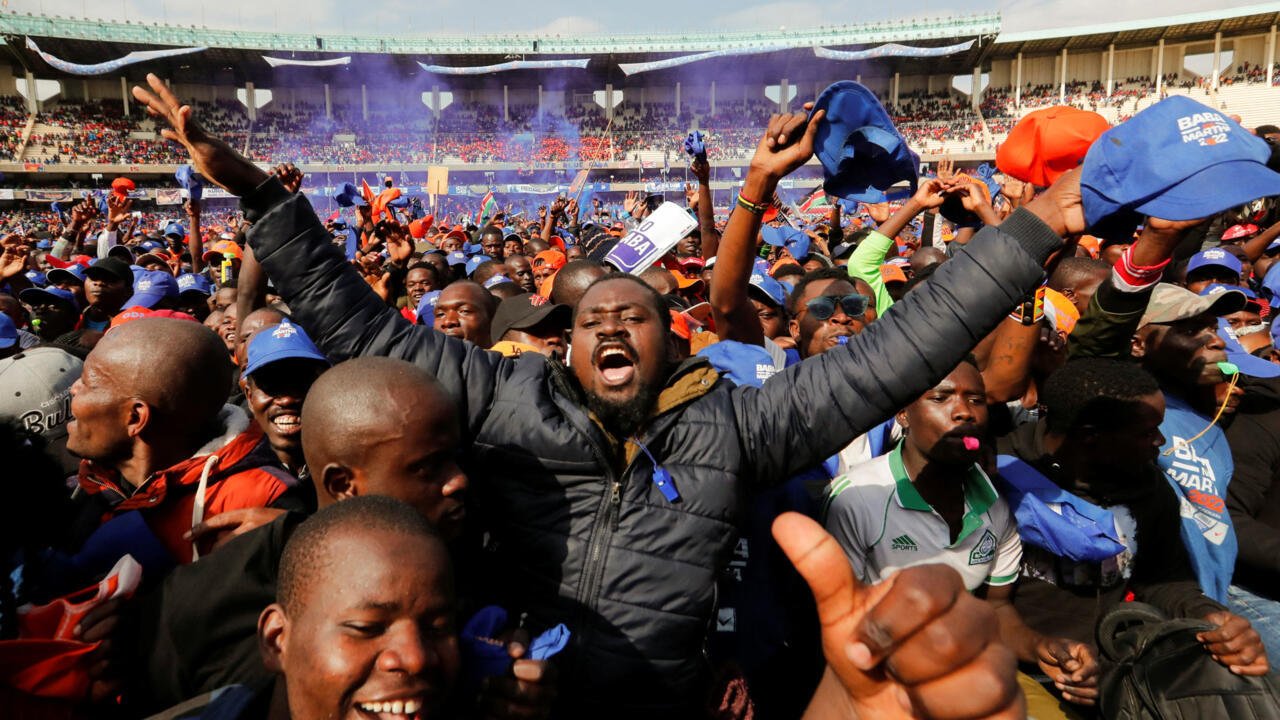
Heckling is increasingly taking root as a calculated, albeit troubling, tactic in Kenya’s political arena as leaders position themselves ahead of the 2027 General Election. What was once an occasional disruption has evolved into an organised strategy, with groups allegedly mobilised and paid to drown out opponents during public events, denying audiences the opportunity to hear and evaluate differing views.
The trend has become more pronounced in recent months, with several high-profile incidents highlighting its growing use. On March 24, 2026, in Siaya County, Governor James Orengo struggled to address a gathering while hosting President William Ruto at Usenge Beach. His attempt to engage the president was overwhelmed by persistent noise, forcing him to cut his remarks short.
“I ask you to come to Siaya again,” Mr Orengo said.
A similar scene unfolded on February 21, 2026, at Aindi Grounds during an Orange Democratic Movement rally. Siaya Woman Representative Christine Ombaka was heckled moments after rising to speak, despite an initially calm atmosphere.
“Siaya power,” she managed to say, repeating the phrase as boos surged and her voice was drowned out.
Efforts to restore order, including appeals from Alego Usonga MP Samuel Atandi, proved ineffective until intervention by Minority Leader Junet Mohammed brought relative calm.
Elsewhere, the pattern has been replicated with varying intensity. In Kiambu County, leaders allied to President Ruto—including Majority Leader Kimani Ichung’wah—faced a hostile reception during a recent event, reflecting shifting political loyalties in the Mt Kenya region.
In some regions, the disruptions are reportedly highly coordinated. In Homa Bay County, groups—often composed of women—have been observed using whistles and vuvuzelas to overpower speakers. These groups, sometimes dressed in matching attire and positioned strategically, can quickly switch from chants of support to loud opposition depending on the speaker.
The growing phenomenon has raised concern among leaders who warn of its impact on democratic engagement. Homa Bay Woman Representative Joyce Osogo has criticised the practice, arguing that it undermines meaningful political discourse.
“We are in a democratic space, but it does not mean that if you want to compete with me, you pay women to make noise,” Dr Osogo said.
“Paying women to make noise is a waste of time. Be objective. Heckling just shows how blank your brain is,” she added.
“Youths should not be used negatively. We don’t want to shed blood because of the election,” she said.
Her concerns echo past instances of politically linked mobilisation, such as activities associated with Simeon Nyachae and the outlawed Chinkororo group, underscoring the risks of organised disruption escalating into coercion.
Dr Osogo has called on President Ruto and the electoral commission to enforce existing laws, including the Election Offences Act, warning that failure to act could erode the integrity of political competition as the country moves closer to the 2027 elections.
Email your news TIPS to Editor@nairobilawmonthly.com, and to advertise with us, call +254715061658 anytime of the day
