

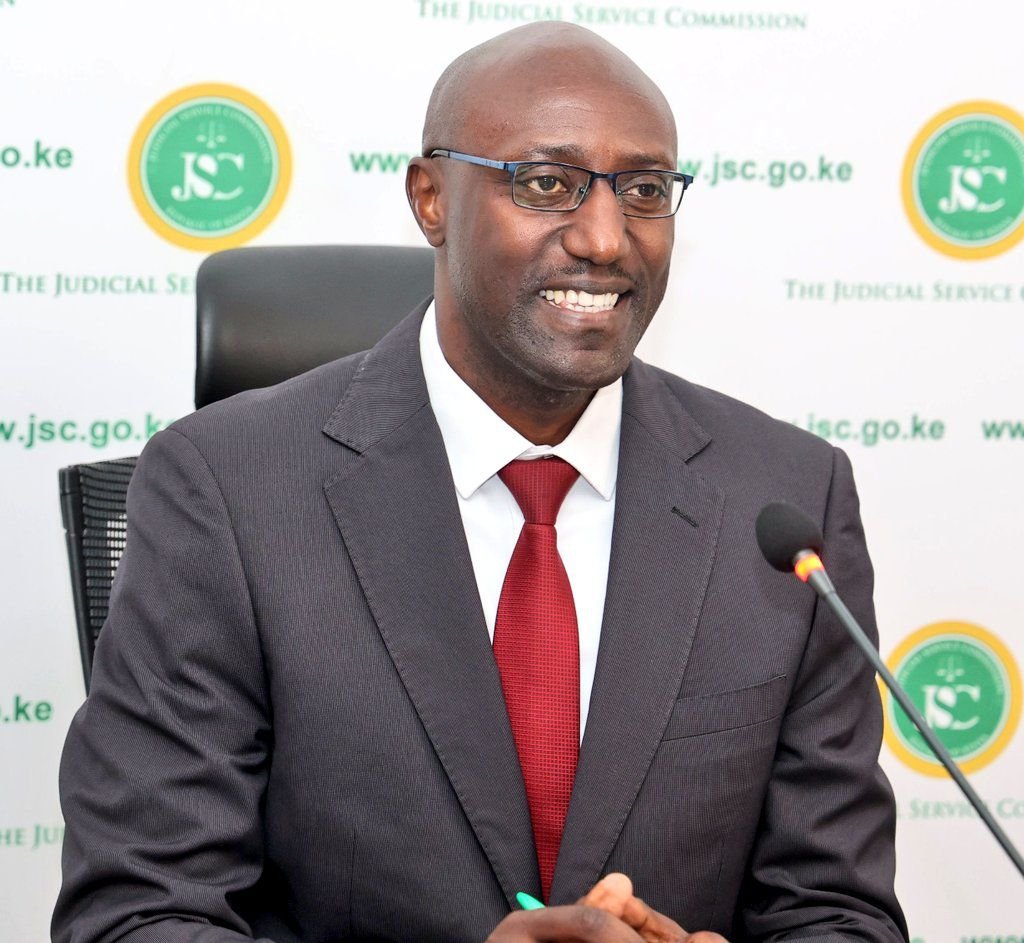
Justice Joseph Kipkoech Biomdo has made history as the first professionally trained military officer to transition from the Kenya Defence Forces (KDF) to serve as a civilian High Court judge.
His appointment, following his swearing-in on Monday, capped more than 20 years in legal practice and public service. During interviews conducted by the Judicial Service Commission (JSC), Biomdo was asked whether he was ready to leave behind the senior military rank of colonel for the Judiciary.

The judge told the panel he had already resolved to exit military service and begin a new chapter in civilian justice administration.
“I first started practising law in a law firm, and this enabled me to have experience in civil and criminal litigation. During my service, I was privileged to be a special counsel since 2015 to appear in court on behalf of the Ministry of Defence. I have had the unique opportunity in criminal litigation to work as a prosecutor in the court martial and a defense lawyer, and currently as a court martial as an administrator,” said Biomdo.
He defended the efficiency of the court martial system, noting that its conviction rate was nearly perfect. According to Biomdo, 13 criminal cases were handled in the last financial year, with seven concluded successfully.
He added that only one military officer had their conviction overturned by the High Court.
To demonstrate the riguor of military accountability, Biomdo explained the strict appraisal system within the KDF.
“Generally, you are not given that report. You will be aware that it follows several procedures thereafter. You have an opportunity to look at it before it is kept in custody,” he said.
Apart from Biomdo, JSC also recruited several professionals from institutions outside the Judiciary, Emmanuel Bitta joined from the Attorney General’s office, Josphat Kuyioni from Parliament, Benard Murunga from the Kenya Sports Disputes Tribunal, and Patricia Leparashao from the Kenya Revenue Authority, among others.
The Environment and Lands Court also gained eight new judges, among them Justice Lilian Tsuma, who became the first person from Kilifi County appointed to the court.
Meanwhile, the High Court received 24 additional judges made up of 15 men and nine women. Some of the appointments marked historic firsts for their communities.
Justice Winnie Molomko became the first High Court judge from Narok County, Patricia Leparashao from Samburu, Abdi Hassan from Wajir, while Joyce Gandani became the first woman from Kilifi to serve in the court.
“My journey from the planes of Griftu to the practice of law has taken me to the management of public institutions, governance, policy formulation, and above all, the lived realities of life. Over the years, across all those spheres, I have learned that Justice is not an abstract; it affects families and livelihoods,” Hassan told the interview panel.
Data from the JSC shows women make up the majority of Judiciary employees, while men account for 40 per cent of the workforce.
Email your news TIPS to Editor@nairobilawmonthly.com, and to advertise with us, call +254715061658 anytime of the day
