

By Muchira Gachenge
Since May, a wave of child disappearances has plunged Madagascar into fear. Yet beyond the human tragedy, the crisis has become a brutal political litmus test. It has exposed long-suppressed social fractures, a government seemingly more preoccupied with its own survival than with governing, and a civil society that, confronted with official silence and mounting uncertainty, is finding its voice with renewed determination.
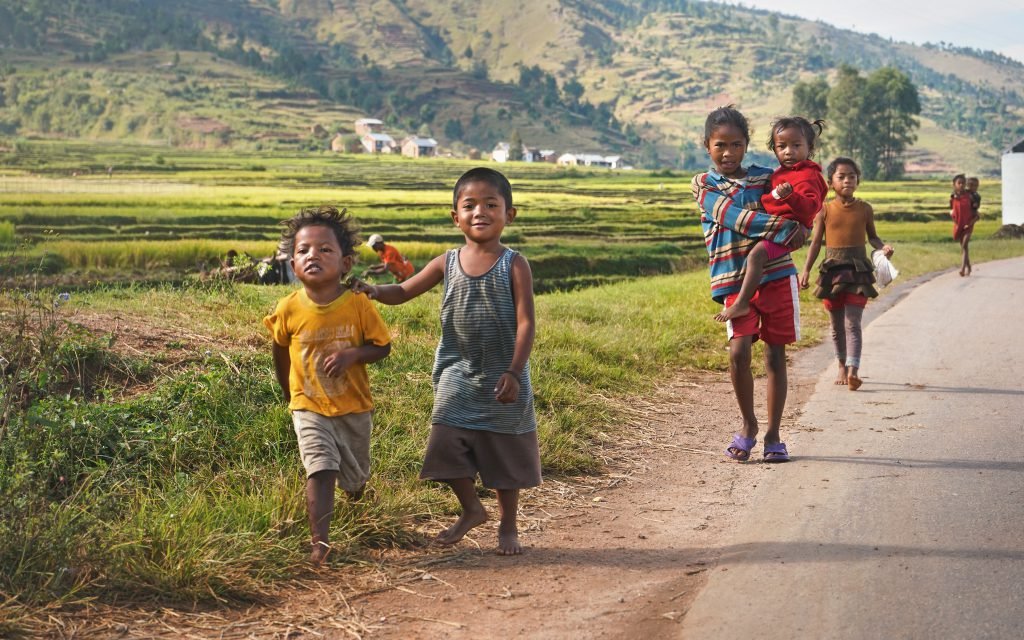
For weeks, photographs of missing children have flooded social media. Children vanish, mutilated bodies are discovered, and families no longer dare allow their sons and daughters to play outside. Since 1 January 2026, the Malagasy National Police has recorded 172 missing persons complaints nationwide, the majority of them in the Analamanga region alone. Since the beginning of the week of 7 July, three more bodies have been found in the capital.
The atmosphere of fear has quickly spilled beyond the bounds of reason. On 6 July, a woman merely suspected of attempting to abduct a child was lynched by an angry mob in Antananarivo. Rumours have spread that the disappearances are linked to ritual practices, a belief fuelled by the documented reality of attacks on albino children and adolescents.
According to the Albinos Madagascar association, at least 16 such murders were recorded in 2025, while eight further abductions have taken place since January 2026, six of them resulting in the deaths of children. As the rule of law falters on the island, growing numbers of citizens appear tempted to take justice into their own hands, a development that rarely heralds a return to calm.
The authorities’ response has deepened the anxiety
Faced with the crisis, Colonel Randrianirina has spoken repeatedly, but in terms that have only compounded the prevailing confusion. On 8 July, he described the child disappearances as an act of “terrorism”, immediately giving the affair a political dimension.
Two days later, speaking in Toamasina, he placed himself at the centre of the narrative: “Why not kill me instead, if I am the one causing the problem?” His Prime Minister, Mamitiana Rajaonarison, declared bluntly: “We are at war.” Thus, confronted with a national tragedy affecting ordinary families, the head of the transitional authorities has reframed the debate as a personal and political struggle.
It must be acknowledged that substantial security resources have been deployed. Around 400 members of the security forces have been mobilised in the capital, an operational command centre has been established, widespread vehicle searches have been carried out, certain websites have been blocked, and the presidency has proposed financing andrimasom-pokonolona, local neighbourhood watch committees.
The problem is not the scale of the response, but the way the crisis is being interpreted. By portraying the disappearances as part of a political conspiracy against the so-called Refoundation, without identifying any perpetrators or producing supporting evidence, the authorities risk appearing more concerned with defending themselves than reassuring a terrified population. More importantly, they may be steering investigators towards political dead ends while the real perpetrators remain at large. The authorities cannot afford to ignore that risk.
A deeply sceptical civil society
The question therefore remains: what purpose does this political interpretation of the crisis serve?
Criticism came swiftly. Legal scholar Omar Abderman Ramadany summed up the concerns with understated severity: “In the face of this security crisis, citizens expect neither speculation nor unsubstantiated accusations.” The Union of Higher Education Teacher-Researchers and Researcher-Teachers (Seces) went further still, urging the authorities not to “content themselves with declarations about the supposed objectives of those allegedly behind these acts” and instead tackle the underlying causes.
“The population expects the authorities in power, particularly a military government, to eradicate these crimes at their root.” The Episcopal Conference of Madagascar (CEM) announced that it “could no longer remain silent”, citing “cases of homicide occurring here and there whose perpetrators remain unknown”, a formulation that implicitly undermines the government’s conspiracy narrative. Shortly afterwards, the Malagasy Council of Christian Churches (FFKM), bringing together the country’s principal Christian denominations, echoed those concerns in less overtly political language, calling for restraint and “measured expression”.
This unusual convergence among Madagascar’s intermediary institutions comes at the worst possible moment for a junta already weakened on several fronts. On 14 July, RFI reported that controversial searches had become “commonplace” under the current authorities, often conducted outside legally permitted hours and primarily targeting associates of former President Rajoelina, as well as foreign nationals.
Just days earlier, on 9 July, around twenty masked and armed men stormed the home of Chinese nationals in Ambohibao, making off with more than 200 million ariary, foreign currency and jewellery while claiming to be acting on presidential orders. The presidency denied any involvement, describing the perpetrators as “impostors” and promising an investigation.
The episode adds to a growing series of incidents that have steadily eroded the regime’s credibility. Late last winter, only months after taking power, the junta reshuffled the government—a troubling signal regarding Colonel Randrianirina’s ability to govern. In June, four of the Constitutional High Court’s nine judges were prosecuted for allegedly “destabilising the regime”.
Two subsequently resigned and were replaced within twenty-four hours, prompting fierce criticism from civil society. Even members of Generation Z, who had initially called for the court’s dissolution, denounced the move as “an attack on the rule of law.”
Almost simultaneously, the Southern African Development Community (SADC) demanded a return to constitutional order, the release of political prisoners and an end to arbitrary arrests, a particularly severe rebuke of the regime’s domestic governance from the regional organisation.
A crisis exposing a regime losing its footing?
The criminal violence and political tensions now gripping Madagascar have not emerged in isolation. They are the culmination of several months of steadily worsening political deterioration.
As early as March 2026, Amnesty International documented what it described as Madagascar’s trajectory “from the Generation Z uprising to junta control.” In April, six Generation Z activists were arrested during night-time raids on charges of “undermining state security”, accusations Amnesty characterised as “deliberately vague.” Earlier that month, Colonel Patrick Rakotomamonjy, formerly responsible for handling public grievances within the presidency itself, was imprisoned after denouncing alleged corruption.
Former minister Paul Rabary was meanwhile prosecuted for “conspiracy” on the basis of private WhatsApp exchanges. Month after month, the list of opposition figures, former allies and dissenting voices facing criminal prosecution has continued to grow. The Colonel’s recent remarks explicitly targeting the press and social media have also prompted fears among observers that the authorities may soon move against some of the island’s last remaining spaces for free expression.
Then there is Russia, whose growing presence on the island appears to be consolidating in parallel with Madagascar’s political and social fragmentation. Since December 2025, military cooperation with Moscow has deepened considerably, with deliveries of BMP-3 infantry fighting vehicles, loitering munitions and assault rifles, alongside the training of 127 Malagasy soldiers by instructors from the Africa Corps, including a special forces unit and a team dedicated to the Colonel’s close protection.
According to Le Monde, Africa Corps mercenaries are now responsible for the president’s personal security. Significantly, this growing partnership with Moscow featured prominently in the communiqué issued by the group Sampana Tsikilo Madagasikara, which claimed responsibility for the drone overflight targeting the presidential convoy in early July and explicitly denounced the “Russian interests” cooperating with the regime. As early as May, the Catholic Church had publicly expressed concern over Madagascar’s geopolitical alignment with Russia while simultaneously condemning the arrests of opposition figures.
Madagascar remains one of the world’s poorest countries. The reforms it requires are well known. Yet the crisis that erupted in July has exposed something deeper: a state increasingly unable to assert its authority through anything other than force and suspicion.
While families demand answers over the disappearance of their children, the authorities appear locked in an escalating cycle of political accusations and security measures, without producing the evidence needed to restore public confidence. The paradox is a cruel one.
A government that came to power promising to restore order now gives the impression of chasing a crisis that is steadily slipping beyond its control. In a country already burdened by poverty, distrust and mounting political tensions, what is emerging is not the image of a regime projecting strength, but one confronting the prospect of losing its grip altogether.
Email your news TIPS to Editor@nairobilawmonthly.com, and to advertise with us, call +254715061658 anytime of the day
