

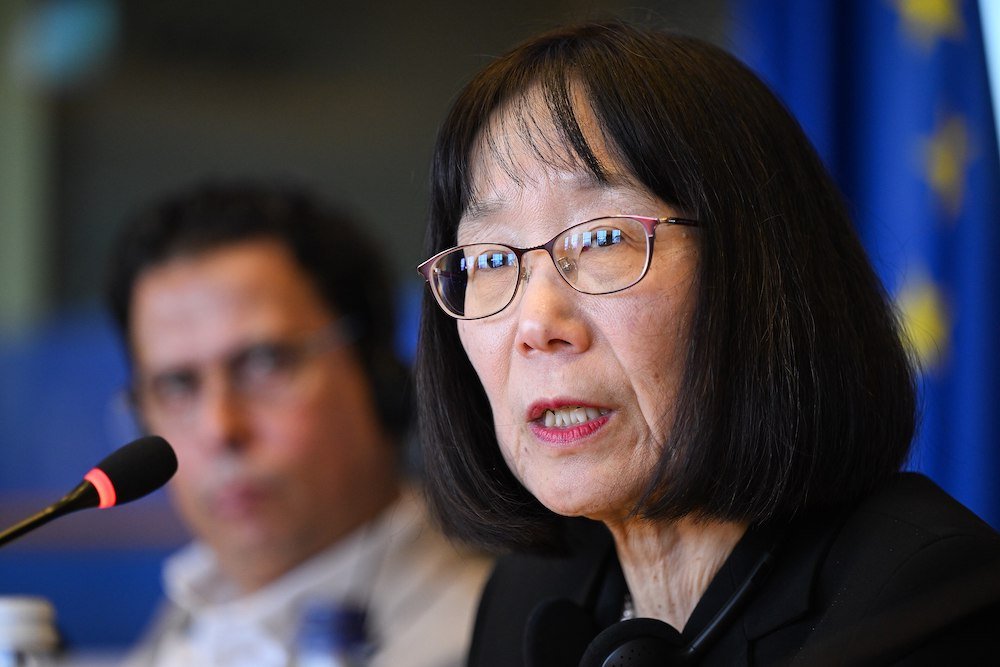
The US sanctions on senior International Criminal Court (ICC) officials mark the latest escalation in President Donald Trump’s campaign to dismantle the court “brick by brick”.
US Secretary of State Marco Rubio on Tuesday announced sanctions against ICC President Tomoko Akane and senior trial lawyer Abdoulaye Seye, accusing them of pursuing cases against officials whose governments have not accepted the court’s jurisdiction.
Pressure on the ICC has been building, with the Trump administration already sanctioning at least 11 court officials, including nine judges and the chief prosecutor. The measures include asset freezes, travel bans and restrictions on services from US companies.
But Washington is also looking beyond individual officials. Last month, Mr Rubio called on the ICC’s 125 member states to withdraw from the court. A US official said Washington would “watch with interest” which countries responded to the appeal.
However, the campaign has drawn legal challenges in the US. Four human rights organisations have sued the Trump administration, arguing that the sanctions have made it harder for them to work with the court on cases involving genocide, war crimes and crimes against humanity.
- US House votes to sanction ICC over Netanyahu arrest warrant
- US senators threaten ICC over Netanyahu’s potential arrest
- ICC sets Nov 30 trial date for Philippine ex-president Duterte
Three ICC judges have also challenged sanctions imposed on them, saying the measures were intended to punish and coerce them. In defence of its position, Washington says its opposition to the court is rooted in sovereignty.
Mr Rubio called the ICC “a corrupt and fatally politicised supranational court” that had “maliciously abused its authority and exceeded its mandate”.
“We will not tolerate its assault on state sovereignty,” he said.
The court has rejected the pressure.
“Measures targeting judges, prosecutors and staff who work towards the fulfilment of the mandate that was conferred to the ICC by States undermine the rule of law,” it said.
“When judicial actors are threatened for applying the law, it is the international legal order itself that is placed at risk.”
Established in 2002, the ICC has jurisdiction to prosecute genocide, crimes against humanity and war crimes in member states, or where a situation is referred by the UN Security Council.
The latest sanctions are part of a wider fight over the court’s future and whether Washington can persuade enough countries to abandon it.
Email your news TIPS to Editor@nairobilawmonthly.com, and to advertise with us, call +254715061658 anytime of the day
