

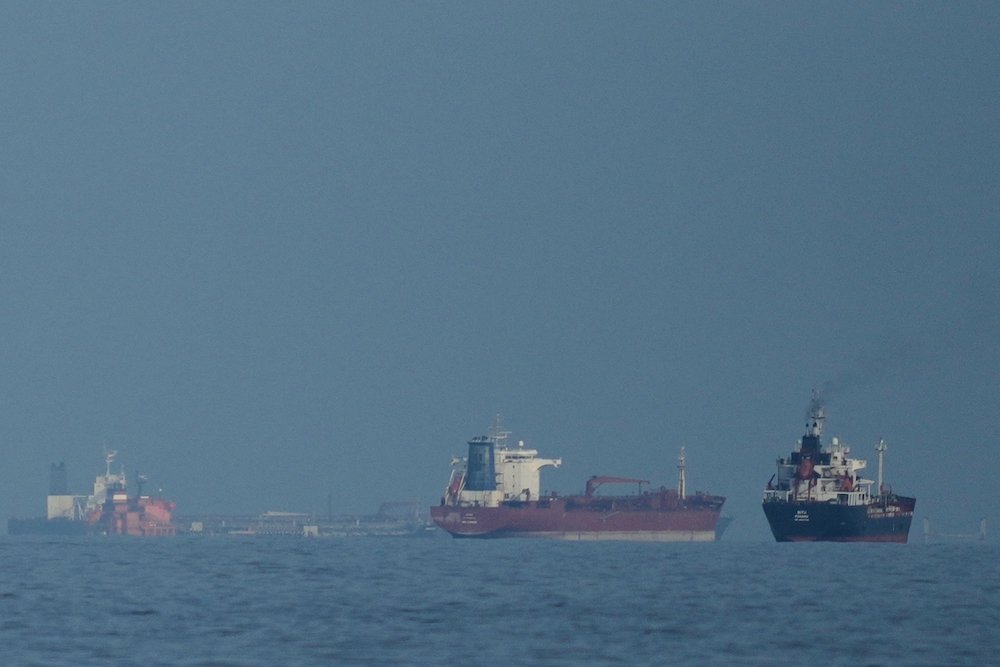
Oil prices have surged above $90 a barrel after the United States struck Iranian military targets near the Strait of Hormuz, with Tehran later retaliating against US bases in Jordan and renewing fears of disruption to global energy supplies.
Brent crude rose 3.58 per cent to $91.25 a barrel on Monday, while US West Texas Intermediate gained 3.55 per cent to $86.36. The rise came as traders reacted to the renewed military confrontation and the risk of further disruption around the strategic waterway.

US forces struck two Iranian launchers on Larak Island on Sunday, in the first known American strikes on Iran since late July.
A US official said the Iranian Revolutionary Guard forces had been preparing to launch rockets carrying sea mines into the Strait of Hormuz. The US military had completed clearing mines from international shipping routes in the strait the previous week. Iran’s Revolutionary Guard said several Iranian soldiers and civilians were killed or wounded in the attack and warned that Tehran would respond.
Iran later launched attacks against two US air bases in Jordan, according to Iranian media citing the Revolutionary Guards. Jordan said its air defences intercepted eight missiles that entered its airspace.
The latest exchange has once again placed the Strait of Hormuz at the centre of concerns over global energy supplies.
The waterway is a major route for oil shipments, and any prolonged disruption could put further pressure on crude prices and increase fuel costs in countries that depend on imported petroleum.
Shipping through the strait has already fallen significantly during the wider conflict. Oil flows have recovered from their lowest levels earlier in the year but remain below those recorded before the war. For financial markets, the immediate concern is whether the latest attacks remain limited or develop into a wider confrontation that could threaten the movement of oil through the Gulf.
Brent’s move above $90 a barrel marks a sharp reversal from earlier expectations that easing tensions could gradually reduce the geopolitical premium in oil prices. The renewed fighting also comes as Washington continues to apply economic pressure on Tehran, while the two sides remain far from a lasting resolution.
Any prolonged threat to shipping through the Strait of Hormuz would have consequences beyond the oil market, potentially increasing transport and production costs and adding to inflationary pressure in economies around the world.
Email your news TIPS to Editor@nairobilawmonthly.com, and to advertise with us, call +254715061658 anytime of the day
