

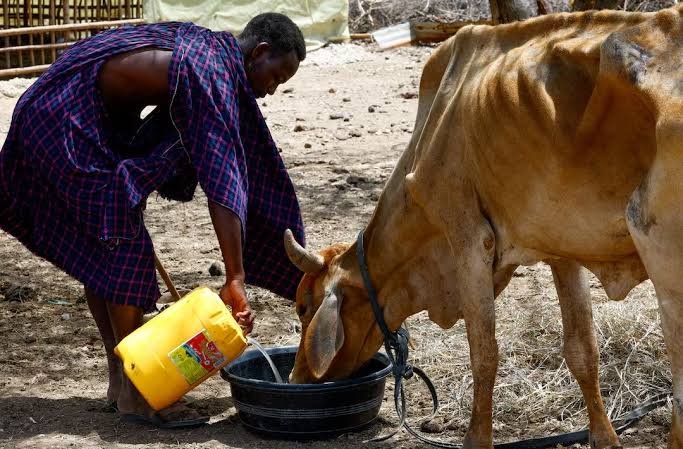
Milk prices are rising in parts of Kenya as dry weather cuts supplies to processors, leaving some popular brands missing from supermarket shelves and forcing consumers to pay more for a product that is a daily staple.
In Nairobi, the price of a 500ml packet has risen to as much as Sh75 from Sh60 in some outlets, a 25 per cent increase, while some supermarkets have also limited the number of packets customers can buy.

A spot check at a Naivas branch on Moi Avenue found only three lesser-known brands available, with Brookside, Mt Kenya, New KCC and Tuzo missing from the shelves.
The shortages come as formal-sector milk intake declined in the first half of the year, falling 0.6 per cent to 513.32 million litres from 516.34 million litres during the same period last year, according to data from the Kenya National Bureau of Statistics.
Willy Kimani, founder of Jaza Retail, said retailers had been informed by suppliers that the disruption was linked to changing weather conditions and could persist for several weeks. “Our suppliers have informed us that the milk shortage is due to changes in the weather. They have told us that the situation will not improve until October at the earliest,” he said.
The squeeze is also being felt outside Nairobi, with dairy-producing areas reporting lower output as farmers struggle with inadequate pasture, water and increasingly expensive animal feed.
In the North Rift, New KCC officials held discussions with milk producers and suppliers from Eldoret over falling production and disruptions in deliveries to the processor.
A director at a local dairy cooperative supplying New KCC, Daniel Too, said farmers were producing significantly less milk as the dry conditions persisted.
“Production of milk is very low. This has been caused by multiple factors, key among them the ongoing drought and the high cost of feeds, which many farmers can no longer afford,” he said.
The impact has extended to other parts of the country.
In Lodwar, some shops have run out of popular brands for days, forcing consumers to switch to alternatives. A resident, Sharon Abei, said she had been forced to change brands because her children regularly take New KCC milk.
“I had no option but to choose between the two available options of Zito and Fresha milk. A box with 21 milk packets of 200ml each retails at Sh650,” she said. Retailers in the area said they were uncertain when normal supplies would return, while some had raised prices by between Sh5 and Sh10 a packet because of higher wholesale costs and limited availability.
In Central Kenya, processors have also reported lower production as cows receive less fodder. A processor in Nyeri said its daily output had fallen from 80,000 litres to about 60,000 litres.
In parts of the Coast, a 500ml packet has also climbed to Sh75 from Sh60 as shoppers compete for reduced stocks. Retailers said some customers were buying more than usual after noticing shortages, raising fears that supplies could tighten further.
“We are receiving less milk than we normally do, yet customers are buying more. Some people are coming in and buying several packets at once because they fear it may run out,” said Jecinta Juma, a retailer in Mikindani.
The situation has also been reported in parts of Nyanza and Western Kenya, where traders say deliveries from processors and distributors have become smaller and less frequent.
However, the shortage is not being experienced uniformly across the country. In Kisumu, major supermarkets including Naivas, Carrefour, Khetia’s and Quickmart still had milk on their shelves, with some 500ml packets selling from about Sh55, although prices were higher in some smaller shops.
The supply pressure comes at a time when Kenya’s dairy sector has recorded strong production in recent years. Fresh milk production reached about 5.5 million tonnes in 2025, according to data in the 2026 KNBS Economic Survey.
But seasonal changes continue to expose the industry’s dependence on reliable pasture and water. Famine Early Warning Systems Network (FEWS NET) has warned that dry conditions and above-average temperatures could reduce livestock body conditions and milk production in pastoral areas through September.
The current squeeze has renewed concerns about the country’s ability to manage seasonal swings in milk supply. Kenya has previously experienced periods of both shortages during dry weather and excess production when rains improve pasture conditions.
Email your news TIPS to Editor@nairobilawmonthly.com, and to advertise with us, call +254715061658 anytime of the day
