

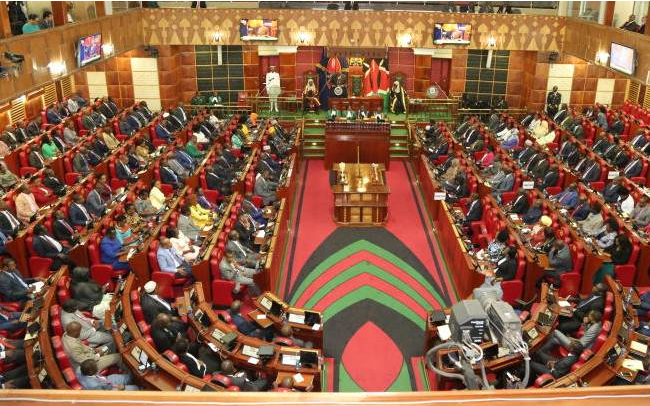
Kenyans will continue to pay value added tax (VAT) of 8 per cent on petrol, diesel and kerosene for another three months instead of the standard 16 per cent, after the National Assembly voted to extend the relief.
MPs passed the Tax Laws (Amendment) Bill, 2026, on October 14, 2026, the day the earlier relief was due to lapse, preventing a sharp rise in pump prices on top of the increases announced by the Energy and Petroleum Regulatory Authority (EPRA) that afternoon.
The Bill amends the VAT Act to maintain the reduced rate for a further 90 days. If the conflict in the Middle East continues to disrupt global oil supplies, the Cabinet Secretary for the National Treasury will be able to extend the relief by another three months, bringing the total to six months.
Majority Leader Kimani Ichung’wah, who sponsored the Bill, said the extension was needed to protect consumers while global markets remain volatile.
“We need to amend the VAT Act to extend the reduced rate for another 90 days,” he told the House, adding that this was “in the hope that the war in the Middle East will come to an end.” Without the relief, a litre of super petrol in Nairobi would have cost about Sh17 more than the Sh226.96 set by EPRA for the current pricing cycle.
The Government first cut VAT on fuel from 16 to 8 per cent in April 2026 as global oil prices rose. It extended the relief in July for three months. At that time, it also set aside Sh945 million from the Petroleum Development Levy to stabilise pump prices.
The Chairperson of the Finance and National Planning Committee, Kimani Kuria, who seconded the Bill, said the State had foregone about Sh54 billion in revenue over the past six months to keep fuel affordable.
MPs backed the measure, saying fuel costs affect every household. “I support this tax amendment because it touches on the kitchen table of every household,” said Mwea MP Mary Maingi. “When fuel goes up, matatu fares go up, the price of food goes up, everything goes up.”
The extension comes as the cost of importing fuel continues to climb. EPRA says super petrol on international markets has risen to about US$1,300 per tonne, up from about US$600 before the crisis. “September has been the worst month ever since this war broke out,” the regulator said.
The Bill also offers relief to builders and homeowners. It amends the Excise Duty Act so that duty on ceramic tiles is charged by surface area in square metres rather than by weight.
Ichung’wah said this could cut the duty on a typical 25,000-kilogramme consignment from between Sh1.2 million and Sh1.5 million to between Sh420,000 and Sh600,000. The change also applies to other ceramic products and bathroom ware.
During the debate, Suba South MP Caroli Omondi called for a stronger government-to-government fuel import framework to eliminate intermediaries and lower costs.
Ichung’wah said oil exploration in Lokichar, Turkana, and the Dangote refinery planned for Lamu could, in the long run, reduce Kenya’s exposure to global oil price shocks. The Bill now awaits the next stages of the legislative process before it becomes law.
Email your news TIPS to Editor@nairobilawmonthly.com, and to advertise with us, call +254715061658 anytime of the day
