

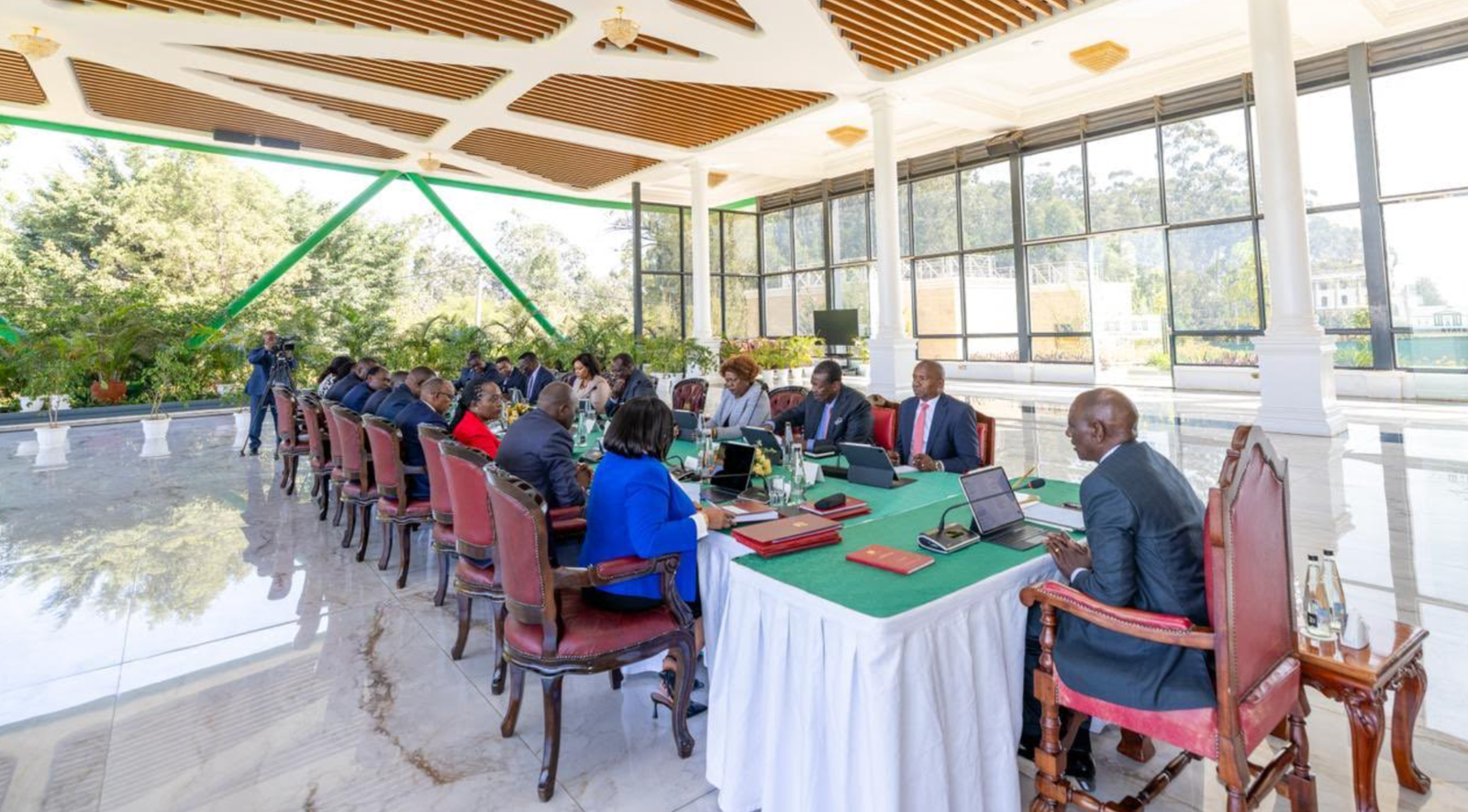
Every financial year has seen Kenyans ready to expect the obvious: the budget going up. And just as expected, this year is already shaping up to be no different.
According to the Cabinet, for the 2026/27 financial year, the government is projecting total revenues of Sh3.53 trillion against expenditures of Sh4.7 trillion. This is set to leave a substantial financing gap that will test the government’s borrowing strategy and highlight the urgency of revenue mobilization efforts.

With the revenue target quite formidable, KRA will be required to collect hundreds of billions more than it ever has, and it remains unclear whether the economic fundamentals will fully cooperate. GDP growth is projected at 5.3% in 2026, supported by favourable weather patterns, a rebound in agricultural productivity, climate-smart investments, and the sustained implementation of the Bottom-Up Economic Transformation Agenda.
However, these forecasts, while plausible, are not immune to external shocks or domestic policy slippages, and the government’s ability to sustain investor confidence will depend heavily on credible fiscal consolidation over the medium term. Still, the administration is pressing ahead, betting that it can borrow responsibly and invest its way out of the structural constraints that have kept productivity stubbornly low for decades.
The expenditure breakdown reveals the weight of recurrent obligations. Recurrent spending, the money that pays salaries and keeps ministries running, accounts for Sh3.46 trillion of the total. That leaves only Sh749.5 billion for development: the roads, dams, electricity lines, and hospitals that expand the economy’s capacity.
This disparity raises many questions about the space available for transformative investment when the bulk of public resources is absorbed by salaries, operations, and maintenance. However, the government argues that the 2026/27 Budget marks a turning point, a deliberate move away from the fiscal stabilization programmes of recent years toward scaled-up investment.
The Budget Policy Statement, now heading to Parliament, frames this as the moment when the gains of earlier reforms begin to compound and when Kenyans should start to feel the effects of the administration’s agenda in their daily lives.
Education, health, energy, infrastructure, agriculture, social protection, and national security emerge as the primary beneficiaries of the scaled-up investment narrative, while digitization, public finance management reforms, state-owned enterprise restructuring, and public-private partnerships are positioned as enablers of efficiency.
Notably, county governments are set to receive Sh495.7 billion in total transfers, a figure that combines equitable share allocations, Equalisation Fund resources, and additional conditional allocations under a supplementary bill. The equitable share alone stands at Sh420 billion, equivalent to 21.9% of the most recent audited revenue, in compliance with constitutional prescriptions.
The Equalisation Fund adds another Sh15.2 billion, directed at historically marginalized regions. A supplementary bill proposes an additional Sh75.7 billion in conditional allocations, bringing the total to just under half a trillion shillings. This injection of resources to devolved units is intended to bolster service delivery at the grassroots, though past implementation challenges suggest that absorption capacity and fiscal discipline at the county level will remain critical variables.
Alongside the fiscal proposals, Cabinet has also cleared a comprehensive suite of education reform bills, marking one of the most significant overhauls of the sector in a generation. A package of bills now before Parliament seeks to overhaul nearly every aspect of how Kenya educates its children.
Governance structures will be streamlined, curriculum delivery aligned with the Competency-Based Education and Training framework, and financing mechanisms rationalised to eliminate the duplication that has long characterized the sector. These reforms follow the recommendations of the Presidential Working Party on Education Reform and aim to resolve inefficiencies that have persisted for decades.
All this now moves to Parliament, where the numbers and the policies will be scrutinized, amended, and ultimately approved or rejected. The 2026/27 Budget, the fourth under the Kenya Kwanza administration, arrives at a moment of cautious optimism tempered by hard fiscal realities.
The revenue gap is real, the recurrent expenditure burden is stubborn, and the development budget, while substantial, is not as large as the government’s ambitions might warrant. However, there is also a sense, evident in both the fiscal strategy and the parallel reform agenda, that the administration believes it has laid the groundwork for a different kind of economic future.
Email your news TIPS to Editor@nairobilawmonthly.com, and to advertise with us, call +254715061658 anytime of the day
