

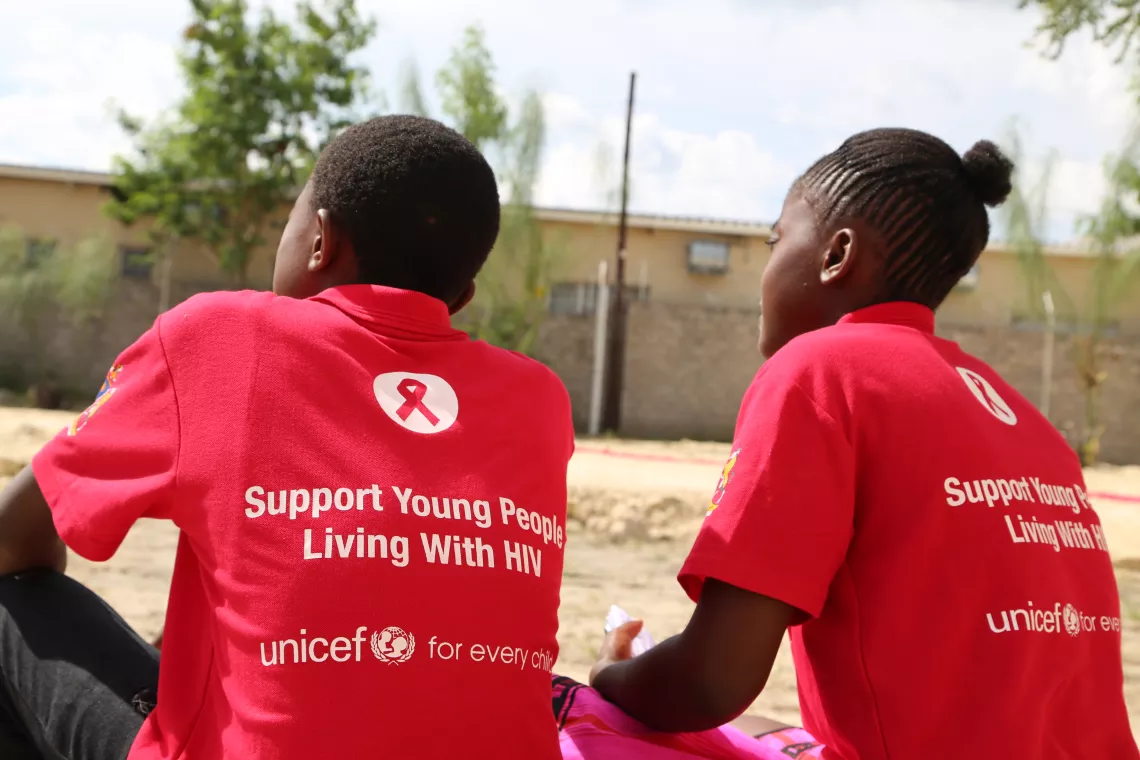
The National Syndemic Disease Control Council (NSDCC) has raised a red flag over the rising cases of new HIV infections among adolescents and young adults, warning that the trend threatens to erode hard-won gains in the national HIV response.
Speaking on Monday in Mbita Sub-County during the World AIDS Day celebrations, NSDCC representative Stephen Oyugi emphasized that adolescents and young people are now driving the epidemic.

“The HIV epidemic is now domiciled among adolescents and young people. This is where we are seeing new infections emanating from, and that is why our flagship project, End the Triple Threat, is focused on this age group,” Oyugi said.
He noted that despite widespread awareness of HIV transmission, behavioral factors continue to expose young people to risk. He added that poor adherence among young people already on treatment is also contributing to rising prevalence.
According to 2024 NSDCC statistics, Nairobi leads with more than 3,000 new infections, followed by Migori (over 1,500), Kisumu (over 1,300), and Homa Bay (over 1,200).
Kenya currently has 1,326,336 people living with HIV and requires about Sh30 billion annually for HIV management.
Homa Bay, whose first documented HIV case was recorded in 2007, now has 104,317 people living with HIV and reports 102 HIV-related deaths annually. Despite these challenges, the county has recorded a major reduction in infant mortality and continues to strengthen the prevention of mother-to-child transmission, currently standing at an impressive 98 percent prevention success rate.
- Why Kenya is facing alarming surge in advanced HIV cases
- Kisumu County tops nationally in male HIV cases
- Kenyan women paid Sh3 million each for unlawful sterilisation
Oyugi urged residents to get tested so that those who test positive can be initiated into treatment early. “Research has shown that when you adhere to treatment, the chances of transmitting the virus to a partner or third party become extremely minimal,” he said.
Homa Bay County Secretary Prof. Bernard Muok echoed these concerns, reiterating that new infections are increasingly concentrated among youth aged 18 to 35, the county’s most productive age group.
“We are also worried about the risk of resurgence,” he added. “New infections are rising, and this is a big concern, especially now that donor fatigue is setting in and many partners are withdrawing support, including those funded by USAID.”
Muok warned that withdrawing support at this stage could reverse progress, leaving the county vulnerable to a renewed surge in infections.
He lauded the county’s progress in reducing HIV prevalence from 18 percent to 11 percent, though it still remains above the national average of 3 percent.
“We are happy with the milestones we have achieved, largely because of strong partnerships and a community that has embraced prevention and treatment interventions. However, we are not yet where we should be,” he said.
The county official urged residents not to relax but to intensify testing, prevention, and adherence efforts to safeguard gains and push the prevalence rate closer to the national average.
At the event, it was revealed that injectable antiretroviral therapy (ART), a long-acting HIV treatment option, is expected to be rolled out in Kenya next year to provide a new alternative for people struggling with daily pill regimens.
– By Sitna Omar, KNA
Email your news TIPS to Editor@nairobilawmonthly.com, and to advertise with us, call +254715061658 anytime of the day
