

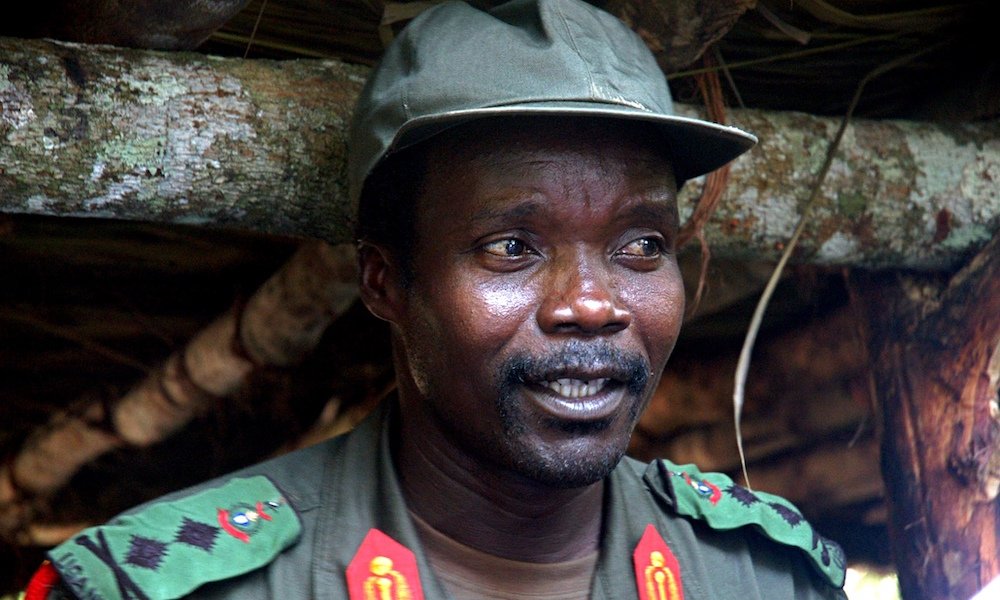
The International Criminal Court (ICC) has taken a historic step by holding a confirmation of charges hearing against Ugandan rebel leader Joseph Kony without his presence—a first for the court.
Kony, founder of the Lord’s Resistance Army (LRA), has evaded arrest for more than 20 years despite an ICC warrant. He faces 39 counts including murder, abduction, sexual enslavement, and the forced recruitment of thousands of child soldiers.

Once claiming he wanted to create a government based on the Ten Commandments, Kony’s group became infamous for mutilations and atrocities across northern Uganda. His profile rose globally in 2012 following the viral “Kony 2012” campaign, yet attempts to capture him have repeatedly failed.
Prosecutors read out charges relating to crimes committed between 2003 and 2004, highlighting horrific gender-based violence such as rape, forced marriage, and forced pregnancy. Deputy prosecutor Mame Mandiaye Niang said, “Unfortunately the tentacles of international justice, even though they are lengthy, have not been sufficient to ensure the efficient arrest of fugitives.”
She added, “Many victims who had the strength to survive the horrors of civil war have not survived this lengthy wait, others have lost patience, but there are some who have waited for this moment.”
Children were abducted from schools and fields, deprived of their rights and forced to kill. The ICC is proceeding under the Rome Statute’s provisions to continue the case without Kony in custody. He is represented in absentia by a court-appointed lawyer, though a trial cannot begin until he is captured and brought to The Hague.
Legal experts see this as a potential precedent for how the ICC will deal with fugitives unlikely to be detained. Survivors in northern Uganda are watching the hearing via live broadcasts. One said, “This is about recognition… Even if Kony is not in custody, the world is hearing what happened to our communities.”
The LRA was driven from Uganda in 2005 and later operated across Sudan, South Sudan, the Democratic Republic of Congo, and the Central African Republic, where its fighters were involved in poaching and illegal mining. Peace talks collapsed in 2008 when Kony demanded immunity from prosecution.
The ICC’s decision to push forward despite these challenges highlights its determination to pursue justice. With the court’s top prosecutor currently on leave amid allegations and political pressures mounting, the Kony case offers a chance to reaffirm the court’s role on the global stage.
Email your news TIPS to Editor@nairobilawmonthly.com, and to advertise with us, call +254715061658 anytime of the day
