

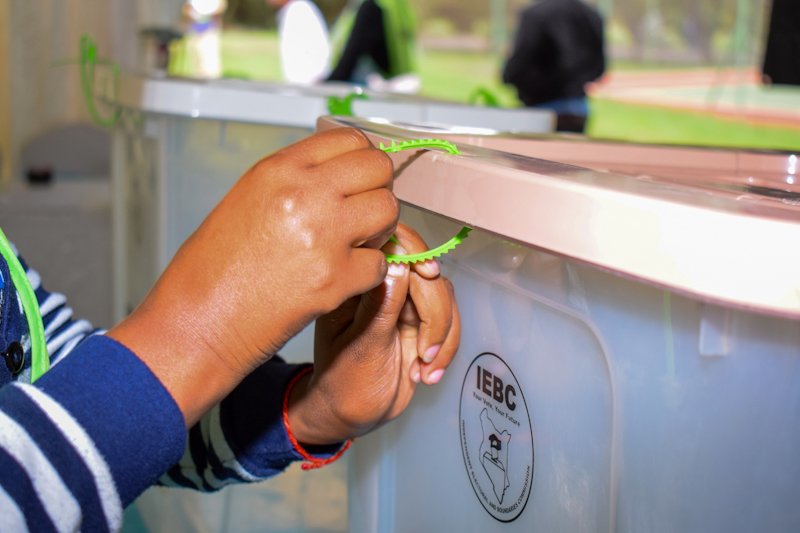
The High Court has given Parliament the greenlight to proceed with the vetting of President William Ruto’s fresh Independent Electoral and Boundaries Commission (IEBC) nominees but issued conservatory orders blocking their gazettement and swearing-in pending the hearing and determination of a petition challenging the selection process.
In the Kenyan context, the decision appears to be a softer way of managing the “executive branch,” reflecting fears that the president could exceed constitutionally defined roles and encroach on powers meant to protect the public. Did the court act to stop executive overreach while ensuring a balance of power among all branches of government?
By allowing vetting but stopping the gazettement of IEBC nominees, the court has provided a textbook example of executive overreach, reinforcing the fact that “executive overreach” is a serious issue. Executive overreach is a silent threat that can undermine democracy because it can be “vague” or mistaken for “political goodwill.”
The expansion of presidential power and authority beyond constitutional limits and the system of checks and balances can seriously destabilize a country, especially in the long run.
When the executive, led by the president, exceeds its constitutionally defined role and encroaches on citizens’ powers, it disrupts the balance of power and undermines the system of checks and balances. Ultimately, this can lead to a concentration of power in the hands of the president, which the current constitution sought to prevent through the separation of powers.
The conservatory order to vet the IEBC nominees seems to be a softer way of addressing executive overreach. It is a decision that requires careful thought as it concerns the presidency, its alignment with the Constitution, and the separation of powers.
While some Kenyans initially struggled to comprehend the temporary order issued by Justice Lawrence Mugambi, many saw the court decision as a smart prevention strategy against executive overreach. It was alleged that Ruto proceeded to submit the names without consulting opposition leaders.
Interestingly, a few weeks ago, opposition leaders rejected the same nominees, calling them a “project” to rig the 2027 General Election. Did the court seize the opportunity to “control” and “slow down” the president when parliaments and top political leaders seem reluctant to take responsibility?
For Wiper party leader and lawyer Kalonzo Musyoka, the process was flawed from the start, as the selection panel was viewed as a political extension of State House, full of people loyal to Dr. Ruto—and that the move undermines democracy.
“We are ready. Even if he (referring to President Ruto) says he is the chairman of IEBC, Ruto must go… we are not afraid,” Kalonzo said.
In a statement signed by eight opposition leaders, he added: “President William Ruto has handpicked a partisan IEBC—tailored to serve his 2027 re-election ambitions. This is not a commission for the people. It is a project designed to rig the next election in broad daylight, with the silent approval of his newfound ally, Hon. Raila Odinga.”
While opposition leaders, civil society organizations, and a section of Kenyans are unhappy about the appointment of IEBC officials who have closely worked with the president in the past, the Supreme Council of Kenya (SUPKEM) expressed “iron-clad confidence in the selection panel” and the outcome.
“We will not run away or question a process we have fully been involved in and supportive of,” SUPKEM said.
But even as it affirms support and confidence in the nominees, concerns persist about the toxic political rhetoric already surrounding them. Some senior politicians are publicly casting aspersions on the character and competence of the nominees, especially the IEBC chairman.
“We appeal to the National Assembly to expedite the vetting of the nominees for a speedy reconstitution of the IEBC because the people of Kenya are anxious for the IEBC to be up and running to conduct pending by-elections and embark on the delayed boundaries review. Any further delay will affect these processes and impact preparations and timelines for the next presidential and general elections, which, as the current political environment attests, promise to be very competitive,” SUPKEM added.
To some Kenyans, constitutional principles of consultation, public participation, and political neutrality were not adequately considered. In this spirit, the petition currently before Milimani Law Courts, filed by the civil society outfit Operation Linda Jamii, appears weightier—and its chairperson Fredrick Ogola was not slow to “inject” his views.
“The appointment of the 1st to 7th Interested Parties… is a complete mongrelization, bastardization, and cannibalization of our multiparty democracy,” Operation Linda Jamii stated ahead of further directions to be issued on June 11, 2025.
It argues that the IEBC nomination and intended vetting of seven individuals as commissioners—including the highly likely Chairperson Erastus Ekethon—violates the Constitution and undermines the spirit of the country’s multiparty democracy.
Ogola cited lack of political consultation and public participation, as prescribed in the National Dialogue Committee (NADCO) report. This committee’s mandate was to facilitate dialogue, consensus building, and recommend constitutional, legal, and policy reforms on pertinent issues affecting Kenyans. However, the bipartisan document appears to be failing to guide reforms in key electoral and governance institutions if some court petitions in Kenya are any indication.
The inclusion of certain nominees, particularly Hassan Noor Hassan—whose name was “sneaked” in through an “addendum list” after the official application period had lapsed—caught civil society’s attention.
With the matter now before the court, Kenyans can expect the President, Speaker of the National Assembly, Attorney General, and the IEBC selection panel to file their responses within seven days.
Email your news TIPS to Editor@nairobilawmonthly.com, and to advertise with us, call +254715061658 anytime of the day
