

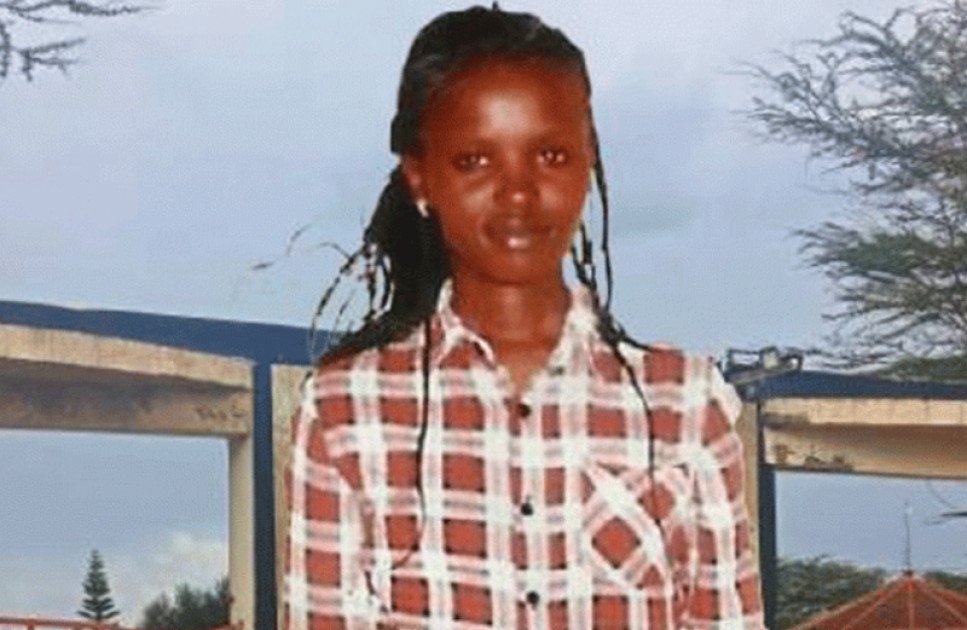
Kenya has formally initiated extradition proceedings against a British soldier accused of murdering Agnes Wanjiru in 2012, with documents now officially received by UK authorities, signaling a major step forward in the long-delayed case.
After years of delay, the process began with the formal transmission of extradition documents to the United Kingdom.

Based on the information provided to the court, the Office of the Director of Public Prosecutions (ODPP) confirmed it had sent the extradition request to the Office of the Attorney General, the main authority responsible for such cases.
The Attorney General’s office then dispatched two physical copies and one electronic copy of the extradition documents on October 9, 2025, via official diplomatic channels. UK authorities acknowledged receipt of these documents and stamped them as received on October 13.
“The extradition process has been initiated. We have done our part and are now waiting for the Attorney General to forward the documents to the UK central authority,” the court was informed during the hearing. This formal acknowledgement signifies that the process has advanced into the international legal phase, where cooperation between the two governments becomes essential for the arrest and surrender of the suspect.
The prosecution requested that the matter be mentioned again in January 2026 to provide an update on the status of the suspect’s arrest and surrender. However, the court declined to postpone the mention that far, citing the need for continued accountability and consistent updates. The judge ruled that the case would instead be mentioned monthly to monitor progress and ensure the process remains active.
“This court agrees that the process should not be delayed. The DPP shall update the court regularly, at least once every month, to ensure accountability and progress,” ruled Justice Alexander Muteti, who has been presiding over the case.
The prosecution told the court that the process involves multiple local and international actors, making it inherently complex.
“This is a complex process involving multiple parties both locally and internationally,” the prosecutor said, noting that the ODPP was doing everything within its power to ensure justice is served. He further acknowledged the emotional toll the lengthy wait has taken on the victim’s family, urging patience as the legal and diplomatic process unfolds.
Agnes Wanjiru went missing in 2012 while British soldiers were stationed in Nanyuki for joint military training. Her body was later discovered in a septic tank near a hotel where the soldiers had been staying.
The case sparked public outrage after witnesses alleged that a British soldier had confessed to the killing, and that fellow soldiers had made disturbing jokes about her death. Despite these revelations, legal action was delayed for years as the case became entangled in bureaucratic and jurisdictional challenges.
Last month, Justice Muteti issued a warrant of arrest for the British soldier suspected of committing the murder. “The court issued a warrant of arrest and the DPP has dutifully transmitted it to the Attorney General. The process is now in the hands of the Attorney General,” the court noted.
In his directive, the judge also cautioned all parties against discussing the matter publicly, warning that any form of disclosure could compromise the proceedings. “The victims must be supplied with necessary materials, but there should be no disclosure to avoid a trial outside court,” Justice Muteti emphasised.
The court further ordered that the matter be mentioned again on November 24 to review updates from the Attorney General and the ODPP regarding communication with UK authorities.
This development marks a new phase in the long journey toward justice for Agnes Wanjiru’s family, who have endured more than a decade of uncertainty. The extradition process now rests with the Attorney General’s office and the UK central authority, whose cooperation will determine how soon the suspect can be brought back to Kenya to face trial.
Email your news TIPS to Editor@nairobilawmonthly.com, and to advertise with us, call +254715061658 anytime of the day
