

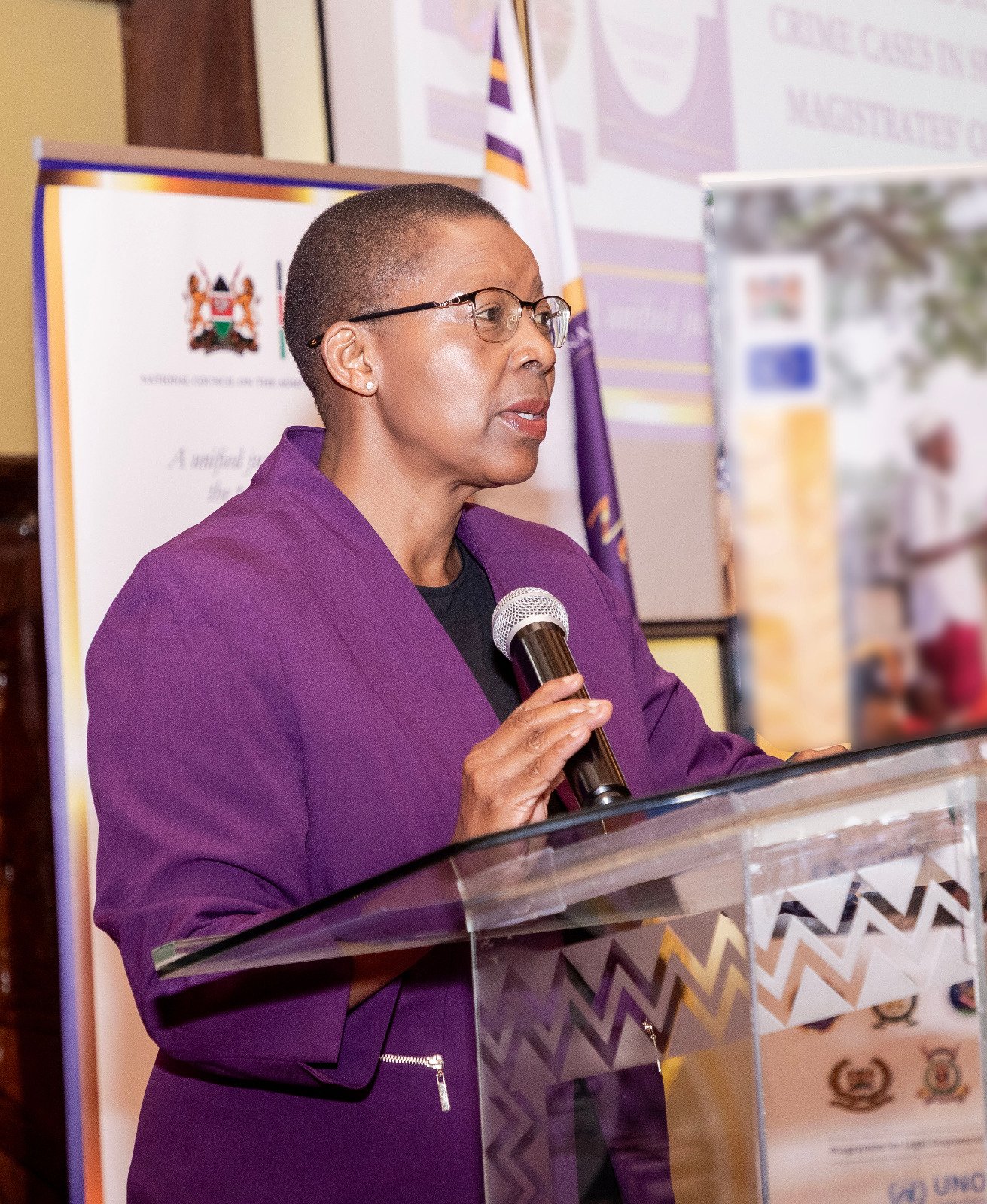
The National Council on the Administration of Justice (NCAJ) Wednesday launched the Guidelines for the Expedited Trial of Corruption and Economic Crime Cases in Special Magistrates’ Courts at a ceremony held at Safari Park Hotel, Nairobi.
The new Guidelines are aimed at strengthening the justice system’s capacity to ensure the timely adjudication of corruption and economic crime cases. By enhancing coordination among criminal justice sector agencies, the Guidelines seek to promote efficient service delivery and uphold accountability in the fight against corruption.

Speaking during the launch, the Chief Executive Officer of the Ethics and Anti-Corruption Commission (EACC), Mr. Abdi A. Mohamud, who also serves as Chairperson of the NCAJ Committee on Anti-Corruption, underscored the importance of the Guidelines in harmonizing procedures across institutions.
Mr. Mohamud said the Guidelines will foster greater consistency, predictability, and accountability in handling corruption and economic crimes by consolidating and standardizing practices and procedures among the diverse actors involved in the process.
He emphasized that EACC fully supports the objectives of the Guidelines and urged all stakeholders to actively contribute to their implementation.
The event was graced by the Attorney General of Kenya, Hon. Dorcas Oduor, who served as the guest of honor. In her keynote address, Hon. Oduor lauded the Guidelines as a critical step towards strengthening the criminal justice system.
- Top 20 most corrupt counties in Kenya
- EACC report reveals scale of corruption in Kenyan counties
- EACC alarmed by rising cases of budgeted corruption in counties
She noted that by establishing clear procedures for timely hearings and coordination among investigators, prosecutors, defence counsel, and the courts, the justice system is enhanced and public confidence in the handling of corruption and economic crime cases is boosted.
Hon. Oduor also highlighted the need for collaboration, stating that the fight against corruption cannot be won in isolation. She emphasized that the development of the Guidelines is a testament to the power of partnership and called for continued collaboration across institutions as primary duty bearers in the fight against corruption.
She further commended Mr. Abdi Mohamud for his leadership and guidance during the development of the Guidelines and applauded all NCAJ agencies for their continued commitment to implementing the broader NCAJ Guiding Framework.
The launch marks a significant milestone in Kenya’s ongoing efforts to combat corruption through institutional reform, inter-agency collaboration, and improved judicial processes.
– By Ouma Ojango
Email your news TIPS to Editor@nairobilawmonthly.com, and to advertise with us, call +254715061658 anytime of the day
