

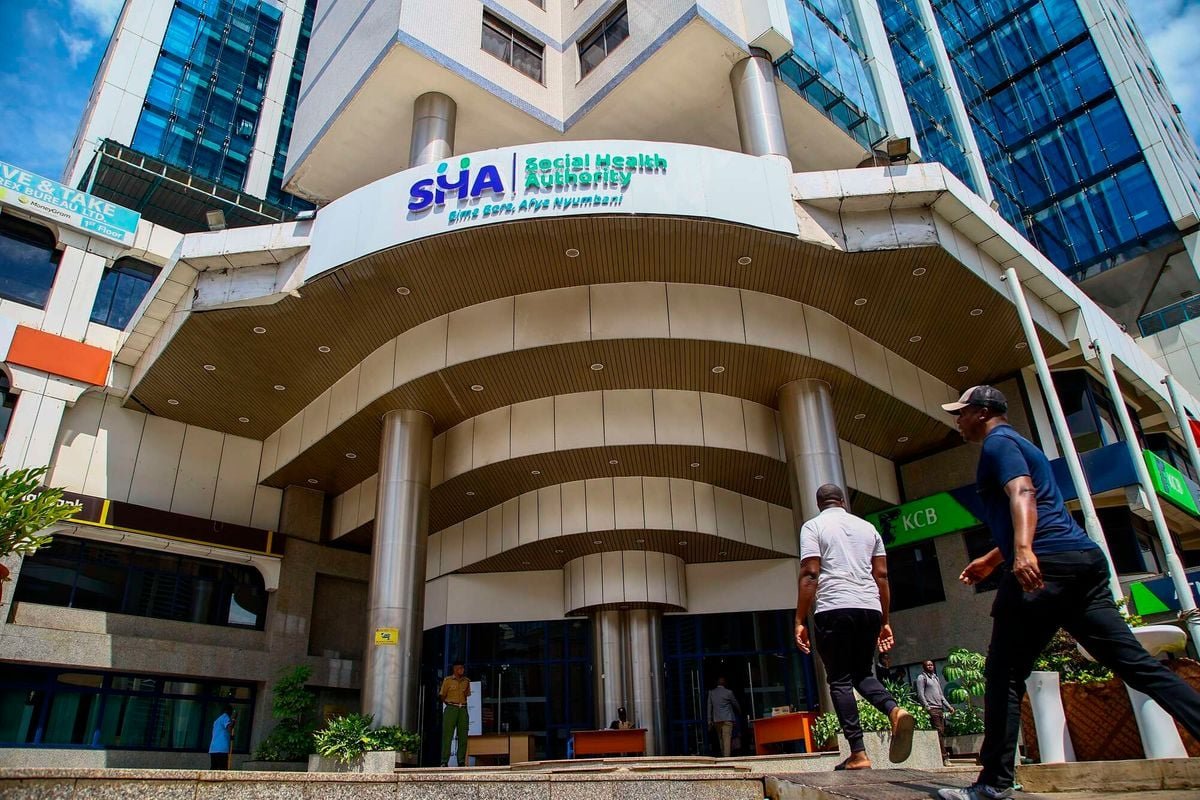
Private hospitals have issued a strong warning to the government over unpaid claims amounting to Sh10.6 billion under the Social Health Authority (SHA), declaring that they will stop offering services to teachers starting in December if the arrears are not cleared.
The warning has heightened concerns among educators who are set to migrate from their current medical insurance provider to the SHA scheme when the Minet contract ends later this year.

The dispute is being spearheaded by the Rural and Urban Private Hospitals Association of Kenya (RUPHA), which represents hundreds of private facilities across the country. According to RUPHA chairperson Dr Brian Lishenga, hospitals can no longer sustain the burden of treating patients without payment.
“We cannot continue to extend credit to the Social Health Authority while our facilities are running out of essential supplies. The government must pay what it owes,” he stated.
The demand focuses on claims worth Sh10.6 billion that SHA has rejected and left unsettled, despite hospitals arguing that the total pending amount exceeds KSh76 billion.
For private health providers, this debt has placed them in a precarious financial position, making it increasingly difficult to run facilities and retain staff. Dr Lishenga emphasised that teachers should not be moved to the SHA scheme until these obligations are met, warning that otherwise, “hospitals will have no choice but to serve them on a cash basis.”
The planned migration of teachers has stirred tension because it comes at a time when SHA is still struggling to manage accumulated claims from hospitals. Teachers and their families, who depend heavily on private hospitals for specialised care, risk losing access to these services if the stand-off continues.
Under RUPHA’s directive, starting in December, any teacher seeking medical attention in private facilities will either have to pay upfront or rely on overstretched public hospitals.
The conflict has also exposed friction between private providers and government officials. RUPHA has accused Health Cabinet Secretary Aden Duale of unfairly labelling hospitals as “thieves and cartels.” In response, Dr. Lishenga insisted that the association will not be intimidated into silence, saying, “We demand respect and fairness. Instead of painting us as corrupt, the government should honour its financial obligations.”
The SHA, which replaced the National Hospital Insurance Fund in 2024, has faced repeated criticism for delayed or rejected claims. While the government has promised a more streamlined universal health coverage scheme, hospitals argue that the situation has only worsened.
The looming scheduled deadline in December has therefore placed pressure on authorities to act quickly to avert disruption of services to teachers and other public servants.
For hospitals, the issue goes beyond numbers; it is about survival. Without payments, they warn that they cannot keep doors open, a crisis that would ripple down to patients who depend on timely medical services.
For teachers, the prospect of being forced to pay via cash or resort to public hospitals underscores the stakes of the stalemate.
As the countdown to December begins, all eyes remain on whether the government will release the funds or strike a settlement with private providers.
What is clear, however, is that unless a resolution is reached soon, the fight over unpaid claims could jeopardise healthcare access for thousands of Kenyan teachers and their families.
Email your news TIPS to Editor@nairobilawmonthly.com, and to advertise with us, call +254715061658 anytime of the day
