

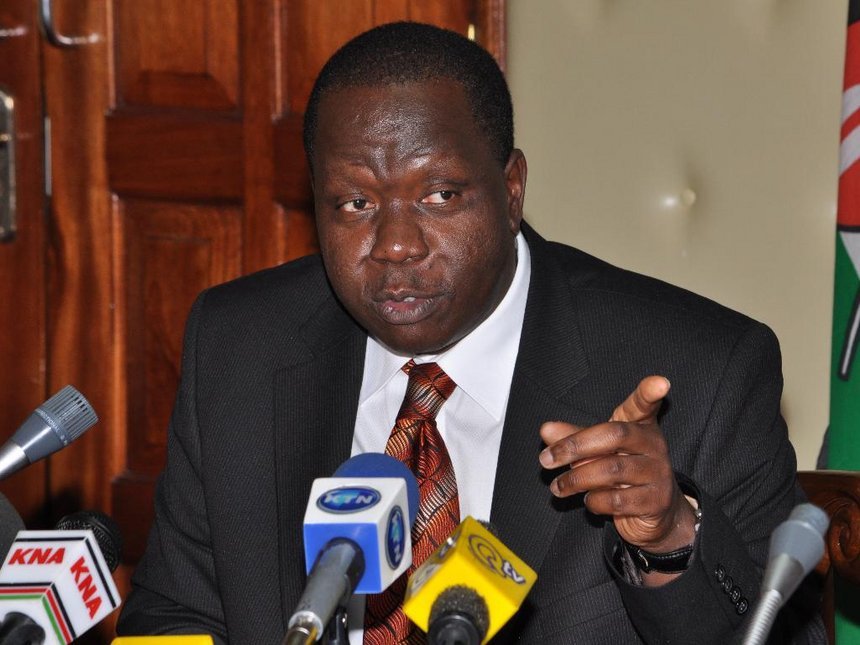
Former Interior Cabinet Secretary Dr. Fred Matiang’i has finally spoken out about some of the high-profile unresolved cases that occurred during his time in office.
These controversial cases include the discovery of bodies in River Yala and the murder of then-Independent Electoral and Boundaries Commission (IEBC) ICT Manager Chris Msando, a week before the 2017 General Election.

Matiang’i has distanced himself from claims of a cover-up in the 2021 River Yala killings, stating that investigations were still underway when he left office and that the case should now be pursued through a public inquiry.
“We asked the Police IG, and it was agreed that the DCI should spend some time there. When they came back, we demanded an inquest. However, the DCI required families to positively identify the bodies to establish the circumstances of their deaths. By the time we left office, the file was still open, as investigations were ongoing. I didn’t leave with the file — it was a police matter,” said Matiang’i.
Speaking to Citizen TV on Tuesday, Matiang’i said blaming him for the deaths was politically motivated and likened it to holding him responsible for unrelated crimes such as road accidents or robberies.
When asked about the unresolved 2017 murder of former IEBC ICT Manager Chris Msando, the former CS said he only knew what was publicly available and renewed his call for a public inquest.
“The incident was reported, and I know it the way you know it. We asked several questions about the matter,” he said. “There were several cases, such as Jacob Juma [and] Sergeant Kipyegon Kenei, which were also under investigation. The DCI kept saying the file is still open. Even if you’re the President, there’s nothing you can do — you go by what the Police IG tells you.”
Matiang’i noted that, as a former CS, he cannot be held responsible for every accident or crime that happened during his tenure.
“Our detractors always choose when it is convenient for them to say these things. The police service is independent when they are doing certain things,” he noted.
“The best way to deal with this matter is to have a public inquest so that all of us who were in the security sector at the time can go and face the inquest. I am ready to go before a magistrate or judge who is going to preside over the inquest and say what I know about it.”
Email your news TIPS to Editor@nairobilawmonthly.com, and to advertise with us, call +254715061658 anytime of the day
