
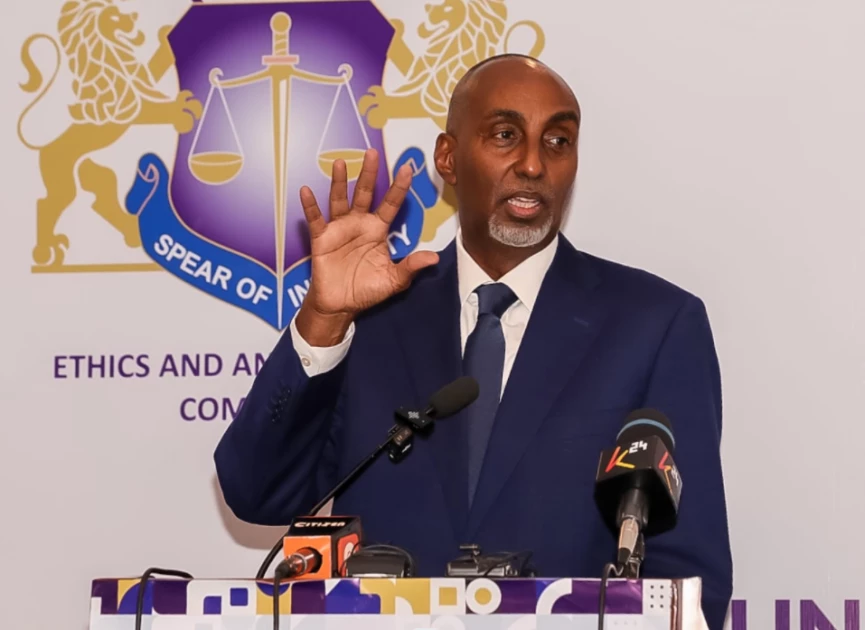
Kenya’s anti-corruption fight is taking a new turn, with the Ethics and Anti-Corruption Commission (EACC) putting greater emphasis on prevention and calling on the media to play a central role.
Speaking in Nairobi on Tuesday, EACC Chief Executive Officer Abdi A. Mohamud said the Commission is moving beyond a heavy reliance on arrests and prosecutions.

“While arrests capture headlines, prevention saves futures,” he said during a workshop bringing together journalists and anti-graft officials.
Mohamud said the agency is scaling up efforts to stop corruption before it happens through risk assessments, public education and tighter controls in public institutions. In the past year, the Commission supported 13 institutions to carry out corruption risk reviews and advised more than 200 public entities on anti-bribery measures.
The EACC also reported recovering assets worth Sh7.4 billion and preventing potential losses of Sh10.7 billion.
He urged journalists to take a more active role, describing the media as “fearless allies” whose reporting can expose risks early and deter wrongdoing.
Court of Appeal Judge Patrick Kiage, the keynote speaker, warned that corruption continues to quietly undermine the country’s future.
“To me, it is a slow poison,” he said, noting its impact on public services, investment and economic growth.
Kiage challenged the press to go beyond routine reporting and act as the public conscience by sustaining scrutiny and pushing for accountability.
“When the media speaks truth to power, it does not wage war against the State; it redeems it,” he said.
The workshop underscored a growing push to tackle corruption before it takes root, with both the Commission and the Judiciary pointing to the media as a key partner in that effort.
Email your news TIPS to Editor@nairobilawmonthly.com, and to advertise with us, call +254715061658 anytime of the day
