

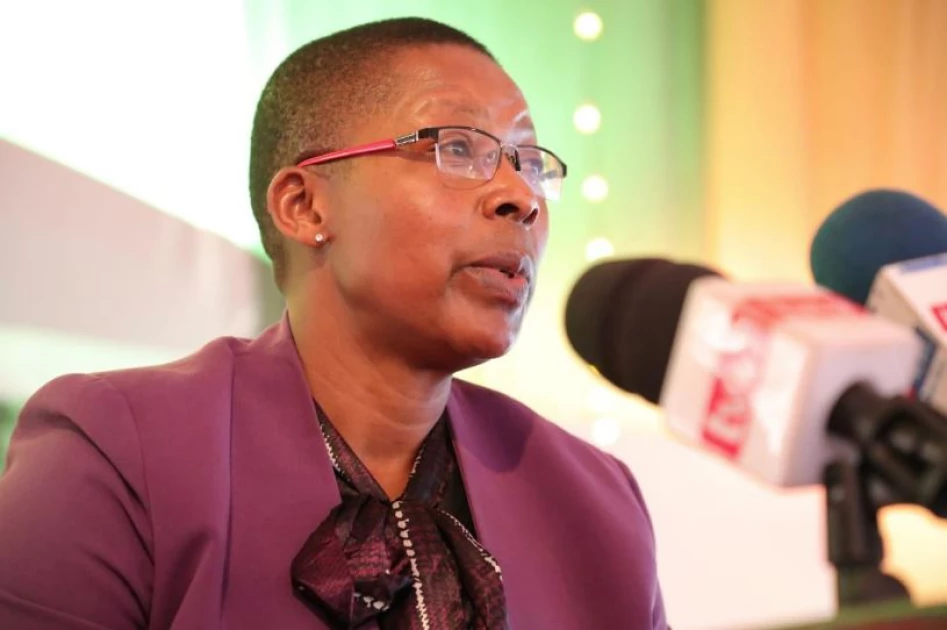
Africa’s first anti-corruption studies and research centre was launched in Nairobi, Kenya, on Wednesday, marking a major milestone in the continent’s efforts to strengthen research, policy development and regional cooperation in the fight against corruption.
The launch was done during the 8th annual General Assembly of the African Association of Anti-Corruption Authorities, currently underway in the Kenyan capital, as leaders called for a shift beyond stronger laws and enforcement toward research, innovation and knowledge sharing in the fight against corruption.
The meeting brought together 43 African countries heads of anti-corruption agencies from across the continent.
The new center is expected to serve as a continental hub for research, policy development, capacity building and knowledge sharing to support evidence-based anti-corruption efforts.
Kenya’s Attorney-General Dorcas Oduor said the center will provide a platform for advanced research, innovation and policy development while helping countries identify emerging corruption risks and assess the effectiveness of anti-corruption interventions.
“Corruption today is no longer a localized or isolated phenomenon. It has become increasingly sophisticated, technologically enabled and transnational in character,” Oduor said.
She stressed that sustainable progress against corruption depends on combining strong enforcement with preventive measures and public engagement.
“The most successful anti-corruption strategies are those that integrate prevention, enforcement, public education, asset recovery, transparency and citizen participation into a coherent and mutually reinforcing framework,” she said.
She noted that Africa loses hundreds of billions of dollars annually through corruption, illicit financial flows, tax evasion, procurement fraud and related financial leakages, warning that illicit proceeds are increasingly concealed through complex financial structures, shell companies, beneficial ownership arrangements, digital assets and emerging technologies.
Ethics and Anti-Corruption Commission of Kenya, which is hosting the assembly, said the meeting comes at a time when Africa’s anti-corruption efforts require stronger collaboration among institutions.
“A continental research centre can help generate data, identify best practices, and provide insights into what works in different contexts. More importantly, it can serve as a platform for knowledge sharing among African countries seeking practical solutions to common challenges,” the commission said.
EACC Chairperson David Oginde urged African anti-corruption agencies to embrace technological innovation to address increasingly complex forms of corruption.
“Digital graft is becoming more difficult to tackle with the systems we have used in the past. We must innovate and use artificial intelligence, blockchain and other advanced technologies to curb the movement of illicit resources in real time,” he said.
– China Daily
Email your news TIPS to Editor@nairobilawmonthly.com, and to advertise with us, call +254715061658 anytime of the day
