

The Kenya National Union of Teachers (KNUT) has asked the Teachers Service Commission (TSC) to clarify its recent warning against teachers’ misuse of social media, arguing that its current wording could unfairly target teachers who simply maintain an active online presence.
TSC issued the warning in a circular dated August 13, cautioning teachers against cyberbullying, harassment and other forms of unprofessional conduct online, and stating that offenders would face disciplinary action.

The commission said it had observed a rise in cases involving teachers engaging in cyberbullying, intimidation, harassment and the sharing of offensive content, and reminded teachers that as public officers, they are required to uphold the dignity and integrity of the profession both in person and on digital platforms.
Many teachers, particularly younger ones, have built a significant presence on platforms such as Facebook, YouTube, TikTok, Instagram, X and WhatsApp, which they use for teaching, sharing professional experiences and entertainment.
KNUT argues the circular’s blanket wording risks being read as punishing that presence itself, rather than targeting genuine misconduct, and wants TSC to make clear that any disciplinary action should be aimed specifically at misuse of these platforms, not at social media use in general.
KNUT secretary-general Collins Oyuu and first vice national chairperson Malel Langat said the directive should be rewritten to draw a clear line between legitimate use and misuse.
Speaking in Bomet during an event to issue assistive mobility devices to teachers and students living with disabilities, Oyuu said: “The wording used by TSC on social media should be specific to the misuse of various platforms by teachers in this country.”
He added that teachers, as trained professionals, have a duty to model responsible online behaviour for young people. “Let us use social media in the right way. Let us not use it to abuse others, including fellow teachers on various social platforms.”
Oyuu also cautioned that online content leaves a lasting digital footprint, urging teachers to think carefully about what they post or say, both on duty and in their personal lives. “KNUT officials, union members and teachers in general should remember that they are professionals and opinion shapers in society, hence the need to use social media responsibly,” he said.
- Teachers face new five-year licence renewal under TSC reforms
- TSC announces 30,000 teachers promotion plan amid reforms
Langat described the regulation of teachers’ online conduct as a grey area, noting that digital platforms are increasingly part of how lessons are delivered, particularly as more schools receive tablets and computers through government programmes. He warned against the directive being used to silence teachers.
“The TSC should not appear to gag teachers through the circular that was issued on August 13 in what has the potential to roll back the gains made through the Constitution,” he said, adding that any guidelines needed careful thought to avoid infringing on teachers’ rights, whether acting in a professional or personal capacity.
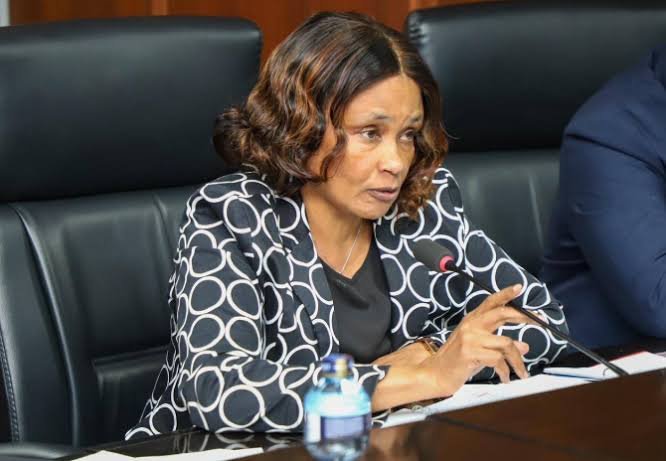
TSC acting Chief Executive Officer Evaleen Mitei said the same standards of professionalism and integrity teachers are expected to uphold in the classroom apply equally to their conduct online.
“The commission formally reminds all teachers that the standards of professional conduct and ethics required of members of the teaching profession are equally applicable in the digital and social media sphere,” she said.
She further pointed teachers to Clauses 10,12 10, 12 and 24 of the Code of Conduct and Ethics for Teachers, 2015, which govern professional conduct, and said both teachers and parents share responsibility for protecting children’s rights, both inside and outside school.
TSC has said breaches could be prosecuted under the Teachers Service Commission Act, the Code of Regulations for Teachers and other relevant law, and has cited the Computer Misuse and Cybercrimes Act, 2018, which criminalises cyber harassment and cyberstalking, as well as the Data Protection Act, 2019, which governs how personal data belonging to learners and colleagues may be shared online.
The commission has stressed that while Article 33 of the Constitution protects freedom of expression, that protection does not extend to hate speech, incitement to violence or ethnic profiling.
The circular appears to have been prompted, at least in part, by a recent viral incident involving a teacher known online as Teacher Cillah, who drew widespread attention after publicly expressing admiration for George Ruto, son of President William Ruto, prompting a light-hearted exchange between the two online that quickly spread across social media.
Despite TSC’s explanations, the directive has unsettled some teachers who view it as an attempt to silence them. A number have used social media in the past to raise concerns over their working conditions and to demand fairer treatment from their employer, and fear the new rules could be used to discourage that kind of advocacy.
Email your news TIPS to Editor@nairobilawmonthly.com, and to advertise with us, call +254715061658 anytime of the day
