

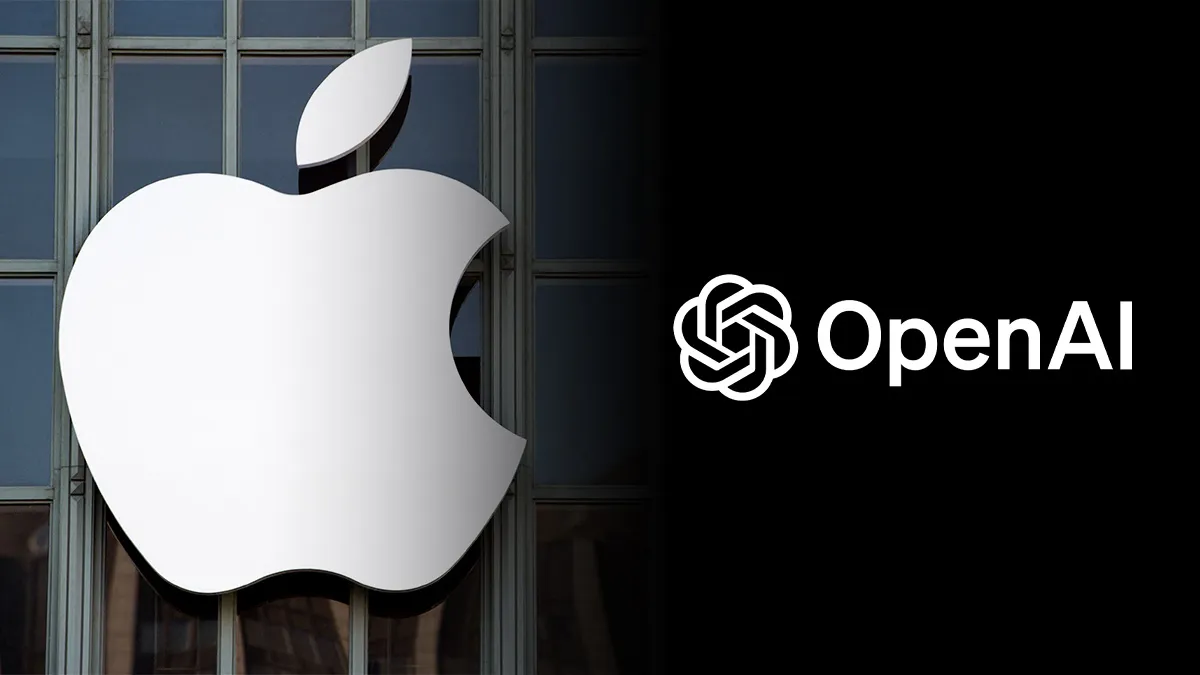
Apple has sued OpenAI, alleging that the artificial intelligence company misappropriated trade secrets by hiring former Apple employees who allegedly brought confidential information related to unreleased products and hardware projects.
The lawsuit, filed on Friday, marks a significant deterioration in relations between the two companies, which were previously business partners but have increasingly become competitors as the race to dominate artificial intelligence intensifies.
In its court filing, Apple claims that OpenAI recruited senior engineers and executives who had access to highly sensitive company information.
Apple alleges that some of those former employees disclosed confidential product designs, supplier details and internal engineering processes that could have benefited OpenAI as it expands into AI-powered hardware.
The iPhone maker said it had uncovered evidence suggesting that former employees now working at OpenAI improperly used confidential information linked to technologies and products that have not yet been released.
“Recently, significant evidence has emerged suggesting individuals employed by OpenAI wrongfully took Apple’s secret and confidential information regarding our unreleased technologies, processes and products,” an Apple spokesperson said in a statement.
OpenAI has denied the allegations, saying it does not rely on competitors’ confidential information to develop its products.
Company spokesperson Drew Pusateri said OpenAI was reviewing Apple’s complaint but maintained that the company had “no interest in other companies’ trade secrets.”
“We remain focused on building innovative technology that empowers people everywhere,” he said.
The legal dispute follows a major shift in the relationship between the two companies.
In 2024, Apple announced plans to integrate ChatGPT into iPhones, iPads and Mac computers as part of a broader artificial intelligence partnership with OpenAI.
- High Court ruling sparks debate on AI use in Kenyan legal filings
- High Court warns against AI misuse in legal filings
- Judiciary moves to regulate AI in courts over AI-generated filings
The relationship later became more complicated after Apple selected Google’s Gemini AI model to support a major upgrade of its Siri voice assistant, signalling a change in its AI strategy.
Tensions increased further after OpenAI acquired io Products, a hardware startup founded by former Apple design chief Jony Ive, in a deal reportedly valued at $6.4 billion.
Apple has also named io Products in the lawsuit, arguing that the company’s hardware ambitions benefited from confidential information that should not have left Apple.
One of the individuals identified in the lawsuit is Tang Yew Tan, OpenAI’s chief hardware officer and a former Apple vice-president.
Apple alleges that Tan retained confidential supplier information after leaving the company and encouraged job candidates who were still employed by Apple to share sensitive information during recruitment interviews.
The lawsuit also names former Apple employee Chang Liu.
According to Apple, Liu retained an Apple-issued laptop after leaving the company and later exploited a security vulnerability to access Apple’s internal systems, where he allegedly downloaded confidential files related to hardware development.
Apple says protecting its intellectual property is essential to maintaining its innovation and competitive position.
The company is seeking financial compensation and a court order preventing OpenAI and the other defendants from using or retaining the disputed confidential information.
The allegations have not been proven in court, and OpenAI has denied any wrongdoing.
– By Regan Oluoch
Email your news TIPS to Editor@nairobilawmonthly.com, and to advertise with us, call +254715061658 anytime of the day
