

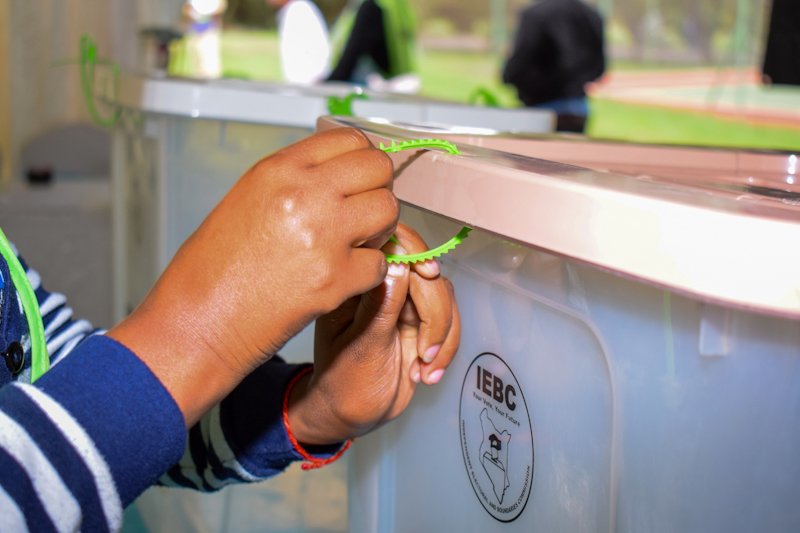
The Independent Electoral and Boundaries Commission (IEBC) has set the maximum amount a presidential candidate may spend during the 2027 General Election at Sh6.11 billion, higher than the Sh4.4 billion ceiling the commission had earlier floated in draft regulations.
The figure was published in a special Kenya Gazette notice dated Friday, August 7, 2026, alongside spending limits for county, parliamentary and county assembly races, as well as caps for political parties.
According to the IEBC, the limits were arrived at using a formula that weighs population at 70 per cent and geographical land area at 30 per cent, reflecting the cost of mounting a campaign across Kenya’s 47 counties.
The commission had earlier proposed a lower ceiling of roughly Sh4.4 billion for presidential candidates and Sh17.7 billion for political parties overall, inviting public feedback on the draft Election Campaign Financing Regulations before settling on the higher, final figure now in force.
The gazette notice draws its legal authority from Article 88(4)(i) of the Constitution and Sections 12, 18 and 19 of the Election Campaign Financing Act, 2013, and applies specifically to the General Election scheduled for August 10, 2027.
The rules require every presidential candidate to appoint an authorised person to receive campaign contributions and oversee campaign spending, though a candidate may act as their own authorised person if they notify the IEBC in writing.
Each candidate or their representative will also be required to open a dedicated campaign bank account with a licensed financial institution, with the aim of making campaign funds easier to trace and audit.
The IEBC has warned that any candidate or party found to have exceeded the prescribed spending limits without reporting the breach to the commission commits an offence under Section 18(7) of the Act.
Under Sections 23 and 24, anyone convicted of an offence for which no specific penalty is set out risks a fine of up to Sh2 million, a prison term of up to five years, or both.
The commission has said the limits are meant to level the playing field between candidates and parties by regulating how much can be raised and spent, and to bring greater transparency to campaign financing, which has historically operated with limited oversight in Kenya.
The draft regulations also proposed banning foreign government funding of campaigns and requiring all donations, including harambee contributions, to be properly documented.
Even with the new cap, past election cycles suggest actual campaign costs have often run high. Presidential candidates in the 2017 election are estimated to have spent close to $39 million (about Sh5 billion at the time), while gubernatorial candidates spent roughly $5 million each. By 2022, campaign spending had climbed high enough that the Central Bank of Kenya warned it risked stoking inflation.
Whether the new limits will be effectively enforced remains an open question. The IEBC’s ability to monitor campaign spending, investigate violations and act against those who exceed the limits will determine whether the Sh6.11 billion cap functions as a genuine check on campaign financing or simply as a figure on paper, particularly given that only candidates with substantial financial backing are likely to be able to sustain a nationwide campaign at anywhere near that scale.
Email your news TIPS to Editor@nairobilawmonthly.com, and to advertise with us, call +254715061658 anytime of the day
