

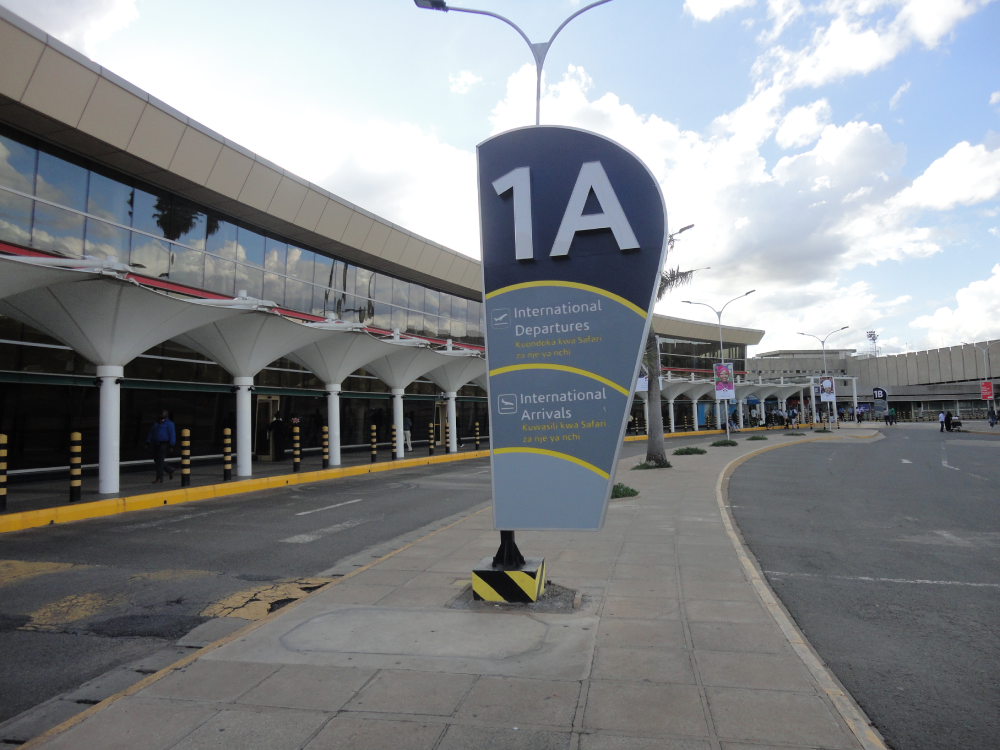
Flight operations at Jomo Kenyatta International Airport (JKIA) were heavily disrupted on Sunday, August 30, after aviation workers resumed strike action, leaving passengers facing hours-long delays and uncertainty over their travel plans.
The disruption began on Saturday night and intensified through Sunday morning, when staff linked to the Kenya Airports Authority (KAA) and the Kenya Civil Aviation Authority (KCAA) staged a go-slow affecting key airport functions.

Aircraft remained on the ground well past their scheduled departure times as ground handling and air traffic services slowed, with several flights due to leave from around 8am still held at the terminal by mid-morning, leaving passengers waiting for extended periods at boarding gates.
Reports also point to workers from KAA and KCAA staging protests in and around terminal areas, with some accounts describing access difficulties at both JKIA and the nearby Wilson Airport as the action continued through the day.
The Kenya Aviation Workers Union (KAWU) confirmed the strike in a formal statement on Saturday, August 29, with Secretary-General Moses Ndiema announcing that the action had taken effect that morning.
“We wish to inform the public and the users of our services rendered by our members that, effective this morning, our members went on strike, more specifically. This is Kenya’s Civil Aviation Authority and Kenya Airports Authority,” Ndiema said. He explained that the union had opted to lift the suspension of a strike notice originally issued on July 20.
According to Ndiema, the resumption follows the collapse of an agreement meant to have resolved the dispute. “We did sign a back-to-work formula but, unfortunately, KAA and KCAA failed to meet our demands. They have never committed to the negotiations and have failed to cooperate and show effort in resolving our grievances,” he said.
That earlier framework agreement, signed on July 27 between KAWU, KAA, KCAA, Kenya Airways and Jambojet, had brought the original strike notice to a halt and set out a process for negotiating the union’s grievances, which include alleged violations of collective bargaining agreements, salary concerns tied to Salaries and Remuneration Commission recommendations, prolonged contracts, limited job security and stalled career progression.
As part of that deal, all parties had also agreed to withdraw ongoing court cases linked to the dispute to create room for dialogue, with the Principal Secretary for Aviation and Aerospace Development committing to be available throughout the negotiations.
KAA acknowledged the disruption through a travel advisory, confirming that airports across the country were experiencing flight delays and that it was working with airlines and other aviation stakeholders to minimise the impact on travellers.
Passengers caught up in the disruption voiced frustration over both the delays and the lack of clear communication. One traveller, who had arrived at JKIA as early as 6am, described the situation as deeply frustrating and called on the government to settle the workers’ outstanding dues, arguing that if aviation staff were owed money, they should simply be paid to end the standoff.
Others urged both the government and the union to resolve the impasse quickly, noting that the disruption was especially difficult for those travelling for urgent business or other time-sensitive commitments.
This is the third round of significant labour unrest in Kenya’s aviation sector this year. An earlier strike in February, involving Air Traffic Control staff, delayed departures at JKIA by up to four hours and paralysed operations at Kisumu’s international airport for a full day before it was resolved through a return-to-work formula brokered by Transport Cabinet Secretary Davis Chirchir.
Email your news TIPS to Editor@nairobilawmonthly.com, and to advertise with us, call +254715061658 anytime of the day
