

President William Ruto’s deadline for foreign hawkers and small shop owners to close down took effect Monday, September 7, with the directive targeting foreign-owned small businesses set to be enforced.
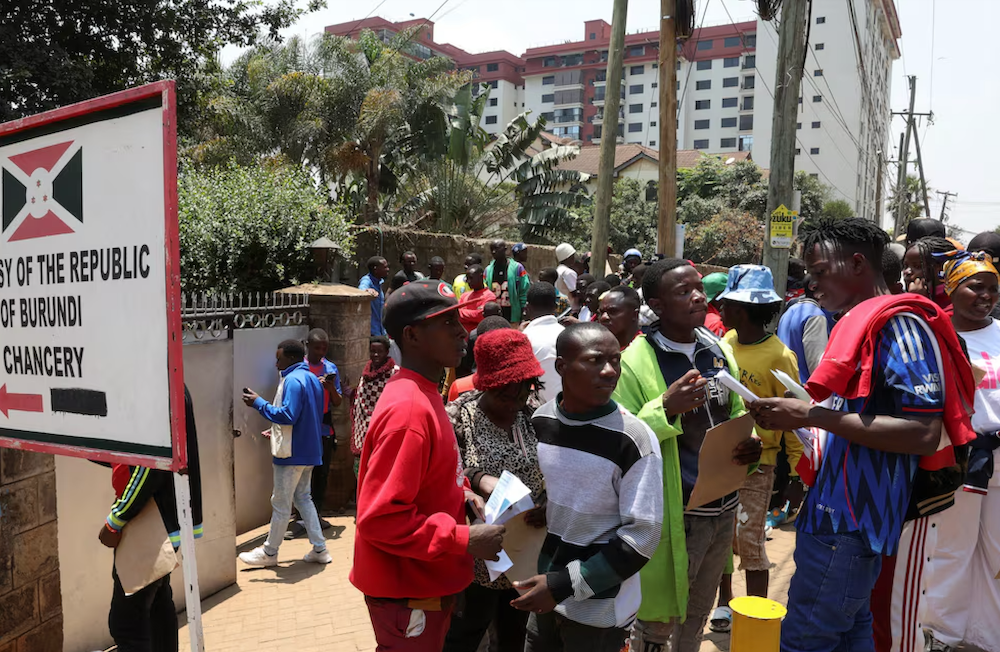
There were no visible signs of a crackdown in Nairobi on Monday, but some Burundians gathered outside the embassy said they had faced threats from neighbours following the president’s remarks.

Ruto announced the directive on September 2 during a meeting with Micro, Small and Medium Enterprise (MSME) traders at State House in Nairobi, saying that small-scale businesses should be reserved for Kenyans.
“It cannot be that a person comes from China or elsewhere to be a hawker or open a small shop,” he said.
The president said the policy was not a rejection of foreign investment, particularly investments that create jobs and expand production, but was aimed at foreigners competing with Kenyans in low-capital trade.
Kenya’s Foreign Affairs Ministry has clarified that the directive is not a blanket ban on foreign nationals working or doing business in the country. On Sunday, Foreign Affairs Permanent Secretary Korir Sing’oei said foreigners with the required documentation, including work permits and licences, could continue their activities.
“Burundian nationals and all East Africans – and Africans for that matter – are free to live in Kenya as long as they conduct their businesses or work according to the requirements of our laws,” he said.
The government has not yet published a detailed list of the businesses covered by the directive or set out all of the procedures for its enforcement. Existing immigration and licensing rules continue to apply to foreign nationals operating businesses in Kenya. Foreign traders with the appropriate permits, licences and other required documentation can continue to operate within the terms of those authorisations.
The directive comes as Parliament considers the Local Content Bill, 2025, which Ruto has called on Parliament to fast-track. The proposed legislation would set out business activities to be reserved for Kenyan citizens.
The president said administrative action should begin while the law is being considered, with the proposed bill providing a longer-term legal framework for reserving certain business activities for Kenyans.
The directive has prompted responses from foreign missions and governments representing nationals who operate businesses in Kenya.
Nigeria’s High Commission in Nairobi has begun registering its nationals and their businesses operating in the country, as Nigerian authorities seek to establish how many citizens and businesses could be affected by the directive.
At the same time, Burundi’s Ministry of Foreign Affairs, Regional Integration and Cooperation for Development said it was preparing to facilitate the return of nationals who wished to leave Kenya, including by sending buses to Kenya and providing free travel documents through the Burundian Embassy in Nairobi.
Burundi’s Foreign Affairs Minister Edouard Bizimana also warned that the situation could have consequences for Kenyans in Burundi. In a post on X, he said Kenyans in Burundi were living peacefully but warned that “if the hate speech against Burundi continues things will certainly change”.
There are roughly 16,000 Burundian refugees and asylum seekers in Kenya, according to the UN refugee agency. Many work in small-scale businesses in Nairobi, selling such used clothes and coffee.
Email your news TIPS to Editor@nairobilawmonthly.com, and to advertise with us, call +254715061658 anytime of the day
