

Kenya’s public debt debate is often reduced to a single number: how much the country owes. But the more important question may be what happens to the money after the government borrows it, where it goes, what it finances and whether Kenyans ultimately get value for it.
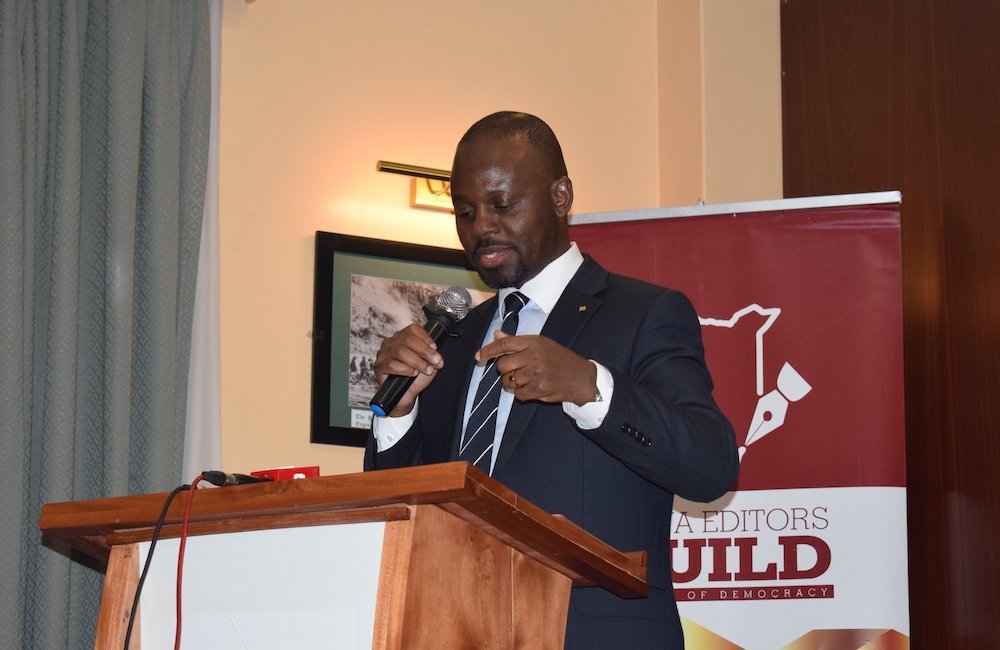
That was the central concern at an institutional dialogue convened by the Kenya Editors Guild (KEG) and the International Republican Institute (IRI) on Tuesday, as editors, oversight officials and economic experts pushed for greater scrutiny of public borrowing and complex financing arrangements.

Senator Moses Kajwang’, chairperson of the Senate County Public Accounts Committee, highlighted the scale of the question, saying about Sh4 trillion has been sent to counties since the advent of devolution.
“We need to ask if there is anything to show for it,” he said.
Kajwang’ said the Senate has pushed for action on audit findings, including recommendations for prosecution, but some cases have ended with dramatic arrests that led nowhere.
The result, he said, is a cycle in which wrongdoing may be exposed but accountability does not necessarily follow.
For economic analyst Kwame Owino, the risks extend beyond the size of the debt. Domestic borrowing accounts for about 55 per cent of Kenya’s debt portfolio and is more expensive to service than external debt, he said.
“The interest premium is bigger than the entire year’s revenue in some cases,” Owino said, warning that Kenya is taking on increasingly expensive debt and that some risks may only become apparent later.
Yet following the money remains difficult when the underlying information is not readily available.
Simon Nzioka of the Commission on Administrative Justice said a culture of secrecy persists in the public service and continues to affect access to information.
Alexander Riithi of Transparency International Kenya pointed to a High Court ruling that ordered the National Treasury to provide debt contracts, saying opacity about how much Kenya borrows and how it borrows leaves questions about debt acquisition and repayment.
The challenge also falls on the media.
Kajwang’ urged journalists to go beyond reproducing the technical language of audit reports and “break down the maths” for citizens, connecting public finance to its human consequences.
That means following Kenya’s borrowed money beyond the headline figure, from the loan agreement, through the allocation, the project and the audit report and, ultimately, to the public benefit.
Email your news TIPS to Editor@nairobilawmonthly.com, and to advertise with us, call +254715061658 anytime of the day
