

The government and Tata Chemicals have agreed to set up a joint technical committee to resolve the compliance issues that led to the suspension of the company’s mining operations in Magadi, easing a standoff that had drawn in President William Ruto himself.
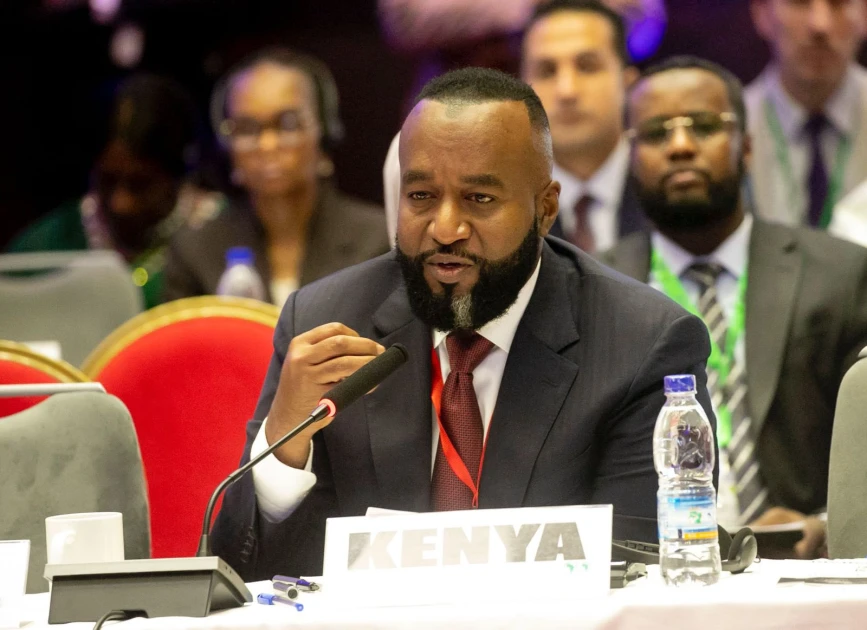
Mining Cabinet Secretary Hassan Joho announced the agreement on Tuesday, September 8, after hosting Tata Chemicals executives at his office to discuss the concerns his ministry had raised.

The Ministry of Mining, Blue Economy and Maritime Affairs had suspended the company’s mining and export activities on July 28 under the Mining Act, citing gaps in mineral beneficiation, royalty reconciliation, community development agreements, local employment and environmental compliance.
“As Government, we remain committed to constructive engagement with investors while firmly upholding Kenya’s laws, regulations and the interests of its people,” Joho said.
The newly formed committee will be co-chaired by Principal Secretary for Mining Harry Kimtai, representing the ministry, and Tata Chemicals Magadi Chief Executive Swaminathan Nagarajan, representing the company.
According to a ministry statement, the team will carry out a detailed technical review of the outstanding matters and submit its findings to Joho’s office for further direction.
The committee has been tasked with addressing five key issues: mineral beneficiation and in-country value addition, outstanding community benefits and royalty obligations, unresolved land matters, the opening up of the area to multiple mineral extractors, and outstanding matters involving the Kajiado County Government.
Joho described the engagement with the company’s executives as fruitful and said the goal extends beyond simply resolving the current dispute, aiming instead to build a lasting framework for responsible mining, stronger community development and a more mutually beneficial partnership going forward.
The agreement marks a significant de-escalation of a dispute that had grown increasingly public and heated over the preceding six weeks.
The standoff intensified sharply on September 3, when Ruto, during a tour of Kajiado County, directed the company to leave the country altogether, arguing that communities around Lake Magadi had gained little from more than a century of mining despite the site hosting one of Africa’s most valuable mineral operations.
Days later, Ruto announced via his X account on September 5 that the Magadi soda ash mining contract would instead be advertised afresh through a competitive bidding process, a shift that would open the mineral-rich area to multiple companies rather than ending Tata Chemicals’ involvement outright.
“We have made the right decision to end the exploitative and extractive contract for Tata Chemicals in Magadi, Kajiado County,” Ruto said at the time.
“For nearly 100 years, Kenyans, especially the people of Kajiado, have not received their fair share of the benefits from the minerals extracted from their land.”
Commercial extraction of trona, the mineral processed into soda ash at Lake Magadi, began in 1911, making the operation more than a century old. Tata Chemicals took ownership in 2005 after acquiring British firm Brunner Mond, and the Magadi plant is regarded as Africa’s largest soda ash producer.
The plant supplies sodium carbonate used in glass manufacturing, detergents, water treatment and a range of other industrial applications, with most of its output historically exported through the Port of Mombasa.
Email your news TIPS to Editor@nairobilawmonthly.com, and to advertise with us, call +254715061658 anytime of the day
