

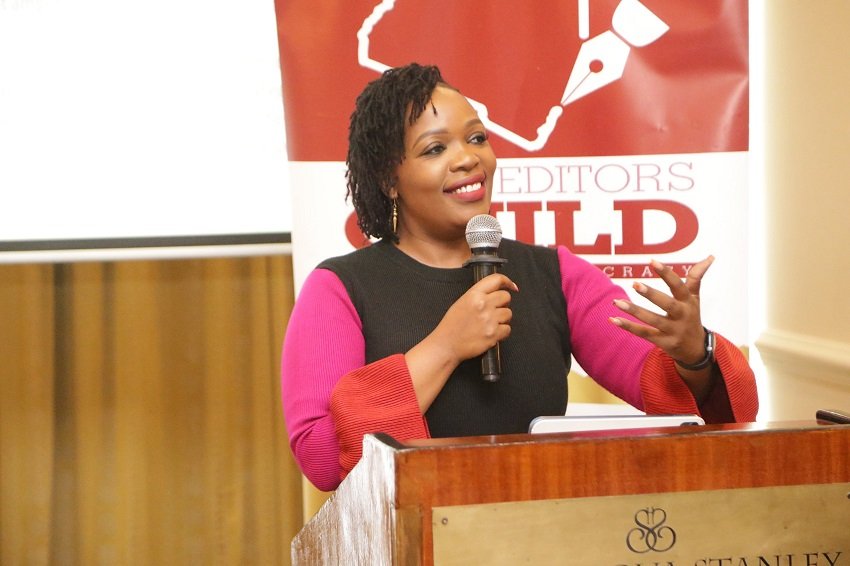
Kenya’s rising debt burden is intensifying calls for greater accountability in public spending, with the Kenya Editors Guild (KEG) warning that restricted access to financial records is hampering scrutiny of government borrowing and expenditure.
The issue took centre stage at an institutional dialogue in Nairobi on Thursday, 8 October 2026, convened in partnership with the International Republican Institute (IRI). Editors, public institutions and accountability experts examined access to debt records, confidentiality in bilateral financing and the safety of journalists covering public finance.

The country’s public debt reached Sh13.01 trillion at the end of June 2026, up 9.2 per cent from Sh11.81 trillion a year earlier, according to the National Treasury’s Fourth Quarter Economic and Budget Review Report. Domestic debt stood at Sh7.33 trillion, while external debt stood at Sh5.68 trillion.
The debt-to-GDP ratio stood at about 68.5 per cent, well above Parliament’s statutory anchor of 55 per cent. Debt service amounted to Sh1.72 trillion in 2024/25, equivalent to roughly 69 per cent of ordinary revenue and more than double the IMF’s 30 per cent threshold. The 2026/27 budget allocates Sh2.22 trillion to debt service, with interest alone accounting for about 40 per cent of ordinary revenue.
KEG president Zubeidah Kananu said citizens need more than published figures to understand the obligations the government is taking on in their name.
“Access to information cannot simply mean uploading a document somewhere and ticking a box. It must enable citizens to understand decisions being made on their behalf, participate meaningfully and ultimately hold institutions accountable for how public resources are managed,” she said.
On bilateral agreements, Ms Kananu referred to public debate surrounding the Dangote refinery agreement. “There must be a balance between legitimate confidentiality and the public’s right to know,” she said.
Deputy Auditor-General Edwin Kamar said performance audits, which assess whether public resources are used economically, efficiently and effectively, deserve wider coverage.
“We undertake performance audits to establish whether public resources are delivering the intended results. We need greater media coverage of these audits to ensure that the findings reach Parliament and receive the attention they deserve,” he said.
Busia Senator Okiya Omtatah urged journalists to go beyond budget allocations and borrowing figures by comparing actual revenue and expenditure with the approved budget. He also warned that development spending cannot excuse breaches of the law.
“The development agenda cannot trump the law. You cannot say you are doing development, therefore you do not have to comply with the law,” he said.
IRI regional resident director Francis Rogers said the question was not simply whether borrowing was right or wrong, but whether governments had clear and sustainable plans for repaying what they borrowed.
“The role of journalists is to ask the right questions to the right actors, get the answers, and engage further,” he said.
Email your news TIPS to Editor@nairobilawmonthly.com, and to advertise with us, call +254715061658 anytime of the day
