

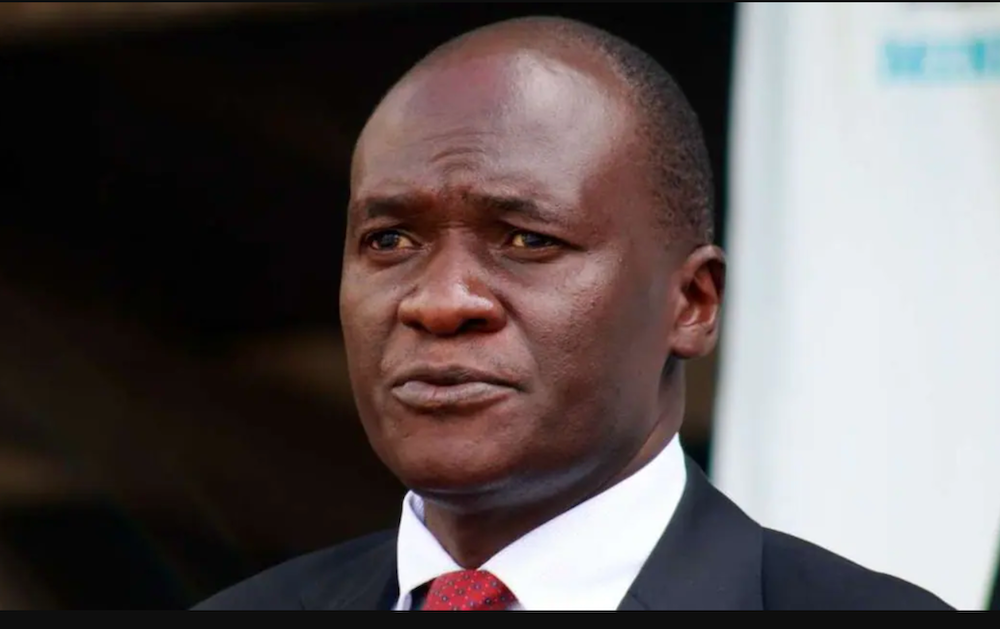
Kenya has confirmed an eighth case of Ebola caused by the Bundibugyo virus. The new patient is a 49-year-old hospital support attendant at Nairobi Hospital who is believed to have been exposed to the country’s first patient.
Director General for Health Dr Patrick Amoth said the man was one of 38 people tested on Sunday, October 18, 2026, and the only one to return a positive result.

“The cases have increased by one additional case,” Dr Amoth said in an interview on Citizen TV. “He is a 49-year-old man who is not a healthcare worker. He developed a fever, headache and muscle pain.” Kenya has now recorded eight confirmed cases, including one death.
The patient worked as a support attendant at the hospital, cleaning utensils and linen, and fell ill on Saturday, October 17. He has been isolated and tested, and doctors are preparing to begin treatment. Dr Amoth said the team was “preparing to be able to start compassionate treatment” for the new patient.
Compassionate use refers to access to an investigational treatment that has not yet received full regulatory approval, subject to applicable conditions.
The Director General said the patients already in care are improving. All seven earlier cases who are still alive have received monoclonal antibodies, a type of targeted therapy.
“All of them, I can confirm categorically, have received monoclonal antibody,” he said, adding that he was glad those who had received the treatment were responding very well.
The 65-year-old patient, a close relative of the first case, is now in stable condition. Dr Amoth also said a shipment of another medicine arrived from Rwanda on Sunday night and would be used in the response.
The new case comes a day after the Ministry of Health confirmed four new infections on October 17, involving three health workers who treated the first patient and a close male relative. All cases reported so far are linked to the first patient, who travelled from the Democratic Republic of Congo (DRC) and died at Nairobi Hospital on October 5, 2026.
The ministry has said there is no evidence of community transmission and that the risk to the general public remains low. By October 17, 128 of 130 identified contacts, or 98.5 per cent, had been traced and placed under quarantine for 21 days of monitoring. There are no restrictions on travel, trade or public gatherings.
Health authorities have reminded the public that Ebola is not spread through the air. It is transmitted through direct contact with the blood or body fluids of an infected or deceased person.
Anyone who develops symptoms such as fever, unusual tiredness, headache, muscle pain, vomiting, diarrhoea or unexplained bleeding is advised to seek care at the nearest health facility or call the Ministry of Health’s toll-free line, 719.
The regional outbreak continues to spread. The DRC, where the outbreak began in May, has recorded at least 9,400 cases and more than 4,500 deaths, making it the worst Ebola outbreak in the country’s history.
On Sunday, Congolese authorities said the virus had reached an eighth province, North Ubangi, while Ituri province remains the epicentre, with nearly three-quarters of confirmed cases.
North Kivu province is introducing a one-week ban on people entering from Ituri starting Monday, October 19. Neighbouring Uganda has recorded 20 confirmed cases and two deaths. There is still no approved vaccine or specific treatment for the Bundibugyo strain.
Email your news TIPS to Editor@nairobilawmonthly.com, and to advertise with us, call +254715061658 anytime of the day
