

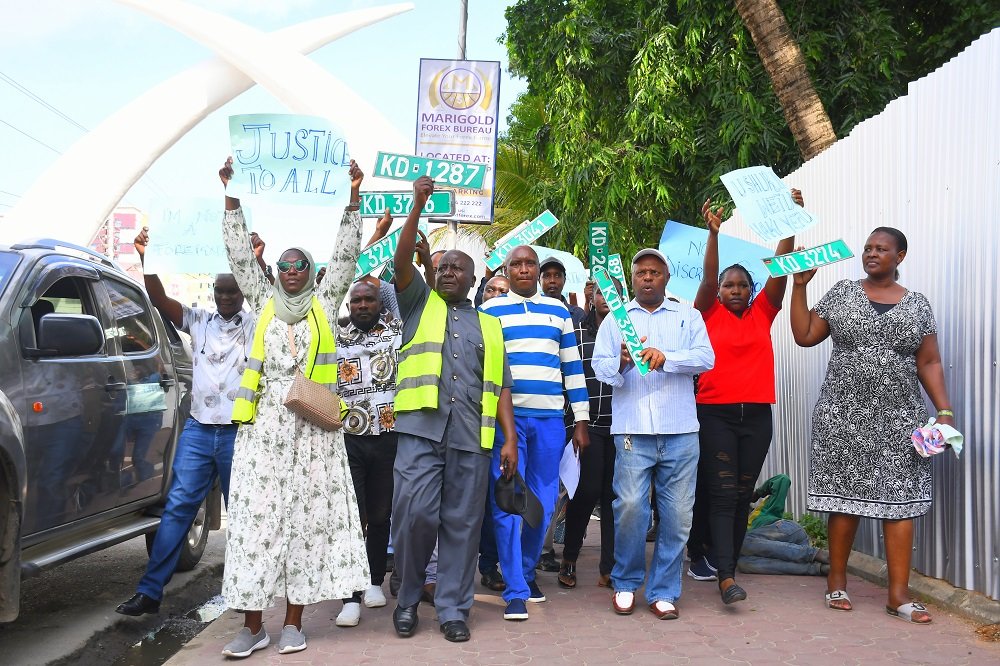
Car dealers in Mombasa are protesting recent changes to the National Transport and Safety Authority (NTSA) system and stricter enforcement of rules governing Dealer Registration (KD) number plates, saying the new measures have slowed down operations and disrupted the movement of imported vehicles.
Through the Independent Car Dealers Association, they are now seeking an urgent meeting with the regulator, hoping to ease what they describe as growing friction between policy and practice on the ground.

At the centre of the dispute is Section 24 of the Traffic Act, which restricts the use of dealer plates. The law bars KD plates from being used to carry passengers or goods for profit, limiting them instead to functions such as inspections, test drives, vehicle examinations, export within East Africa, and moving vehicles between yards, manufacturers and buyers.
But dealers say the problem is not the law itself — it is how it is now being enforced alongside changes introduced in April to the NTSA system.
In Mombasa, where most imported vehicles first land before being distributed across the country, dealers say the new requirements have unsettled a long-standing logistics chain linking the Port of Mombasa, container freight stations and showrooms.
One of the biggest complaints is the insistence that vehicles must be fully registered before leaving CFS facilities. Dealers say that step alone has slowed deliveries and increased costs, particularly where vehicles are already destined for named buyers.
Association chairman Mathew Katili says the sector is not resisting regulation, but argues the current approach is too rigid for how the business actually works.
He questioned how government expects to meet its Sh4.82 trillion revenue target for the 2026/27 financial year if key sectors are being weighed down by administrative hurdles.
Dealers also want a rethink of how customs entry numbers are used in the NTSA system. Katili said while they support the use of customs documentation to track movement, tying it directly to importers creates complications, since importers are not licensed dealers and cannot access the NTSA portal to generate movement permits.
He said this mismatch is creating delays, especially where vehicles have already been allocated to customers.
Others in the trade describe more immediate frustrations. Jacob Mutinda says the April system change introduced a requirement for customs import entries when applying for movement registration, a step he says has made it difficult to use KD plates even after paying all required fees.
“The system says the import entry is for an importer. When you have brought your car and been allocated a number, you can’t use the KD plate to move it to Nairobi or elsewhere,” he said.
Some dealers say the consequences have gone beyond delays. Issac Omollo says traffic police officers are still arresting drivers despite compliance with KD plate requirements, and is calling for the previous system to be restored.
Vice chairperson Joseph Kamiti says the pressure is now being felt beyond business accounts.
“It is affecting families as well as clients,” he said, pointing to a trade that moves thousands of vehicles and supports hundreds of jobs along the coast.
The association insists it is not opposed to enforcement, but is urging NTSA to sit down with stakeholders and design a system that keeps regulation intact without disrupting a sector that sits at the heart of Kenya’s vehicle import economy.
Email your news TIPS to Editor@nairobilawmonthly.com, and to advertise with us, call +254715061658 anytime of the day
