

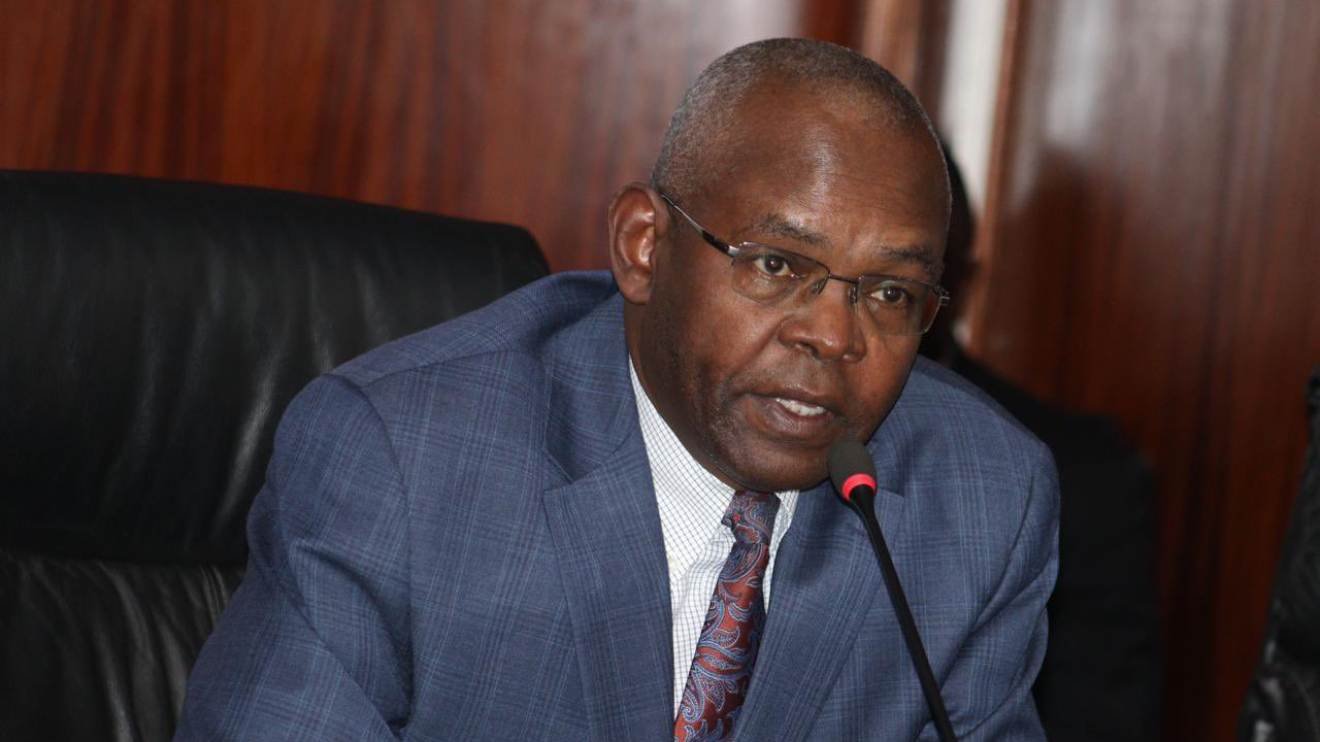
Central Bank of Kenya (CBK) Governor Kamau Thugge has backed a National Treasury proposal to move county governments’ funds into a single account at the Central Bank, saying the change would give the government a clearer view of public money and save taxpayers avoidable interest costs.
Under amendments to the Public Finance Management (PFM) Act now before Parliament, the Treasury Single Account system, already used by the national government, would be extended to all 47 counties. Counties would need written approval from the National Treasury before opening or closing bank accounts, effectively shifting from multiple commercial bank accounts to a centralised system at the CBK.

Appearing before the Senate Standing Committee on Finance and Budget on Tuesday, November 17, 2026, Thugge said the reform would help the government track public funds and avoid borrowing when cash was already available.
“We fully support the amendments by ensuring county deposits are held at the Central Bank rather than across multiple commercial banks, the National Treasury gains better visibility and avoids incurring unnecessary interest payments when idle resources are already available,” he said.
The Treasury Single Account brings government bank accounts together under one structure, allowing public resources to be pooled and used efficiently. Under the system, ministries, departments and agencies transact through linked accounts within a consolidated Treasury structure, instead of maintaining separate stand-alone accounts in different banks.
Thugge, who helped draft the original PFM Act, said the change would also address the growing number of bank accounts held by county governments. He recommended limiting counties to one commercial bank imprest account, with their main operational and project accounts held at the CBK.
He said opening an account would generally require one-off approval, while county treasuries would retain control of their day-to-day finances.
CBK officials told the committee that 99 per cent of county transactions are already digital, adding that all 47 counties can open accounts and make payments remotely, including counties such as Wajir that have no CBK branch.
Senators on the committee, however, raised concerns about the proposal’s implications for county autonomy and service delivery.
Kakamega Senator Boni Khalwale questioned whether requiring Treasury approval for county bank accounts would interfere with the constitutional independence of the two levels of government.
“Management of public funds is a critical role of any government,” he said. “If the national government will now be involved in authorising bank accounts at the county level, does it not affect the constitutional provision that the two governments are independent?”
Committee Vice-Chairperson Tabitha Mutinda questioned whether the additional approval requirement would slow county operations. She cited existing delays in the release of funds through the Office of the Controller of Budget and raised concerns about semi-autonomous county entities, including municipalities, water companies and public hospitals, that manage Facility Improvement Funds.
Committee Chairperson Ali Roba urged the CBK to explore technological solutions to strengthen accountability. The committee plans to invite the National Treasury to present its position on the proposed amendments.
The Council of Governors has opposed the proposal, arguing that it would undermine the autonomy of county governments.
“We strongly oppose the proposal. It is against the letter and spirit of the Constitution that recognises counties as distinct governments with autonomy and not an appendage of the national government,” Council Chairperson Muthomi Njuki said.
He warned that the proposal would introduce another layer of approvals on top of clearances required from the Controller of Budget, potentially slowing the absorption of development funds and increasing pending bills.
Wiper Patriotic Front leader Kalonzo Musyoka also criticised the proposal, saying it would undermine devolution.
Email your news TIPS to Editor@nairobilawmonthly.com, and to advertise with us, call +254715061658 anytime of the day
