
The National Cohesion and Integration Commission (NCIC) has vowed to press ahead with investigations into Health Cabinet Secretary Aden Duale and former Deputy President Rigathi Gachagua over alleged hate speech and ethnic incitement, despite both leaders publicly questioning or resisting the commission’s summons.
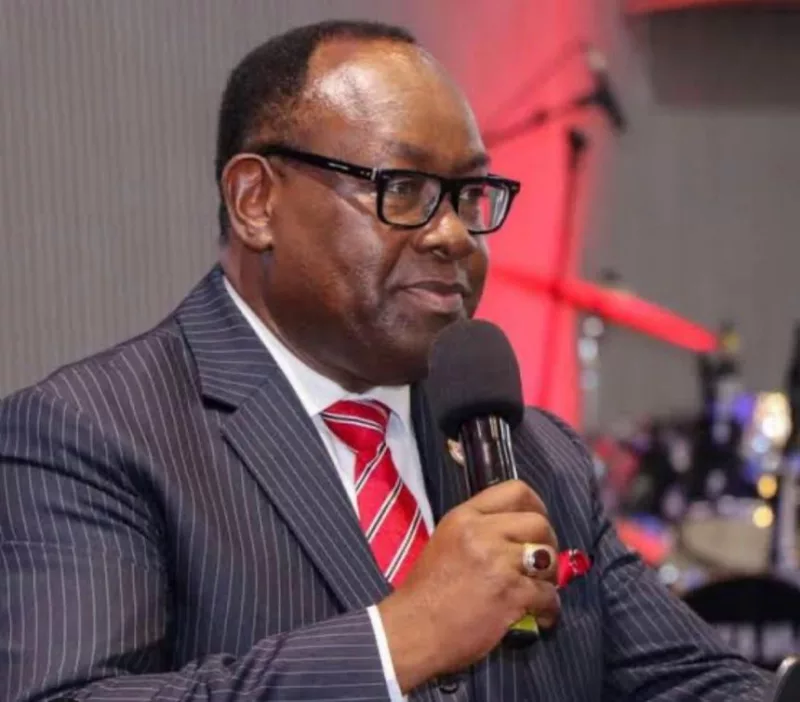
NCIC Chairperson Bishop Kepha Omae said the commission would carry out its constitutional mandate independently and would not allow politicians to dictate how investigations are conducted.

“There is time for politics and there is time for real work. We cannot allow such jokes. We will not entertain those games. We cannot allow someone to say they will only appear before the commission after another person has done so. We will do our job,” Mr Omae said.
His remarks followed Duale’s declaration that he would only honour the commission’s summons if Gachagua was summoned first over his own controversial statements.
“No Gachagua, no Duale,” the Health Cabinet Secretary said, insisting that the law should be applied equally to all leaders.
Mr Omae, however, maintained that those under investigation have no authority to determine the commission’s procedures.
“We issue summons and, whoever is asked to come, whether they show up or not, there is a procedure for dealing with that. We will take firm action without fear or favour,” he said.
He added that the commission would have no objection if both leaders appeared before it at the same time, provided due process was observed.
“If they come together, that will be fine. We have enough space in our offices to accommodate both of them. But we must follow due process so that each of them gets justice. We cannot go outside the law,” he said.
Gachagua, the leader of the Democracy for Citizens Party (DCP), has challenged the commission to formally summon him over remarks in which he said Kenyans would “kill the snake together with its eggs”, comments that attracted widespread criticism and calls for investigations.
The former Deputy President has defended the remarks as figurative language, saying they referred to defeating President William Ruto and his allies through the ballot rather than violence.
“If NCIC wants an explanation, let them write to me. We use proverbs, symbolism and figurative language for effective communication,” he said.
The commission is also investigating Public Service Cabinet Secretary Geoffrey Ruku, Busia Governor Paul Otuoma, Mandera Deputy Governor Ali Maalim Mohamud, Sirisia MP John Waluke, Tipape Naini Musa and Dr Dennis Adison Ouma over alleged hate speech and ethnic incitement.
NCIC emphasised that all those under investigation remain innocent until due process is completed.
The investigations come amid growing concern over rising political intolerance, ethnic mobilisation, cyber harassment and inflammatory rhetoric as political activity intensifies ahead of the 2027 General Election.
Mr Omae warned that political discourse was increasingly becoming divisive and could undermine national cohesion.
“Language is increasingly being used not simply to disagree with political opponents but to dehumanise them. Communities are being portrayed not as neighbours with different opinions but as enemies who must be defeated at all costs,” he said.
He noted that the commission derives its mandate from the National Cohesion and Integration Act, which empowers it to investigate hate speech, ethnic incitement and conduct that threatens national unity. During investigations, the commission has powers similar to those of a subordinate court, including summoning witnesses, compelling the production of documents and gathering evidence. Failure to comply with lawful summons may lead to further legal action, while completed investigation files are forwarded to the Director of Public Prosecutions for consideration.
Rejecting claims that political pressure could influence the commission’s work, Mr Omae said: “Political comments by politicians cannot change the way we are supposed to work. We have not been overwhelmed by the number of cases coming before us.”
The commission has also announced a partnership with the Inter-Religious Council of Kenya to strengthen early warning and response mechanisms against hate speech as the country heads towards the 2027 General Election.
Email your news TIPS to Editor@nairobilawmonthly.com, and to advertise with us, call +254715061658 anytime of the day
