
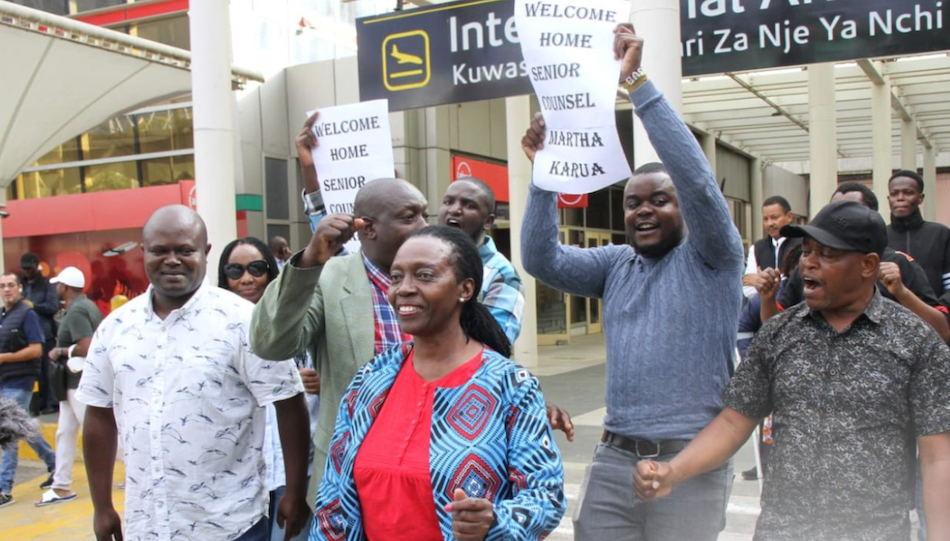
The detention and subsequent deportation of both People’s Liberation Party (PLP) leader Martha Karua and Chief Justice Emeritus Willy Mutunga by the Tanzanian government will surely go down as one of the lowest moments in the recent history of the East African Community.
The two, besides being senior counsel of repute, have built their credentials over time as human rights defenders. It is in these two capacities that they had travelled to Dar-es-Salaam as observers in the trial of opposition presidential candidate Tundu Lisu of Chadema party.
No matter how one looks at the deportations — and the trial of Lisu on what many believe are politically-instigated charges — Tanzania is coming out looking very untidy and President Samia Suluhu’s democratic credentials have all but been thrown out the window.
Tanzania is going into a presidential election in October and it does not augur well that the main opposition candidate is operating from prison while facing treason charges, which carry a mandatory death sentence.
And it would appear that Tanzania has borrowed a leaf from Uganda, where President Yoweri Museveni’s administration is holding opposition leader Kizza Besigye in a military prison on grounds that he was found in possession of a firearm and intending to overthrow the government using violent means.
Ironically, Besigye was irregularly arrested while in Nairobi where he had travelled to to attend the launch of Karua’s memoirs, Against the Tide, last November. Initially, Karua, an opposition politician in Kenya in her own right, had initially been blocked from representing Besigye in his court martial but was later granted a temporary licence, thus becoming Besigye’s lead counsel.
Even as the Dar-es-Salaam fiasco was unfolding, police in Kenya raided the home of impeached Deputy President Rigathi Gachagua over allegations of incitement to violence.
Gachagua has become the most vocal critic of President William Ruto’s administration and he has already indicated that he intends to vie for the presidency in 2027. Also in the cross-hairs of the government was Trans Nzoia governor George Natembeya, whose home was raided over a corruption allegations.
Natembeya, like Gachagua, has been a leading critic of the Ruto administration. It will be very difficult for the government to demonstrate that the police action against the two was not politically motivated.
Besides attracting unnecessary negative publicity to themselves, the governments of Kenya, Uganda and Tanzania are increasingly coming across as intolerant to divergent political views.
One would be forgiven for concluding that they are bristling at the possibility of facing tough opposition candidates when they hold their respective elections in Tanzania this year, Uganda next year and Kenya in 2027.
The twin debacles in Dar are particularly worrying because freedom of dissent is the very philosophical foundation on which the Tanzanian society is built, having been laid by that country’s founding president, Julius Nyerere.
He created a home away from home for Kenyan and Ugandan dissidents and offered unequivocal support to black South African liberation heroes and heroines, particularly members of the African National Congress (ANC).
For the government to therefore show its iron fist, first against Lisu and subsequently, against lawyers standing in solidarity with him, amounts to undermining and negating the ideals that Tanzania has historically stood for.
It would, however, appear that there is some choreography among the three heads of State to undermine democracy. The political repression targeting those who have fallen out with the administration of the day represents a regrettable regression that people of goodwill everywhere ought to raise a voice against.
Email your news TIPS to Editor@nairobilawmonthly.com, and to advertise with us, call +254715061658 anytime of the day
