
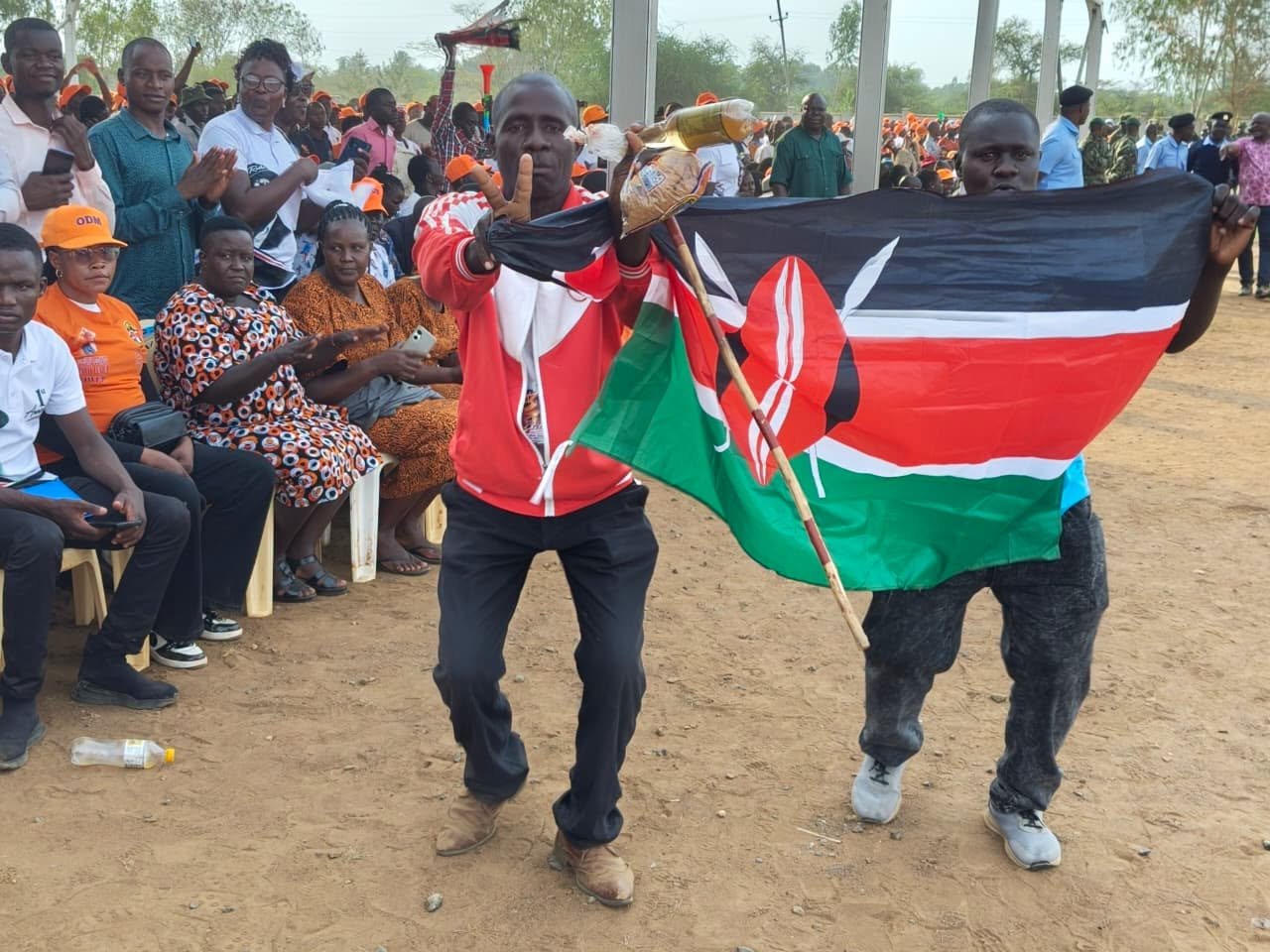
Thousands of Kenyans gathered at Migwena Cultural Grounds in Bondo, Siaya County, on Thursday, October 15, 2026, to mark the first anniversary of the death of former Prime Minister Raila Amolo Odinga.
The ceremony honoured a statesman whose struggle for democracy, constitutional reform and national unity shaped the country for more than five decades.
Mourners began arriving as early as 6am for the main memorial, which concluded a three-day national commemoration organised by the Raila Odinga Memorial Anniversary Committee. The day brought together the Odinga family, political leaders, community representatives and members of the public, with songs, dance and cultural performances by musicians from Kenya and beyond.
Organisers presented the anniversary as a celebration of Raila’s life rather than an occasion of grief. “This is not a week of mourning alone. It is a week of gratitude,” said committee chairman Prof Adams Oloo, who promised that the main event “will be a celebration worthy of the man.”
Reflecting on the bond between the late leader and his supporters, he added: “Raila Odinga loved the people, and the people loved him back.” The committee said the gathering at Migwena would be “a moment of collective remembrance” and urged everyone attending to observe the programme peacefully and respectfully.
The commemoration began on Tuesday, October 13, at Ofafa Memorial Hall in Kisumu, with an intergenerational conclave that brought together the Luo Council of Elders, young people, women and religious leaders.
The forum took up Raila’s long-standing call for dialogue between generations and reflected on peace, tolerance and public participation, while young people paid tribute through poetry and music and a blood donation drive was held.
On Wednesday evening, his widow, Mama Ida Odinga, led an international candle-lighting ceremony at Kang’o ka Jaramogi, the family home in Bondo. Supporters around the world lit candles at the same time, with the committee inviting tributes “in homes, in churches, in mosques, in diaspora gatherings from London to Lagos.”
Ahead of the anniversary, Mama Ida and Siaya Governor James Orengo appealed for peace and political tolerance, stressing that Raila’s legacy belongs to all Kenyans. “The main reason we are here is to commemorate Baba,” Mama Ida said, describing her late husband as a man who “belonged to many people, belonged to denominations, and belonged to many parties.”
Orengo extended an open invitation to the public. “Everybody is welcome on the 15th to be here and be part of the congregation,” he said, asking Kenyans to “help us remember our son in his true greatness and glory.” ODM Vice Chairperson and Rarieda MP Otiende Amollo urged politicians not to use the occasion to show off political strength.
Residents of Bondo said Raila’s ideals still speak to a new generation. “My message to the young people is to have courage to think differently,” said Jotham Ajiki. Another resident, Philip Pande, said: “The young people and the political ecosystem are expressing the need for inclusion.”
The anniversary comes a week after President William Ruto commissioned the Raila Amolo Odinga Mausoleum at Kang’o ka Jaramogi on October 7, 2026, formally dedicating it under the seal of the Republic.
The President described the former Prime Minister as “a once-in-a-generation leader whose vision transcended politics” and paid tribute to his resilience: “Through years of darkness, detention, sacrifice and adversity, he did not yield.”
He added: “May his memorial endure as a solemn testament to his life and service.” The ceremony, attended by Mama Ida, members of the Odinga family and church leaders, ended with the planting of a commemorative tree.
Raila died on October 15, 2025, at the age of 80, while receiving medical treatment in India, and was buried with full state honours at Kang’o ka Jaramogi beside his father, Kenya’s first Vice-President, Jaramogi Oginga Odinga. He spent years in detention without trial during the single-party era and went on to become one of the leading champions of multiparty democracy.
He was a central figure in the push that produced the 2010 Constitution and served as Prime Minister in the Grand Coalition Government formed under the 2008 power-sharing agreement that ended the post-election crisis. He contested the presidency five times, and his 2018 handshake with former President Uhuru Kenyatta was widely credited with calming political tensions.
In his final year, he led ODM into a broad-based cooperation arrangement with President Ruto’s government in the interest of national stability, and the party has since resolved to back the President’s re-election in 2027.
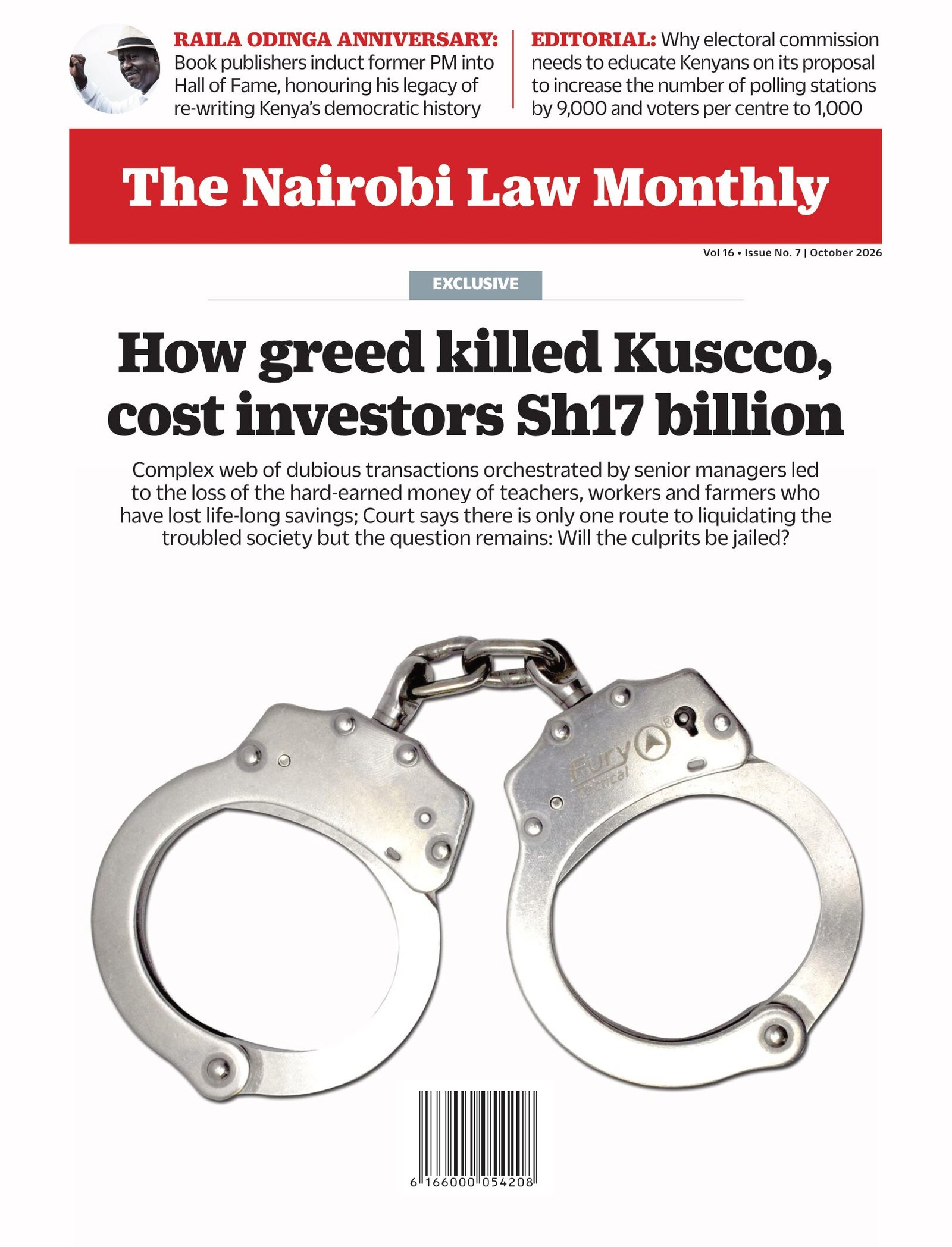
One year after his passing, the scenes in Bondo showed that the man fondly known as Baba, Agwambo and Jakom remains a unifying figure whose ideals of democracy, dialogue and inclusion continue to shape Kenya’s public life.
Email your news TIPS to Editor@nairobilawmonthly.com, and to advertise with us, call +254715061658 anytime of the day
