

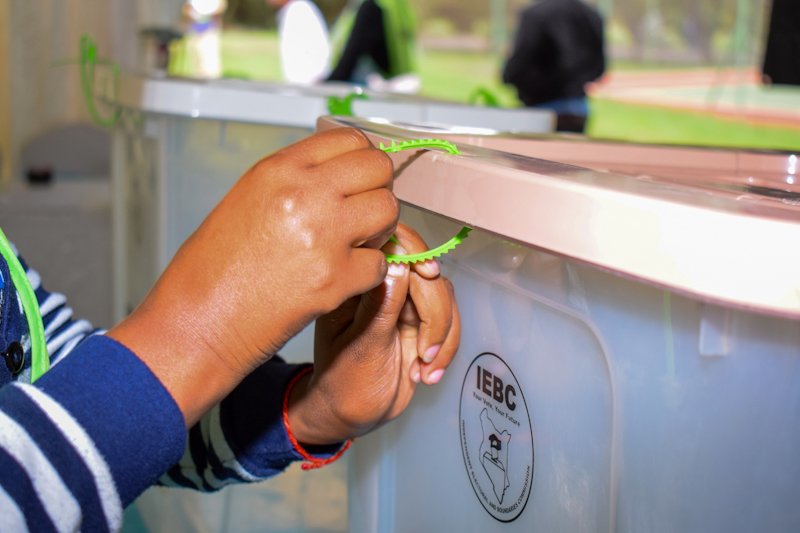
The upcoming Magarini Constituency by-election, scheduled for November 27, 2025, is not just another routine exercise in democratic renewal. It is, in fact, a stark reminder of the inefficiencies and systemic delays embedded within Kenya’s electoral dispute resolution framework.
Unlike other by-elections arising from deaths or appointment to government of sitting MPs, Magarini’s was occasioned by the nullification of a contested election result—nearly two years after the original vote.

In August 2022, Harrison Garama Kombe of ODM was declared the winner by a razor-thin margin of 21 votes over UDA’s Stanley Kenga. Alleging electoral malpractices including ballot stuffing and vote tampering, Kenga pursued legal redress.
The High Court, Court of Appeal, and ultimately the Supreme Court, found merit in the petition. In March 2024, Kombe’s election was nullified. Yet it took the Independent Electoral and Boundaries Commission (IEBC) a further 18 months to set a by-election date, leaving the people of Magarini effectively disenfranchised for that duration.
This is not merely a case of delayed justice—it is a failure of the electoral justice system.
The Constitution, under Article 140, sets out a strict 21-day window for filing, hearing, and determining presidential election petitions. These rigid timelines underscore the importance of legitimacy at the apex of government. However, the same urgency is glaringly absent in the adjudication of parliamentary and county-level electoral disputes.
The Elections Act—particularly Sections 75 and 85A—outlines a lengthy, multi-layered process: six months for determination in the court of first instance, a further 30 days to file an appeal, and another six months for determination in the appellate court.
Add to this the inevitable procedural delays—adjournments, interlocutory applications, and appeals on interlocutory rulings—and the result is a justice process that may stretch across election cycles.
Magarini’s case is illustrative: for nearly three years, electoral justice was either delayed or denied. For the first half of this period, an illegitimately elected MP exercised power, drew public funds, and participated in legislation. For the second half, the seat remained vacant, depriving constituents of representation and development funds such as the NG-CDF.
The current system undermines both the spirit and the letter of democratic accountability. If elections are the heartbeat of democracy, the integrity of their outcomes is its pulse. The protracted resolution of electoral disputes not only erodes public trust in institutions but also compromises governance and service delivery.
It is imperative that Kenya considers legislative or constitutional reforms to impose firmer and more reasonable timelines for parliamentary and county-level election petitions. A 45-day ceiling for the full lifecycle of an electoral petition—including all appeals—would significantly improve the speed and credibility of dispute resolution.
Further, the establishment of a specialized electoral court or tribunal, with exclusive jurisdiction and expedited procedures for electoral disputes, could ensure focused and timely adjudication. Limiting the stages of appeal and discouraging frivolous interlocutory applications would also reduce the tendency to abuse the system for political gain.
None of this can succeed without strengthening the IEBC. The commission must be recalibrated into a body that inspires public confidence—independent, professionally run, and unyielding to political interference. Only then can it effectively manage elections and enforce compliance with electoral laws and timelines.
Moreover, electoral malpractice must attract real consequences. Perpetrators—be they candidates, officials, or parties—must be held accountable through criminal sanctions, disqualifications, or bans from contesting future elections.
The Magarini by-election should serve as a turning point. It is a glaring testament to how a flawed dispute resolution framework can disenfranchise voters, reward illegitimacy, and undermine democracy. Electoral justice must be timely, transparent, and trusted. Anything less is not just inefficient—it is unjust.
Email your news TIPS to Editor@nairobilawmonthly.com, and to advertise with us, call +254715061658 anytime of the day
