

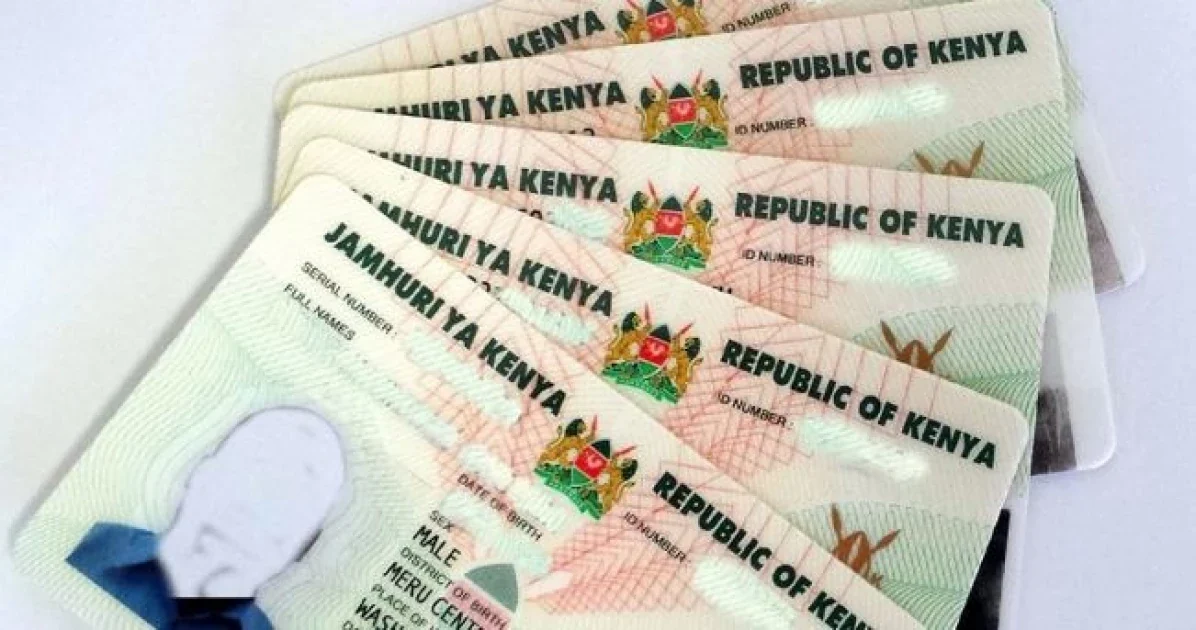
The government has stepped up efforts to ensure that more than 557,000 Kenyans whose national identity cards remain uncollected receive them in time to register as voters and participate in next year’s General Election.
Immigration and Citizen Services Principal Secretary Belio Kipsang told the National Assembly’s Committee on Administration and Internal Security on Thursday, November 5, 2026, that 557,930 identity cards were awaiting collection at registration offices and Huduma Centres across the country. Nearly 400,000 of the cards have remained uncollected for more than 10 years.

“We are making sure that before the voter registration exercise in January, every Kenyan who should have an ID has one and is able to participate in next year’s elections,” Kipsang said.
The PS said the backlog was being addressed through the support of local administrators, improved processing systems and new technology.
The government has also scrapped all fees for national identity cards, including the Sh300 previously charged for new cards and Sh1,000 for replacements.
“We have removed all payments, including the Sh300 that used to be charged for new IDs and Sh1,000 for replacements, so that it becomes easy for every Kenyan to acquire these documents and prepare to play their civic duty when the time comes next year for the elections,” he said.
Chiefs, assistant chiefs and other National Government Administration Officers will be provided with lists of uncollected cards in their respective areas to help trace their owners.
The department is also considering allowing registration officers to release identity cards to parents, guardians and other authorised representatives, subject to proper verification.
Applicants will receive SMS notifications through the e-Citizen platform once their cards are ready for collection. The department has also introduced live-capture equipment to prevent identity cards from being handed over to the wrong people.
Kipsang said the department now has the capacity to print up to 20,000 identity cards daily.
“Any ID application that reaches us should be processed and delivered within seven to 10 days,” he said.
He added that 11,000 identity cards had been processed for Busia County in the previous 30 days, while another 17,000 for Kericho County were being processed and would be delivered within seven to 10 days.
However, MPs on the committee, chaired by Narok West MP Gabriel Tongoyo, raised concerns over persistent delays in some areas.
Teso North MP Oku Kaunya said identity cards were taking between two and three months to reach registration stations in Amagoro, despite the introduction of modern systems intended to speed up the process.
“In Amagoro, we have more than 5,000 that have taken over two to three months without arriving. The PS needs to explain what is happening and what is being done to fast-track the process,” Kaunya said.
Tongoyo directed the PS to investigate the delays reported in different regions.
In response, Kipsang said staffing levels would be reviewed to address imbalances between regions. He added that civil and national registration offices were being integrated to enable residents to access both services under one roof.
Email your news TIPS to Editor@nairobilawmonthly.com, and to advertise with us, call +254715061658 anytime of the day
