

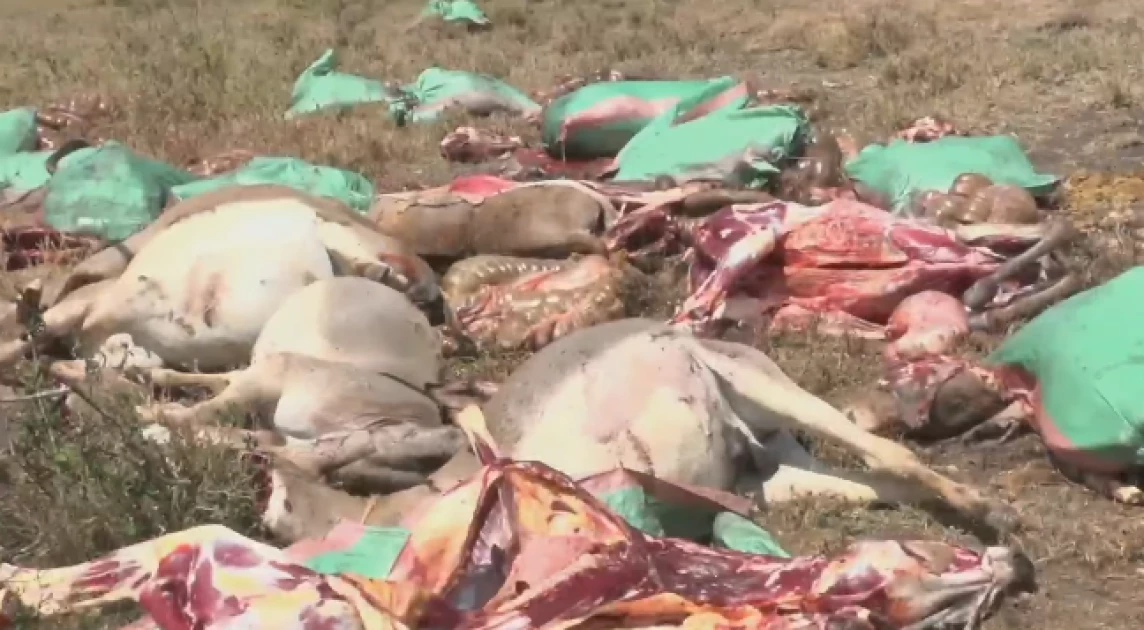
Police in Kajiado County have launched an intensive manhunt for more than 20 suspects who fled after residents intercepted them while slaughtering 34 donkeys in a chilling incident that has exposed the growing illegal donkey meat trade and raised serious public health and security concerns.
The suspects were discovered in the early hours of the morning in the Kichakani area of Ereteti, Kajiado West Sub-county, where they had set up an illegal slaughter operation along a seasonal river. According to police and local authorities, the group was in the process of skinning and cutting up the animals for meat believed to be destined for black-market outlets in Nairobi when villagers raised the alarm, forcing them to flee.

By the time police arrived at the scene, the suspects had escaped on foot, abandoning two vehicles and a motorcycle that were allegedly meant to transport the meat. A search of the area revealed a horrifying scene, with donkey carcasses strewn along the riverbank—some already skinned and packed into sacks, while others lay freshly slaughtered.
Kajiado West police commander Maureen Kuto said preliminary investigations indicate that part of the meat may have already been transported to markets in Nairobi, including Dagoretti, before the suspects were interrupted.
“We suspect part of the meat may have already been transported to markets like Dagoretti in Nairobi. We are following crucial leads to track down the suspects and dismantle the network behind this illegal trade,” she said.
Area Chief Edward Mopel described the operation as highly organized and warned that illegal slaughter of donkeys has been ongoing in the area for some time. “The carcasses are usually buried to mask the smell. This has been happening for some time, and it is worrying because it poses health risks and threatens the livelihoods of local communities,” Mopel said.
Residents said they became suspicious after noticing unusual night movements and vehicles accessing the isolated area. Their swift action in alerting authorities prevented what could have been an even larger illegal operation. Local leaders have since praised the community for their vigilance, saying it demonstrates the importance of public participation in combating crime.
The incident has once again brought to the fore the issue of illegal donkey slaughter, which continues to thrive despite a nationwide ban on donkey slaughterhouses imposed in 2020. Donkeys play a vital role in pastoral and rural communities, providing affordable transport for water, farm produce, and household goods. Their loss has far-reaching economic and social consequences.
Animal welfare groups condemned the act, saying the illegal trade is rapidly decimating donkey populations and pushing vulnerable households deeper into poverty. They warned that if the trend continues unchecked, communities that rely heavily on donkeys for survival will suffer devastating long-term effects.
Public health officials also expressed concern over the safety of consumers, noting that meat from illegally slaughtered animals is not inspected and could expose people to serious diseases. Kajiado County Health Officer Jeremiah Lalaito cautioned members of the public against purchasing cheap meat from unverified sources. “This kind of meat is not subjected to any form of inspection. It poses a serious health risk, and we urge the public to be extremely careful about where they buy their meat,” he said.
Police have since launched a coordinated operation to trace the suspects and recover any meat that may have already entered the market. The abandoned vehicles and motorcycle have been impounded as exhibits, and forensic investigations are underway to identify those behind the illegal slaughter.
Authorities believe the incident is part of a wider criminal syndicate that supplies donkey meat to urban markets, taking advantage of high demand and limited surveillance in remote areas. Security agencies have vowed to intensify patrols and intelligence-led operations to dismantle the network.
The Kajiado incident highlights the urgent need for stronger law enforcement, public awareness, and cooperation between security agencies, local leaders, and animal welfare groups. As investigations continue, residents hope the crackdown will end illegal slaughter and protect livelihoods, animal welfare, and public health.
– By Mark Simitia
Email your news TIPS to Editor@nairobilawmonthly.com, and to advertise with us, call +254715061658 anytime of the day
