

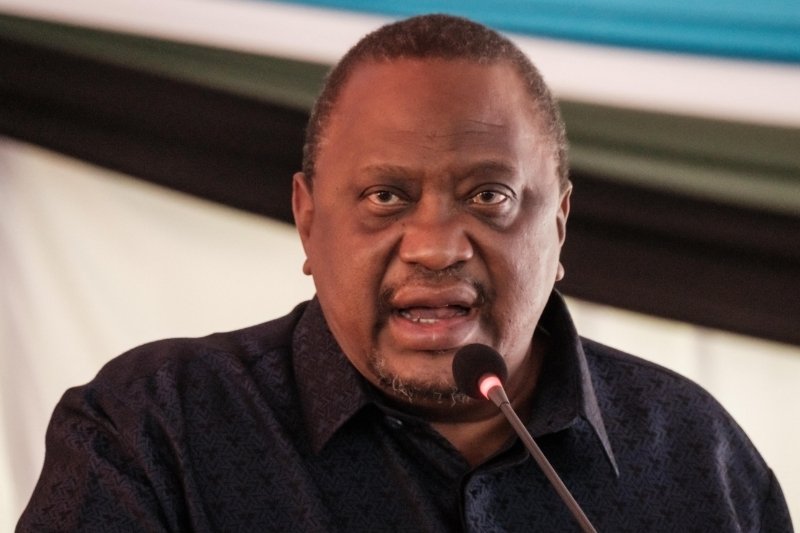
Former President Uhuru Kenyatta has stepped down as chairperson of the Azimio La Umoja One Kenya Coalition Council, now operating as The Ukombozi Alliance (TUA), setting the stage for changes to the coalition’s leadership as it seeks to broaden its membership ahead of the 2027 General Election.
Mr Kenyatta’s resignation, contained in a letter dated October 5, followed the formal handover of the Jubilee Party leadership. He said the decision was not an end to his association with the coalition, but part of efforts to renew democratic institutions.
Attention has now turned to who will take over the council chairmanship, with Democracy for Citizens Party (DCP) leader Rigathi Gachagua and Siaya Governor James Orengo among the names discussed by coalition officials. Consultations on the position are ongoing.
“Consultations are ongoing about who takes up the role. We have largely agreed that it should be taken by either Mr Gachagua or Governor Orengo,” a top official who attended the meeting said.
Mr Orengo is reported to have indicated his willingness to take up the position, while Mr Gachagua has emerged as a potential choice as the coalition seeks to bring additional political formations into its fold.
The leadership question comes as TUA works to attract parties that have so far remained outside the coalition. DCP and Nairobi Senator Edwin Sifuna’s Linda Mwananchi have previously resisted joining, with a key point of contention being the provision in the coalition agreement that makes the party leader the automatic presidential candidate.
Mr Kenyatta had earlier overseen changes to the coalition’s membership, including the admission of Jubilee Party leader Fred Matiang’i, Party of National Unity (PNU) leader Peter Munya and Devolution Empowerment Party (DEP) leader Lenny Kivuti to the council.
The council is the coalition’s main decision-making organ, while Wiper Patriotic Front leader Kalonzo Musyoka remains the party leader. Mr Musyoka has stressed that the two positions are separate and that Mr Kenyatta’s resignation did not create a leadership vacuum.
“The chair of the council was the coalition’s council-level position, one of counsel, convening and guidance, and it is the office President Kenyatta has now relinquished. The party leader is the political and executive head of the party.”
- Uhuru–Gachagua reunion sparks 2027 alliance speculation
- High Court clears ex-presidents for political comeback
The coalition is also preparing to complete the requirements necessary for its formal launch under the new name. Its leaders have indicated that they favour a model similar to the National Rainbow Coalition (Narc) arrangement that brought together different parties behind Mwai Kibaki in the 2002 election.
Under the proposed model, individual parties would retain their identities while participating in a common coalition and supporting a shared presidential candidate. Mr Kenyatta has assured the coalition’s partners that membership of the alliance would not require parties to surrender their individual identities. “In a coalition, political parties are like tributaries joining a great river.
The tributaries do not lose their unique identity when they merge; rather, they combine their waters to form a current strong enough to shape the landscape,” he said. “My role in this leadership has been to help guide that confluence, to ensure our waters ran clear, and to protect the riverbed from the erosion of internal division.”
The restructuring marks another phase in the evolution of the coalition that brought together several parties ahead of the 2022 General Election. Its immediate challenge is to build a structure that can accommodate additional partners while settling questions around leadership and the eventual presidential ticket.
Political analyst Prof David Monda said the success of Mr Kenyatta’s efforts would depend on whether other opposition parties agree to join the new arrangement and accept its eventual leadership structure.
“At a bare minimum, it is Uhuru’s effort to bring some type of unified structure around Kenya’s fractured opposition. It is becoming clear that Kenyans know who they will vote against. What is not clear is whom they will vote for,” he said.
He added that the rebranding raises Mr Musyoka’s profile while putting pressure on other political players to decide whether to participate in the new coalition structure.
Email your news TIPS to Editor@nairobilawmonthly.com, and to advertise with us, call +254715061658 anytime of the day
