
 By Gabriel Gervais
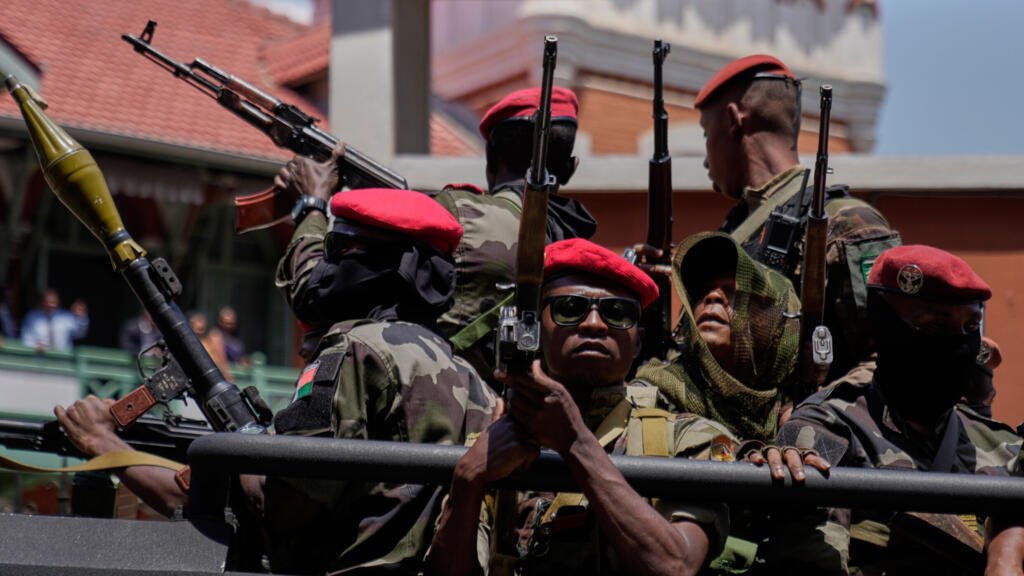
Since the coup of October 2025, Madagascar has become a test case for the African Union. Immediate suspension from continental bodies, diplomatic pressure and the requirement of a credible electoral timetable show that zero tolerance for unconstitutional changes of government is being applied with consistency.
In Addis Ababa, at the 39th summit, the Chairperson of the AU Commission reaffirmed that no leniency would be granted to military seizures of power. On 15 October 2025, Madagascar was formally suspended from all activities of the organisation. Any normalisation is contingent upon a return to constitutional order.
Structured continental pressure
Structured continental pressure
The AU is monitoring the transition through special envoys and dialogue with the authorities of the refoundation. The lifting of sanctions remains explicitly linked to the organisation of a presidential election within 24 months.
On the sidelines of the Addis Ababa summit, Malagasy diplomacy multiplied bilateral meetings to defend the legitimacy of the process. While SADC had required a detailed roadmap by the end of February 2026, the transitional authorities have now presented their document, ruling out any political agreement in favour of what they describe as an inclusive and participatory programme of refoundation. Its publication has nevertheless drawn criticism from parts of the political class and civil society, who question both its unilateral character and the credibility of its timetable.
SADC is adopting a more graduated approach. Rather than suspension, the regional organisation favours supporting the interim authorities while insisting on verifiable steps towards civilian rule. The objective remains a return to constitutional order through credible elections.
Internal militarisation, external constraints
Internal militarisation, external uncertainties
While the international community is demanding guarantees, the internal dynamic appears to be moving in another direction. Observers point to a gradual militarisation of key posts within the state apparatus and strategic economic sectors, fuelling doubts about the genuinely transitional character of the regime.
Madagascar’s withdrawal from the rotating presidency of SADC reinforced the impression of a priority refocusing on internal consolidation rather than regional integration.
External partners are adopting cautious watchfulness. The European Union continues to monitor the situation while maintaining humanitarian and development programmes, but access to international financing remains conditioned on political clarification.
The stakes are economic as much as diplomatic. A prolonged transition without a precise timetable increases the risk of investor wait-and-see attitudes and budgetary fragility. Antananarivo’s pivot towards Russia suggests that the transitional authorities are keeping their options open in the event of a hardening stance from traditional partners.
The risk of chronic instability
The African Union views the multiplication of coups as a systemic risk to continental stability. Madagascar is one link in a broader sequence, which explains the maintenance of a firm line.
For the Malagasy junta, the equation is narrow. Implementing the roadmap with verifiable electoral commitments could trigger normalisation. Conversely, prolonging ambiguity would transform a temporary crisis into structural instability, given that the junta of Colonel Michel Randrianirina has no legitimacy to remain in power indefinitely.
The first victims would be Malagasy citizens, faced with economic stagnation and weakened public services. For now, the international community is showing patience. But without concrete implementation of the roadmap, pressure could translate into tighter sanctions and reduced financial flows.
Madagascar has become a test for Africa’s zero-tolerance doctrine. The question is whether the transition will remain transitional.
The writer is an international economy specialist.
Email your news TIPS to Editor@nairobilawmonthly.com, and to advertise with us, call +254715061658 anytime of the day
