

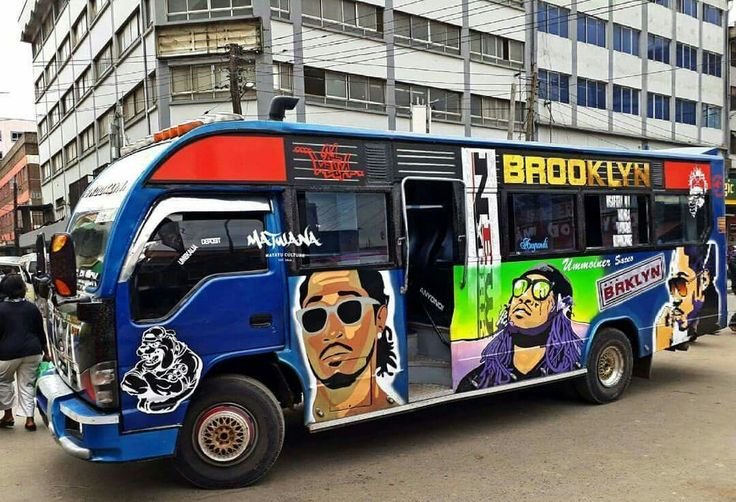
The High Court has upheld a directive by the National Transport and Safety Authority (NTSA) requiring public service vehicles (PSVs) to remove graffiti, decorative artwork and tinted windows, dealing a major blow to operators defending Kenya’s popular nganya culture
In a judgement delivered on Wednesday, Bahati Mwamuye dismissed a constitutional petition challenging the May 2025 enforcement notice, ruling that the directive is lawful, constitutional and grounded in public safety.
The petition, filed by Michael Makubo, argued that the regulations unfairly targeted matatu operators and threatened nganya culture- widely recognised form of urban expression characterised by elaborate graffiti, customised lighting, tinted windows and powerful sound systems.
Makubo further claimed the directive was discriminatory, violated constitutional rights and had been introduced without adequate public participation.
However, the court found no merit in the claims.
“The petitioner has failed to establish any violation of his constitutional rights of the class he purports to represent,” Justice Mwamuye stated.
The judge held that the contested regulations were lawfully enacted following public participation and parliamentary oversight, adding that any limitations imposed on artistic expression were justified under Article 24 of the Constitution of Kenya.
“The limitations they impose on constitutional rights are reasonable and justifiable under Article 24 for the compelling public interest of road safety,” the judge said.
The court heard that NTSA had directed operators to remove all unauthorised modifications, including graffiti and tinted windows, or face enforcement action. The authority defended the move as necessary to improve visibility, enhance passenger safety and standardise the public transport sector.
Justice Mwamuye agreed, describing the directive as an administrative clarification rather than a new legal requirement.
“The NTSA notice is a lawful administrative reminder of existing legal obligations and does not violate the right to fair administrative action or any legitimate expectation,” he ruled.
The court also dismissed claims that enforcement unfairly targeted matatu operators associated with nganya culture, noting that no evidence of discrimination had been demonstrated.
While acknowledging that the petition was brought in good faith as a public interest matter to protect artistic and cultural expression, the judge emphasised that such considerations could not override statutory obligations on road safety.
“Having found the impugned regulations are constitutional, the NTSA notice is lawful and enforcement actions are authorised by law, the court finds the petitioner not entitled to any of the relief sought,” he ruled.
Following the decision, the petitioner’s legal team sought a 14-day window to file an appeal and requested temporary preservation of the status quo. State lawyers opposed the application, arguing that the court was functus officio and could not revisit its final orders.
In a brief ruling, Justice Mwamuye granted limited interim relief, citing the need for an orderly transition and to safeguard the right to appeal.
“Having considered the matter and persuaded by the arguments by counsel for the petitioner for an orderly transition, regulatory compliance and or appeal, this court does reinstate for a limited period only the substance of orders one and two only,” the judge said.
The court clarified that the temporary orders do not affect its substantive findings upholding NTSA’s directive. The relief took immediate effect and will lapse on May 17, unless extended by a higher court.
Email your news TIPS to Editor@nairobilawmonthly.com, and to advertise with us, call +254715061658 anytime of the day
