

By Seth Shisabilu Shava
For all their swagger, intimidating appearance and reputation for extreme violence, the Africa Corps have not been noticeably effective in securing the regions they have been paid to secure.

Africa Corps’ predecessor, the infamous Wagner Group, from which it evolved in 2023, was under the personal control of its chief, Yevgeny Prigozhin. He ran it as a marauding militia that remained at arm’s length from the Kremlin but ultimately followed Putin’s orders from afar. Wagner Group primarily provided “security” and military training and, in return, received benefits such as access to minerals.
That was until Prigozhin fell foul of Putin. Soon after Prigozhin’s short-lived rebellion – the result of intense resentment that had built up against the Russian military establishment – the light aircraft in which he was travelling exploded in mid-air. This effectively decapitated the Wagner Group’s leadership and sent a blunt message to those considering rebelling against the Kremlin. As a result, the Africa Corps organisation now sits under the Russian Defence Ministry, which gives it a veneer of officialdom and helps restrain its rogue tendencies. This has allowed the organisation to continue its African operations unabated.
The Central African Republic has probably been the group’s longest-term “success”. The organisation has been entrenched within the government and a key provider of security for President Faustin-Archange Touadéra since 2018. However, rumours of rivalry and frustration between original Wagner Group members and Africa Corps are emerging.
According to the Robert Lansing Institute, the former wants to retain its relative independence from the Kremlin and its ties to Touadéra and his officers, whilst Africa Corps, which has recruited personnel more recently into its ranks, attempts to introduce some unpopular formality into its operations.
Elsewhere, things have not gone well for the Wagner Group or its successor either. A recent report by The Sentry and up-to-date data published by ACLED show that security and jihadist attacks in Mali, which Wagner entered in 2020, have actually increased. This suggests that far from being the saviours and guarantors of security they claimed to be, they have instead played a role in Mali’s worsening security environment.
Their ineffectiveness in Mali and the growing confidence of the terrorists there have led the Wagner Group to become even more violent and unpredictable, according to the same 2025 report by The Sentry. The result of this is a deepening crisis in which terrorists utilise these spates of violence to burnish their narratives, and civilians grow increasingly terrified and disenchanted. At the same time, Mali is gradually drifting further away from allies and closer to the emerging group of violent and authoritarian states in the Sahel.
In Burkina Faso, where a military junta took control in a 2022 coup, Wagner has fared in much the same way. After a triumphant entry into the country following the expulsion of French forces and a new security partnership, the group made little progress and has now stalled. Burkina Faso was already struggling to contain issues relating to jihadist terrorist attacks, yet the situation has only worsened since Wagner has been involved. According to the Global Terrorism Index, jihadist and other terrorist groups still control 60% or more of the country.
There is a yawning gap between what Traoré’s media machine (now run mostly by his brother) is telling its people and the bleak reality on the ground. This “say-do” gap is a symptom of both the ineffectiveness of Russian mercenary intervention on security and the effectiveness of Russian-sponsored disinformation campaigning.
Traoré’s faith in Wagner is fading, and the group’s narratives of dominance and strength appear increasingly flimsy. Within this deteriorating situation, Traoré has survived a handful of attempted coups, something that Wagner/Africa Corps were unable to prevent. Instead of Traoré robbing the rich to give to the poor, as Russian disinformation would have you believe, he has instead pulled members of his family closer. Many of them now fill senior positions in his administration, helping him concentrate power amongst a narrowing group of people as the pressure mounts around him.
Across North Africa, there is genuine anger and post-colonial frustration about the ongoing influence and the lack of success of the French and other powers in beating the various terrorist groups operating there. Russia has been very effective in framing itself as an overdue and alternative solution to Western forces – one that is not tainted by colonialism.
It is therefore not surprising that many states which lack resources and stability have turned towards Russia and its offers of military or mercenary support. But the growing evidence of these groups’ violence, cruelty and, ultimately, their failure to achieve their objectives demonstrates that whilst they are an alternative to Western forces, they are not a good one.
At this point, African nations should reflect on the options they do have to improve security: improving the African Union Forces, strengthening regional bodies like ECOWAS, and looking to other African countries with strong militaries that can provide security assistance. Finally, if African countries do want to partner with Russia, they should, but shouldn’t Russia commit to an official military force, bound by the laws of the host country, instead of a Wagner 2.0 with limited accountability?
Given Russia’s invasion of Ukraine and its recent humbling exit from Syria, this may be beyond the bounds of reality.
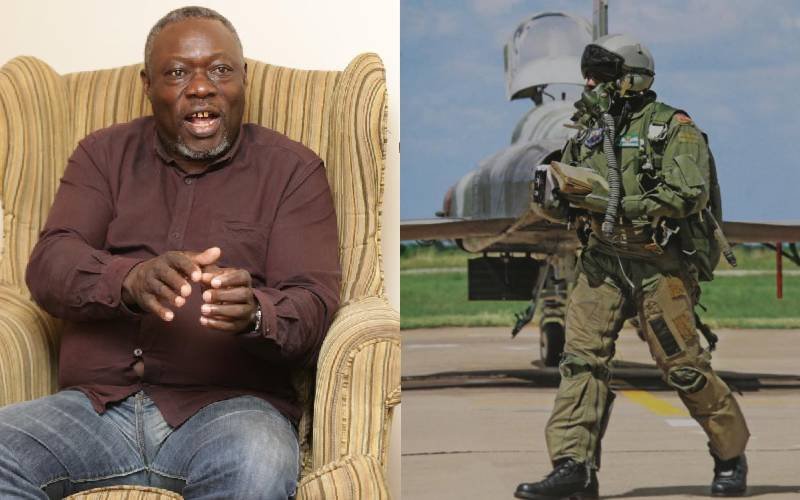
Colonel (Retired) Seth Shisabilu Shava served in the Kenya Air Force for 31 years and is a graduate of the US Air Force Fighter Weapons School, the USAF Air Command and Staff College, and the Kenya National Defence College.
Email your news TIPS to Editor@nairobilawmonthly.com, and to advertise with us, call +254715061658 anytime of the day
