

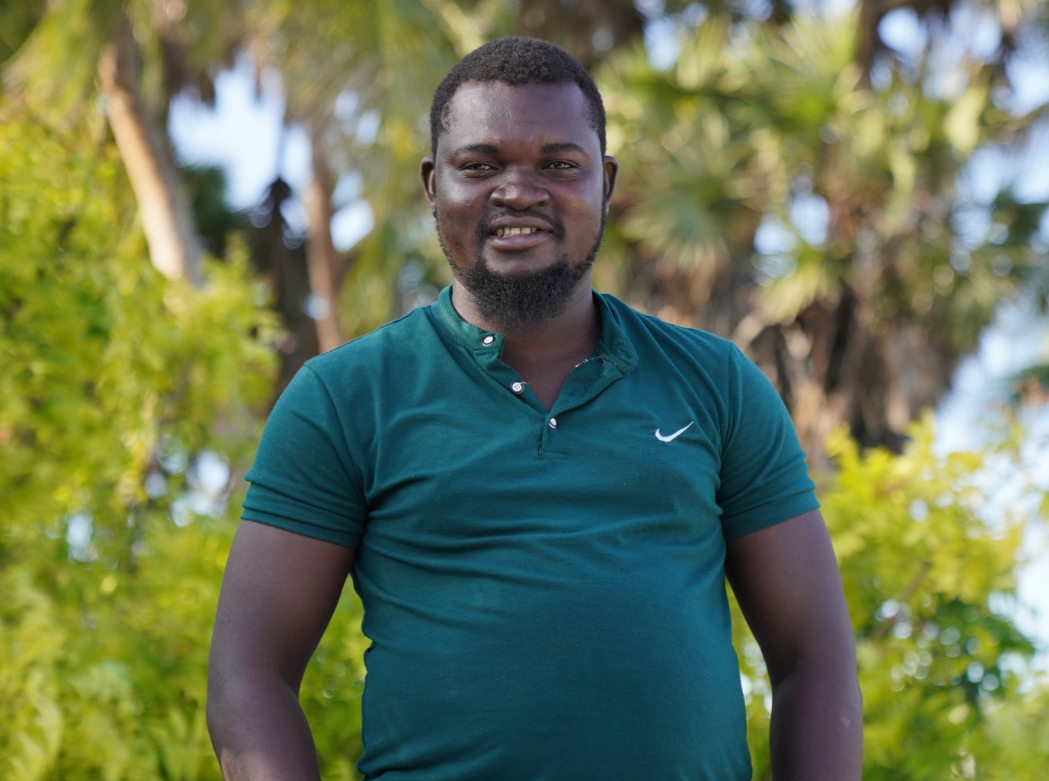
The murder of teacher and blogger Albert Ojwang was a planned act followed by a deliberate effort to destroy evidence and conceal what happened inside Nairobi’s Central Police Station, the High Court heard on Monday as the trial of six suspects began.
Opening the prosecution’s case before the High Court in Kibera, Senior Assistant Director of Public Prosecutions Gikui Gichuhi told the court that the evidence would show Ojwang’s death was neither an accident nor self-inflicted, contrary to the initial police account.
“The prosecution will demonstrate that this was a case of abuse of power and authority by police officers who had a constitutional duty to protect his life and other members of the public,” Gichuhi told the court.
“The evidence will show that the death was caused by assault, which was fatal and was orchestrated and planned. It will show that the victim was helpless in the cell with no assistance,” she said.
Former Central Police Station Officer Commanding Station (OCS) Samson Tallam is charged alongside police officers James Mukhwana and Peter Kimani. Also facing murder charges are civilians John Ngige Gitau, Jim Ambao and Brian Nue, who were allegedly held in the same police cell as Ojwang.
The prosecution told the court it would also present evidence showing that CCTV footage from the police station was deliberately erased as part of an alleged cover-up.
One of the prosecution witnesses, CCTV technician Alon Okwako, testified that he was called to the station on June 9 after investigators from the Independent Policing Oversight Authority (IPOA) had arrived.
He told the court that upon examining the Digital Video Recorder (DVR), he found it had been switched off, disconnected from its power supply and its hard drives removed. He further discovered that recordings for June 6 and June 7 had been deleted.
Okwako maintained that deleting the footage required deliberate formatting of the system by someone with authorised access and insisted the DVR presented before the court was the same one his company had installed in 2024.
A second protected witness, identified only as D.A.N., gave further testimony linking the alleged destruction of the CCTV footage to the station’s command.
- What killed Albert Ojwang? Outrage grows over death in custody
- Protests rock Nairobi CBD over Ojwang’s death in custody
- Autopsy reveals Albert Ojwang’s injuries were not self-inflicted
The witness said he had been summoned to the OCS’s office on June 8, where Mr Tallam allegedly requested footage covering June 6 and June 7.
After informing those present that deleted footage could only be removed by formatting the hard drives, he told the court that the former OCS instructed him to erase everything.
“I was told to format it,” the witness testified.
He said he used the system’s default password to access the storage menu before formatting the hard drives, deleting all recorded footage. He further testified that Mr Tallam paid him Sh3,000 in cash for the task.
According to the witness, he returned to the station the following day with replacement hard drives after receiving further instructions and was paid Sh20,000 before leaving. He was later arrested and recorded a statement with investigators.
The prosecution also called a police records officer attached to Central Police Station, identified as A.A.A., who testified that she reviewed CCTV footage on the morning following Ojwang’s death after questioning the initial report describing the incident as suicide.
She told the court the recordings showed police officer Peter Kimani speaking with two individuals near the police cells before another person ran towards the last cell. Moments later, the three were allegedly seen carrying what appeared to be a heavy object towards the same cell.
The witness said Mr Tallam identified one of the individuals as James Mukhwana before directing that the CCTV technician be called.
She then recounted hearing the instruction that now forms a key part of the prosecution’s case.
“He instructed, ‘Hii camera inatuletea shida, futa kila kitu’ (This camera is giving us trouble. Delete everything),” A.A.A. testified.
According to prosecutors, the destruction of the CCTV footage formed part of a wider effort to conceal the circumstances surrounding Ojwang’s death while in police custody.
Ojwang was arrested at his home in Kakoth, Homa Bay County, on June 7, 2025, by officers from the Directorate of Criminal Investigations following a complaint linked to a social media post allegedly involving Deputy Inspector-General of Police Eliud Langat. He was transported to Nairobi and booked at Central Police Station, where he died hours later.
His death sparked nationwide protests and renewed scrutiny of police conduct. Deputy Inspector-General Langat later stepped aside to allow investigations.
A post-mortem examination conducted on June 10 concluded that Ojwang suffered severe head injuries, neck compression and multiple soft tissue injuries. Pathologists found the injuries were externally inflicted and consistent with assault, contradicting the initial police claim that he had fatally injured himself by repeatedly hitting his head against a cell wall.
The prosecution maintains that the evidence will demonstrate all six accused persons played a role in the events leading to Ojwang’s death before attempts were allegedly made to destroy CCTV evidence and cover up the circumstances of the killing.
Email your news TIPS to Editor@nairobilawmonthly.com, and to advertise with us, call +254715061658 anytime of the day
