

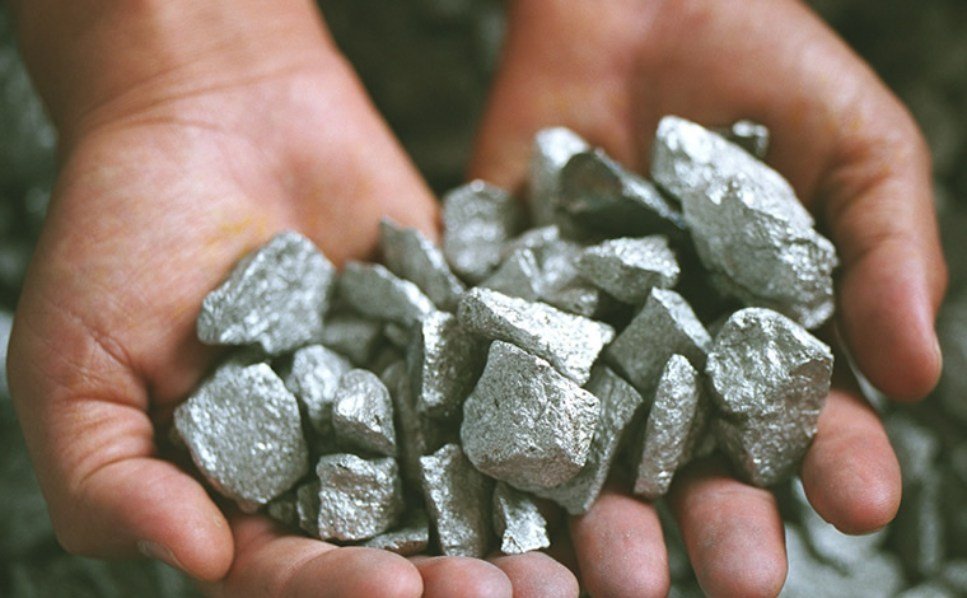
Kenya has selected a consortium of American companies to develop the Mrima Hill mineral deposits in Kwale County. The deposits contain niobium, rare earth elements and other minerals, with an estimated value of Sh8 trillion.
Mining Cabinet Secretary Hassan Joho confirmed the decision in a statement issued on Thursday, November 19, 2026. He said the ministry had issued a Notice of Intention to Award the project to the Frontier Minerals Consortium, comprising Frontier Minerals LLC, Bunker Hill Mining Corp, ReElement Technologies and American Resources Corporation.

The CS clarified that the award does not give the investors immediate permission to begin operations. Before exploration can start, they must engage host communities, landowners and county leaders and obtain the consents required by law.
“Each successful bidder must now go to the ground, engage openly and respectfully with the host communities, landowners, county leadership, and relevant local stakeholders, and obtain all requisite consents as mandated by law. No prospecting operation can proceed without the social licence and formal consents of the people on the ground,” the statement read.
The consortium must also apply for prospecting licences through the ministry’s Online Mining Cadastre (OMC) platform. The Mineral Rights Board will review the applications before any licence is granted. A prospecting licence only allows exploration. Commercial mining would require a separate mining licence, environmental approval, a community agreement and further clearances following public participation.
The award concludes months of competition among international investors seeking access to the deposits. Niobium is used in specialised steel and alloys, while rare earth elements are essential in electronics, electric vehicles and aerospace manufacturing.
The contest drew wide attention amid growing competition between the United States and China for access to critical minerals. Joho had earlier said Kenya’s choice would be guided by national interests rather than pressure from either country.
Two Chinese companies, Hunan Research Institute for Nonferrous Metals and Jinan Yuxiao Group, withdrew from the bidding in October, leaving five international bidders. The remaining contenders included an Australian consortium comprising RareX and Iluka Resources.
The US Department of State’s Bureau of African Affairs welcomed the decision. “Congratulations to Frontier Minerals for being selected to develop the Mrima Hill rare earths and niobium project in Kenya,” it said on X.
Joho’s announcement also named a Chinese joint venture between Fangda Special Steel Technology and Sinohydro Corporation as the successful bidder for two other projects: chromite at Kang’ura in Samburu and copper at Kamacabi in Tharaka Nithi. Both awards are subject to obtaining local consents before prospecting licences can be issued. The tenders for manganese at Lali Hills in Tana River and coltan at Kiritiri in Embu received no qualifying bids.
The ministry’s notification also triggered a standstill period, during which shortlisted bidders can challenge the procurement decision. RareX, whose consortium ranked second among three shortlisted bidders, has said it will file a procurement complaint before the December 10, 2026 deadline. It argues that the winning group missed the deadline for expressions of interest and is “legally ineligible to receive the award”. It has also requested a formal debriefing by November 26.
Some Mrima Hill residents have raised concerns that the project could affect farms, ancestral burial grounds, sacred sites and protected forests. Community representatives want a bigger role in consultations and clarity on how the project could affect land ownership and livelihoods. The consent requirement outlined in Joho’s statement is intended to address these concerns before prospecting activities begin.
Email your news TIPS to Editor@nairobilawmonthly.com, and to advertise with us, call +254715061658 anytime of the day
