

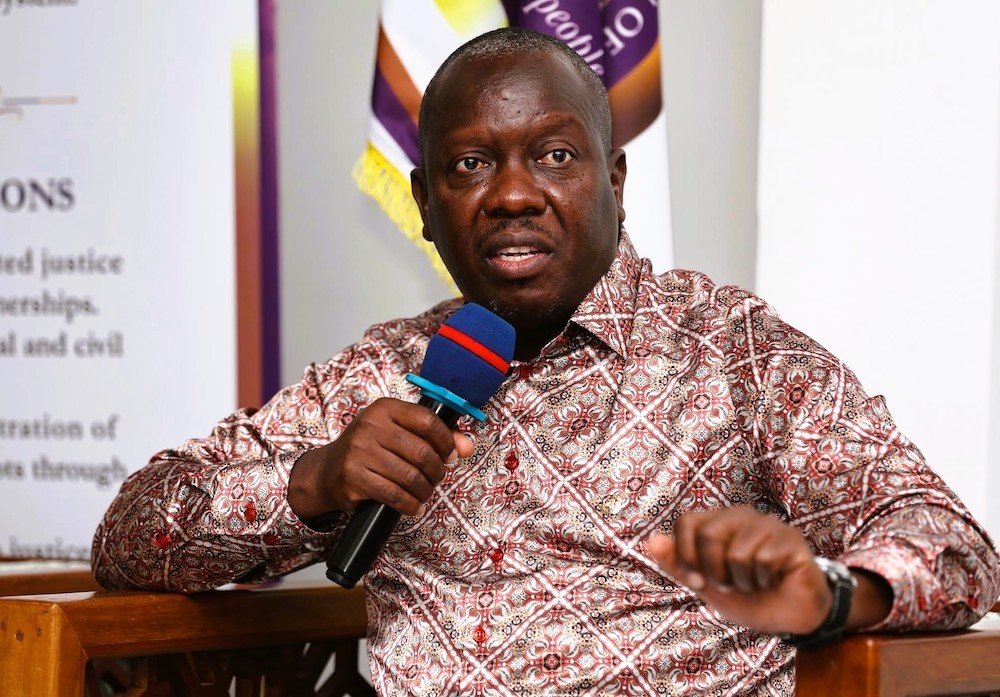
The Director of Public Prosecutions (DPP), Renson Ingonga, has approved charges against five people and 12 companies accused of conspiring to defraud the government of about Sh3.9 billion in value added tax (VAT), in one of the largest tax fraud cases brought to court this year.
The decision followed joint investigations by the Office of the Director of Public Prosecutions (ODPP) and the Kenya Revenue Authority (KRA), which reviewed 70 inquiry files linked to the scheme.

The five suspects are Henry Ateka Nyabwari, James Ojiambo Nyengenye, Amisi Zamda, Frank Nyabwari and Hesbon Onyoni. They are alleged to have registered 70 companies that were used to carry out the fraud. They were expected to appear in court on Thursday, October 15, 2026.
According to the prosecution, the suspects ran a network of shell firms, known as “missing traders”, that produced fake electronic tax invoices for goods and services that were never supplied.
“These fraudulent invoices were subsequently used by other businesses to unlawfully claim VAT refunds or reduce their tax liability, despite no genuine purchases having been made,” the DPP said.
Companies named in the cases include Renova Limited, Larigi Enterprises, Njemtar Agencies, Jeflar Construction Company, Namtek Transporters Company Limited, Jawari General Supplies and Tekaza Investment and General Supplies.
Ingonga approved prosecution in 36 cases involving transactions worth about Sh3.22 billion and an estimated VAT loss of Sh518 million. Six of these have been prioritised for prosecution.
“Of these, six have been prioritised for immediate prosecution, with a VAT implication of about Sh17 million,” he said.
The remaining files will be registered in court in due course, and the suspects will be charged accordingly.
The ODPP said the case demonstrates the government’s resolve to protect public revenue as tax fraud becomes more sophisticated.
“The ODPP reaffirms its unwavering commitment to combating economic and financial crimes, including sophisticated tax fraud schemes, and to protecting public revenue,” the office said in a statement.
The prosecution comes as KRA steps up its crackdown on fictitious electronic invoicing, which allows unscrupulous traders to lower their tax bills or claim refunds to which they are not entitled, at the expense of honest taxpayers and the Exchequer.
Email your news TIPS to Editor@nairobilawmonthly.com, and to advertise with us, call +254715061658 anytime of the day
