

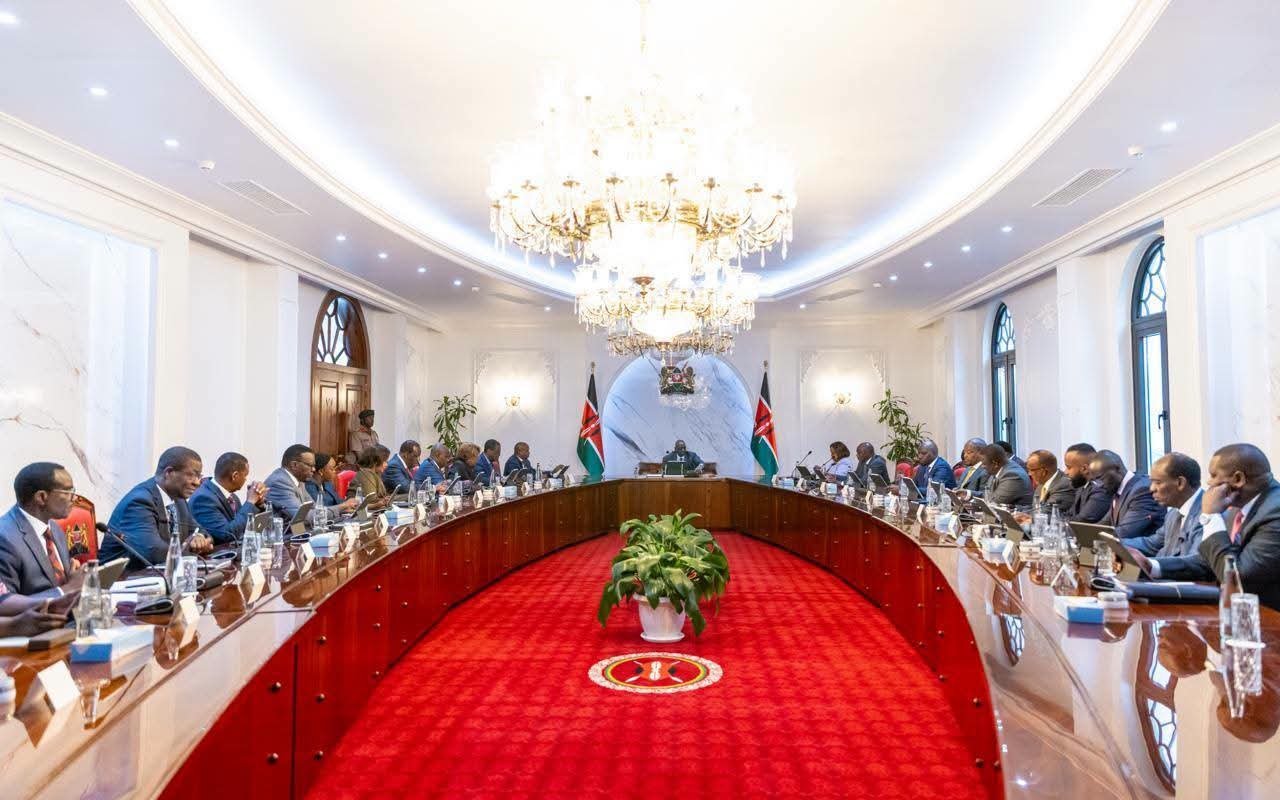
Attorney-General Dorcas Oduor has asked the Court of Appeal to suspend a High Court judgment requiring President William Ruto to reconstitute his Cabinet to meet the constitutional two-thirds gender rule, saying that implementing it before the appeal is heard could disrupt the running of government.
In an application filed as the 120-day deadline for compliance expired on October 28, 2026, the AG is seeking an urgent hearing and a stay of the June 30 judgment, delivered by a three-judge bench divided on some of the issues, until the intended appeal is decided.

“The matter raises questions of grave public interest affecting the entire country. It is imperative to appreciate that Cabinet is responsible for key decision-making central to the running of the Government,” the AG’s lawyer, Christopher Marwa, said.
The Court of Appeal duty judge declined to certify the application as urgent. Instead, the judge directed the government to serve the respondents and file proof of service, and ordered the parties to exchange written submissions within 30 days of October 6. No hearing date has been set, and the stay application remains pending.
The respondents include governance activist Saitabao Ole Kanchory, Katiba Institute, Wanjiru Gikonyo, the Kenya Human Rights Commission and other petitioners. The AG has asked the court to preserve the position as it stood on the day of the judgment until the appeal is determined, or to issue any other interim orders it considers appropriate.
In a supporting affidavit, Arthur Osiya, the Principal Administrative Secretary in the Executive Office of the President, said that carrying out the judgment before the appeal is decided could set off Cabinet nominations, parliamentary vetting, appointments and administrative changes that would be hard to undo.
“The application therefore seeks to preserve the position obtained at the date of judgment pending appellate determination,” he said.
The government says it recognises the importance of equality and gender representation, but argues that a stay would protect the substance of the appeal and stop it from becoming meaningless if changes are made before the Court of Appeal rules.
It concedes that a stay would delay action on gender representation, but says the respondents would suffer no lasting harm, since the Cabinet could still be adjusted if the judgment is upheld.
“The direction to make appointments within 120 days imposes a continuing obligation whose implementation may precede determination of the intended appeal,” Marwa said.
In its intended appeal, the government argues that the High Court judges did not properly read Article 27(8) together with Article 152, which sets out how the Cabinet is constituted. It also challenges the court’s rejection of the principle that the gender rule can be achieved progressively, arguing that setting a fixed deadline intruded on the President’s power of appointment and on Parliament’s role in vetting nominees.
In the June 30 judgment, Justices Eric Ogola and Stephen Githinji, who formed the majority, found that the Cabinet breached Article 27(8) of the Constitution, which bars more than two-thirds of the members of any appointive body from being of the same gender.
At the time, the Cabinet had 25 members: the President, the Deputy President, the Attorney-General and 22 Cabinet Secretaries. Of these, 18 were men and seven were women, so at least nine women were needed.
The judges declared the rule “immediate, mandatory and fully enforceable” in appointive bodies, including the Cabinet, and gave the President 120 days to comply. However, they upheld the processes used to nominate, vet and appoint the Cabinet Secretaries.
They also ruled that the Constitution does not create an official Opposition or bar politicians from parties outside the ruling coalition from serving in the Cabinet or other appointive offices, and therefore dismissed the challenge to the inclusion of opposition figures in government.
The third judge, Justice Jairus Ngaah, agreed that the Cabinet breached the gender rule but differed with his colleagues on other issues.
He found that reappointing Cabinet Secretaries who were dismissed in July 2024 violated the Constitution, and that appointing opposition politicians without a formal coalition agreement breached the Political Parties Act and the principle of multiparty democracy. He would have declared the Cabinet invalid.
The case arose from the broad-based Cabinet President Ruto formed after he dismissed most of his Cabinet in July 2024, following the Gen Z protests over taxes and governance.
Email your news TIPS to Editor@nairobilawmonthly.com, and to advertise with us, call +254715061658 anytime of the day
