

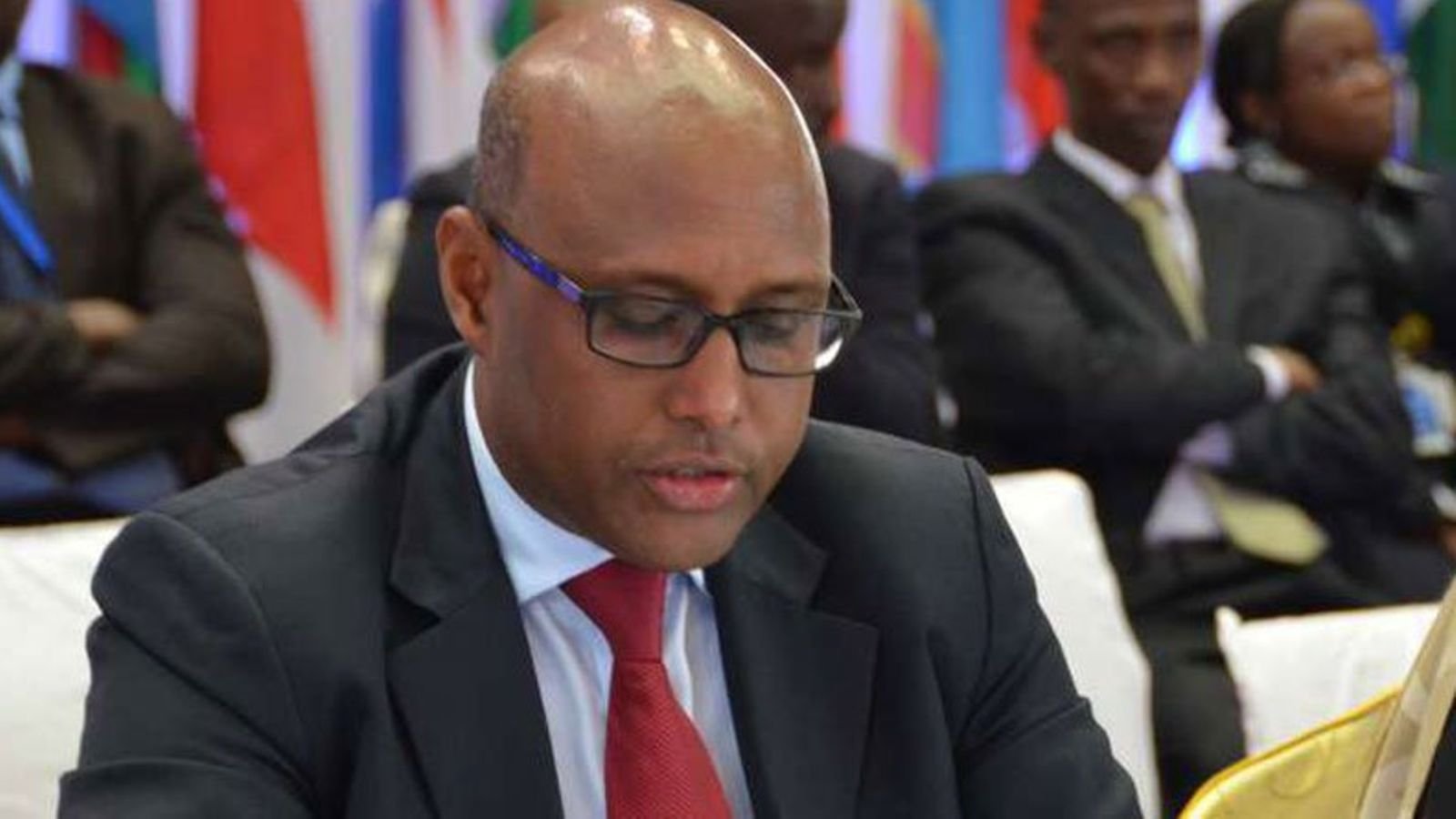
The Employment and Labour Relations Court on Thursday, October 29, 2026, threw out a petition challenging the appointment of Adan Mohamed as Commissioner-General of the Kenya Revenue Authority (KRA), ruling that it lacked jurisdiction to hear the case.
Justice Monica Mbaru said the dispute, which questioned whether Mohamed was eligible for the job because he was over the public service retirement age of 60, should have been filed in the High Court. She upheld a preliminary objection raised by the KRA Board and supported by the National Treasury, and struck out the petition filed by activist Francis Awino.

The judge said the court was bound by a 2026 Supreme Court ruling that limited the Employment Court’s jurisdiction. Under that ruling, the court cannot hear petitions from people who have no employment relationship with the respondent, such as an employer or a trade union.
KRA relied on that decision in its objection, arguing that Awino had no legal standing to bring the case before the labour court.
The Treasury said the petition was a public law matter rather than an employment dispute. Justice Mbaru agreed, noting that Awino’s own submissions showed he had no employment link with the respondents and was acting only in the public interest. Awino had acknowledged that he was neither seeking the job nor claiming any personal employment right.
Awino filed the case as a public interest petition under Articles 22 and 258 of the Constitution, which allow any person to go to court to enforce constitutional rights. He asked the court to cancel the appointment and order a fresh recruitment process.
He argued that Mohamed was past the retirement age, that no lawful exemption had been disclosed, and that the hiring process was not open, competitive or merit-based. He maintained that the labour court had jurisdiction because the case was about public employment, recruitment and eligibility for public office, and the court can hear some recruitment disputes before employment starts.
Because the court ruled on jurisdiction only, it did not decide whether Mohamed was eligible for the post. Section 80(1) of the Public Service Commission Act provides for retirement at the prescribed age, while Section 80(2) allows a retired officer to be engaged on contract under certain conditions, including where rare skills are needed.
Two other challenges to the appointment are pending in the High Court. The Consumers Federation of Kenya (Cofek) filed one after its earlier labour court case was struck out in August on similar grounds. The other was filed by rights advocate Bernard Opere, who is challenging the appointment on age and public service grounds.
Treasury Cabinet Secretary John Mbadi appointed Mohamed for a three-year term under the Kenya Revenue Authority Act through a Gazette notice dated May 18, 2026, and he was sworn in on May 20, 2026. He succeeded Humphrey Wattanga, who left in April after being appointed Kenya’s High Commissioner to South Africa. Lilian Nyawanda acted as Commissioner-General in the interim.
Mohamed brings extensive experience in government and banking to the tax agency. He served as Cabinet Secretary for Industrialisation and Trade, and later as Cabinet Secretary for East African Community and Regional Development.
Before joining the government, he held senior roles at Barclays, including chief executive of Barclays Kenya, managing director for Barclays East and West Africa, and chief administrative officer for Barclays Africa, where he oversaw operations in ten countries.
Email your news TIPS to Editor@nairobilawmonthly.com, and to advertise with us, call +254715061658 anytime of the day
