

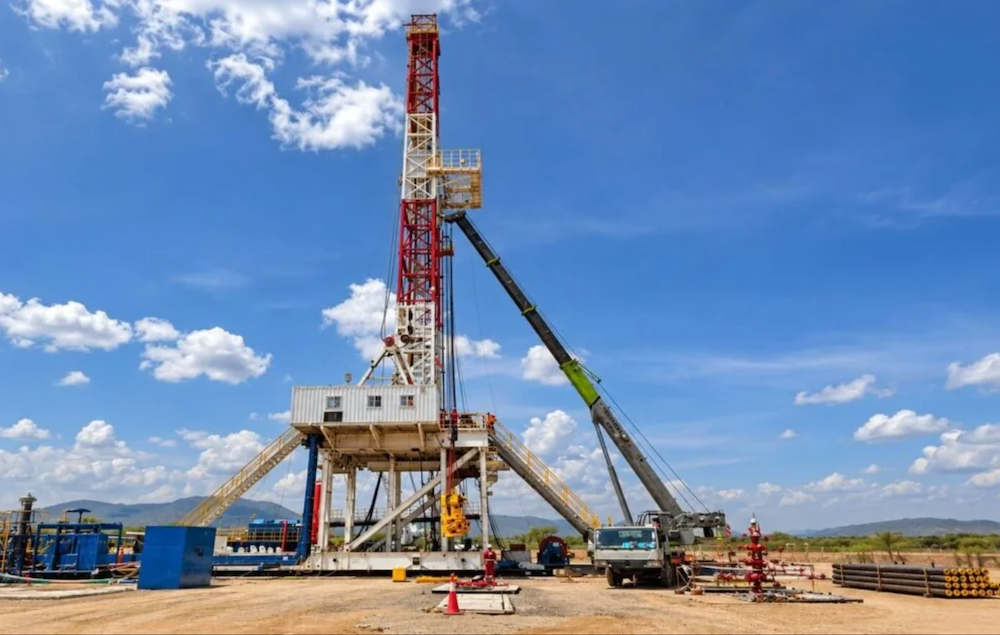
Kenya has started drilling crude oil in Turkana County’s South Lokichar Basin, 14 years after the discovery of oil in the area. The move puts the country on course to become an oil producer.
Energy and Petroleum Cabinet Secretary Opiyo Wandayi presided over the spudding ceremony at the Amosing 1 and 2 oilfields on Friday, November 20, 2026. Spudding marks the beginning of drilling a well.

The ceremony marked the launch of the first phase of Gulf Energy E&P BV SEZ’s field development programme, valued at about $6 billion. Wandayi said the event “marks a historical milestone ahead of first oil production.”
Wandayi said President William Ruto would flag off the first crude trucks to Mombasa in the first week of December. Gulf Energy has set December 1 as its target for first oil production, with the crude to be stored at the Kenya Petroleum Refineries Limited tank farms in Mombasa.
Energy and Petroleum Regulatory Authority (EPRA) Director-General Edward Kinyua said the first exports are expected in the first quarter of 2027. The government has targeted March 2027 for the first export cargo.
The first phase covers four fields in Blocks T6 and T7: Ngamia, Amosing, Twiga and Ekales, collectively known as NEAT. Kinyua said the phase involves drilling 43 new wells and using five existing ones. Production will start at 20,000 barrels a day and rise to 50,000 barrels in the second phase.
The six discoveries in the two blocks hold an estimated 326 million barrels of recoverable oil over the 25-year contract period. The government expects the project to generate more than $2.9 billion (about Sh371 billion) over its lifetime, depending on oil prices and output.
Kenya’s crude is classified as light to medium, sweet and waxy, with an API gravity of about 30.5 degrees. It will be priced against the Dated Brent benchmark. Drilling is being carried out using the GW70 onshore rig, leased from China’s Great Wall Drilling Company. Baker Hughes will provide integrated well services, while SLB will deliver the Early Production Facility.
“I am impressed by the sense of professionalism and patriotism of Gulf Energy E&P BV SEZ,” Wandayi said. Gulf Energy Managing Director Paul Limoh said the company was “maintaining a tight delivery and project management schedule”.
Petroleum Principal Secretary Kello Harsama described the drilling as a significant milestone that would pave the way for Kenya’s crude oil production and export programme. He credited President Ruto’s leadership for the progress.
The government is investing more than Sh24 billion in roads and other infrastructure in the oil-producing region. Roads and Transport CS Davis Chirchir identified the Lokichar-Amosing-Lokori corridor as a priority project.
“These infrastructure investments will strengthen connectivity, facilitate oil exploration and production,” he said. “Our commitment is to ensure that infrastructure development goes hand in hand with economic transformation.” EAC, ASALs and Regional Development CS Beatrice Askul Moe also attended the ceremony.
The project is expected to bring investment, jobs and business opportunities to Turkana. Gulf Energy says 400 of the 600 trucks contracted to transport crude to Mombasa have been reserved for local community organisations.
To ensure accurate accounting of the oil, Gulf Energy says a master meter and separate truck-loading meters will be used to measure the crude. The records will be accessible to the national government, Turkana County Government and EPRA for auditing.
Under the revenue-sharing formula, the national government will receive 75 per cent of oil revenue, the county 20 per cent and the local community five per cent. Gulf Energy Country Manager Franklin Juma said compensation for people affected by the project was being processed. Award letters are expected to be issued within two weeks of the Treasury releasing the funds.
Email your news TIPS to Editor@nairobilawmonthly.com, and to advertise with us, call +254715061658 anytime of the day
