

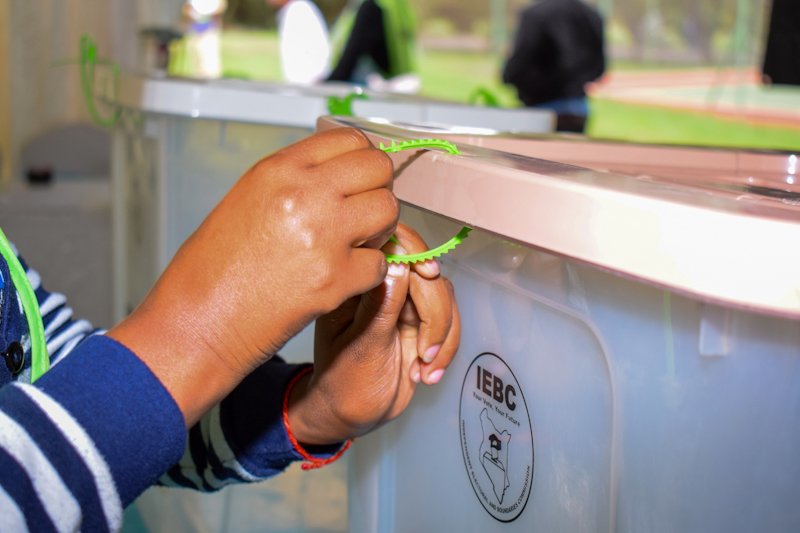
The 2027 State House race could be fought under a new financial framework if the Independent Electoral and Boundaries Commission (IEBC) succeeds in implementing proposed campaign spending limits that would cap presidential campaigns at Sh4.4 billion and political party campaigns at Sh17.7 billion.
The regulations, published on July 6, 2026, represent the electoral agency’s latest attempt to bring closer oversight to the billions of shillings spent during Kenyan elections. A previous attempt to regulate campaign financing failed almost a decade ago after facing resistance from Parliament.

Under the proposed rules, presidential candidates would be allowed to spend a maximum of Sh4,435,565,094, while political parties would have a national campaign ceiling of Sh17.7 billion ahead of the 2027 General Election.
The draft regulations also set limits for other elective positions. Candidates running for governor, senator and woman representative seats would be permitted to spend between Sh12.3 million and Sh123 million, depending on the size and population of their electoral areas.
- IEBC warns Sh23bn budget shortfall could disrupt 2027 elections
- Leadership shake-up at IEBC as CEO Marjan abruptly exits
- IEBC proposes Sh57.4bn budget for 2027 polls amid funding concerns
Parliamentary candidates would face similar restrictions, while candidates for Member of County Assembly (MCA) seats would have spending limits ranging from Sh2.5 million to Sh20 million.
This is IEBC’s second attempt to introduce campaign finance controls after its 2016 proposals failed to take effect following objections in Parliament.
IEBC chairman Erastus Ethekon said the proposed rules are intended to improve transparency and accountability in the management of campaign funds while giving candidates and political parties clear guidelines on how they should handle their finances.
“The proposed regulations aim to strengthen accountability in the management of campaign funds by candidates and political parties,” Mr Ethekon said.
He noted that the Election Campaign Financing Act gives the commission powers to oversee campaign contributions, spending and disclosure requirements, ensuring that political parties and candidates operate within established legal limits.
IEBC said it arrived at the presidential spending cap after assessing two possible methods of calculating campaign costs. One approach considered the overall cost of allowable campaign activities, while the other relied on average spending patterns at ward, constituency and county levels.
“The commission adopted the second approach due to the availability of average cost at the lower electoral levels,” Mr Ethekon said.
He explained that the presidential limit was then derived from the average spending ceilings set across the three lower electoral levels.
The Constitution requires IEBC to regulate the amount of money spent by or on behalf of candidates and political parties during elections. The Election Campaign Financing Act also requires the commission to establish contribution and expenditure limits at least 12 months before a General Election.
The law allows IEBC to regulate campaign-related costs, including venue hire, publicity materials, advertising, campaign personnel and transport.
The proposed regulations will now go through public participation, with members of the public invited to submit their views by July 15, 2026.
The draft rules address campaign contributions, spending limits, approved expenses, financial reporting, monitoring and record-keeping – areas that have repeatedly raised concerns over the years.
Email your news TIPS to Editor@nairobilawmonthly.com, and to advertise with us, call +254715061658 anytime of the day
