

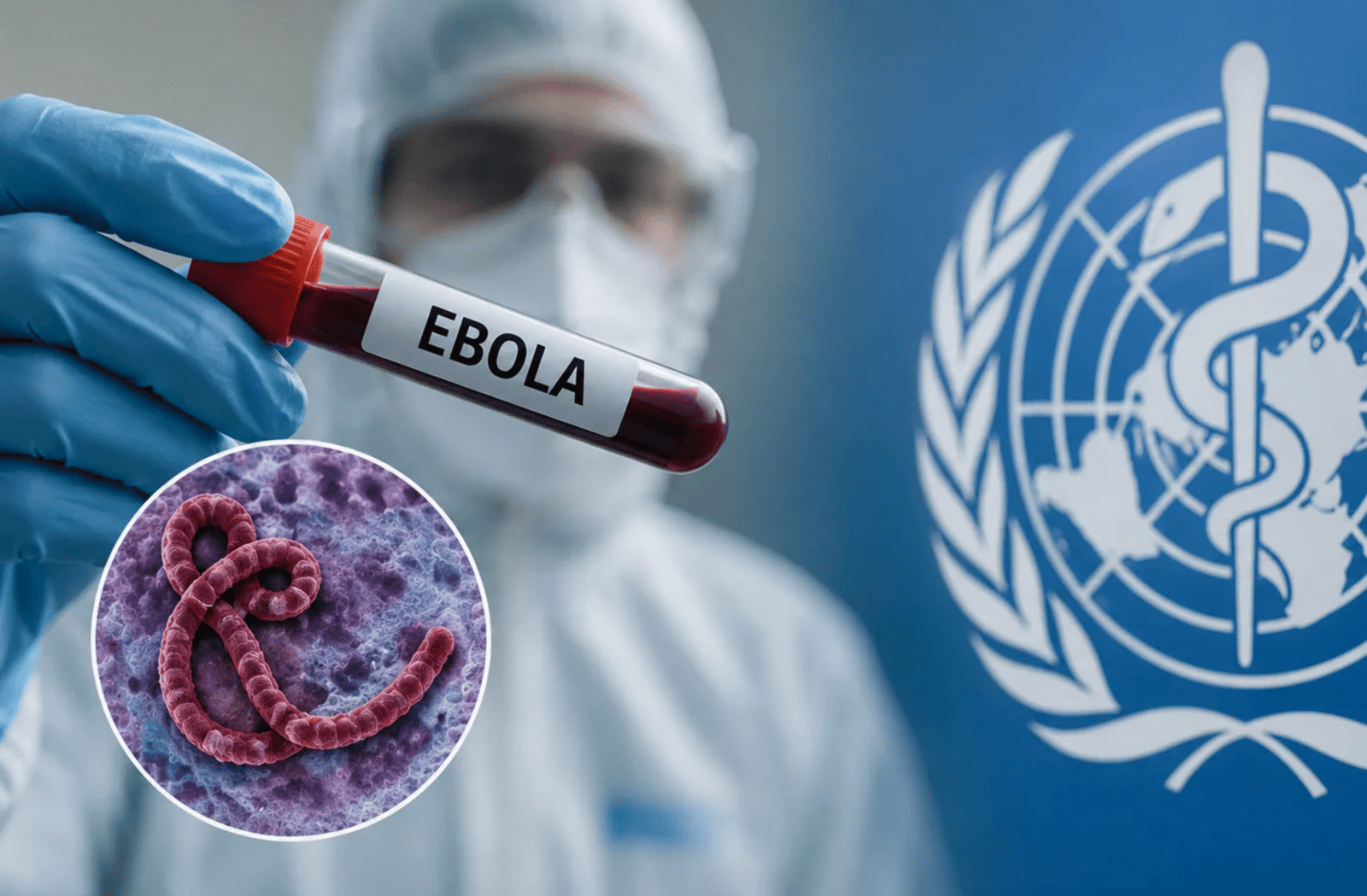
Kenya has confirmed a ninth case of Ebola caused by the Bundibugyo virus, and the Ministry of Health says the outbreak remains contained within a single cluster of patients. The new case is a 24-year-old man who is a close relative of the country’s first patient.
He tested positive on October 19, 2026, after developing symptoms while already in quarantine, and was isolated and started treatment immediately. Of the nine confirmed cases, three are health workers, while the rest are relatives of the first patient.

The first patient, who arrived from the Democratic Republic of Congo (DRC) through Uganda, has died, while the other eight are stable and responding well to treatment.
The confirmation comes as the United States raised its travel advisory for Kenya to Level 3. On October 19, 2026, the US Department of State updated its travel notice, citing Ebola alongside its existing warnings on crime, terrorism and kidnapping. Level 3 advises travellers to reconsider travel but does not bar anyone from travelling.
The Government has played down the advisory, saying it does not restrict travel from Kenya. “The United States is duty-bound to advise its citizens with respect to decisions that it deems important,” Foreign Affairs Principal Secretary Korir Sing’oei said on Wednesday, October 21, 2026. “Level 3 is more of a caution, and there are no implications with respect to barring travellers coming from Kenya associated with that advisory.”
He warned that sweeping measures such as border closures could badly hurt trade, tourism, education and international transport, and called for stronger surveillance across borders instead. He pointed out that the first patient passed through screening checkpoints in several countries without being detected and urged the adoption of common health standards at all entry points.
“Unless we are able to have similar standards and the same level of rigour with respect to dealing with these issues, we are all exposed,” he said. “The need for global co-operation to address Ebola has never been greater.”
Health officials say the containment effort continues to deliver results. Of the 135 contacts identified so far, 134, or 99.3 per cent, have been traced and placed in quarantine. Director General for Health Dr Patrick Amoth said contacts who entered quarantine on October 6 and remain free of symptoms will complete their 21-day monitoring period and begin returning home from October 25, 2026. He explained that anyone who completes the full 21 days without developing symptoms poses no risk of infection.
Kenya is keeping its borders open while stepping up thermal screening, digital symptom logging and rapid-response teams at airports and land border crossings. Meanwhile, El Salvador has imposed entry and transit restrictions on travellers from Kenya and several other African countries, including Uganda, Rwanda, Burundi, Ethiopia, the DRC, Angola and the Central African Republic.
Kenya confirmed its first imported case of the Bundibugyo strain on October 6, 2026. There is no approved vaccine or specific treatment for this strain. Members of the public who develop fever, unusual tiredness, muscle or joint pain, vomiting, diarrhoea or unexplained bleeding are advised to seek care at the nearest health facility or call the Ministry of Health’s toll-free line at 719.
Email your news TIPS to Editor@nairobilawmonthly.com, and to advertise with us, call +254715061658 anytime of the day
