
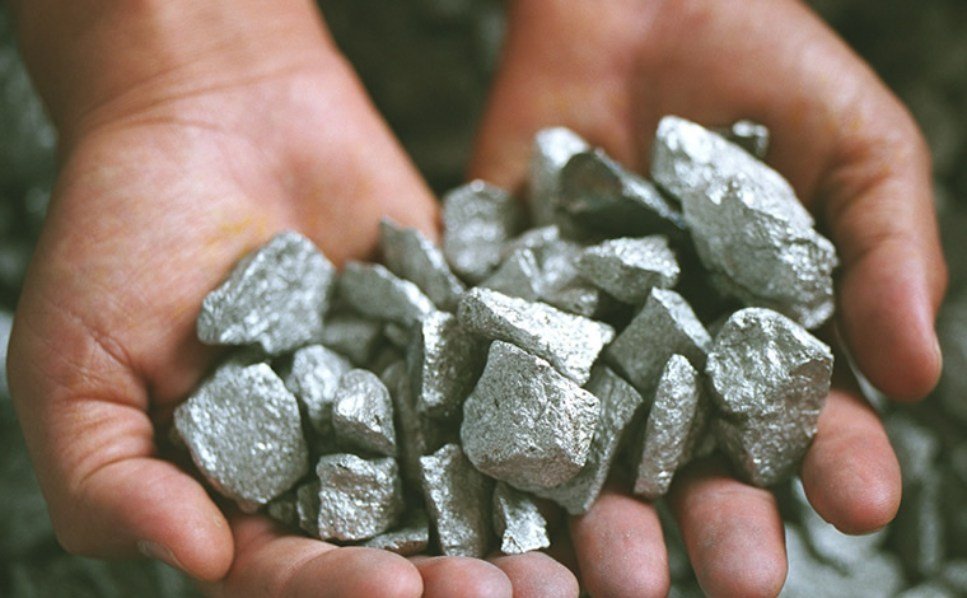
Kenyans will be able to buy shares in the Mrima Hill niobium and rare earths project in Kwale County after Frontier Minerals committed to list a 20 per cent stake on the Nairobi Securities Exchange (NSE).
Brad Barnett, managing member of Frontier Minerals LLC, said the company would consider listing the stake within three years of starting production. Frontier Minerals LLC is the lead firm in the US consortium selected to develop the deposit.

The listing would allow ordinary Kenyans and local investors to share directly in the returns from one of the world’s most valuable mineral deposits.
The plan is in line with the Mining Act, 2016, which requires large-scale mining companies to list at least 20 per cent of their equity on a local stock exchange within three years of starting production.
The State is also set to hold its own share. Section 48 of the Mining Act allows the government to take a 10 per cent free-carried interest in large-scale mining operations, giving it an ownership stake without having to pay for the initial shares.
The government can negotiate for more. The Gazette notice of March 27, 2026, which invited expressions of interest in Mrima Hill, highlighted this requirement for bidders.
The local share ownership will complement other benefits expected from the project, including royalties, taxes, jobs, infrastructure and local processing. Under the Mining Act, royalties are shared as follows: 70 per cent to the national government, 20 per cent to the county government and 10 per cent to the host community.
Mining CS Hassan Joho named the Frontier Minerals Consortium as the preferred bidder on November 19, 2026. The consortium comprises Frontier Minerals LLC, Bunker Hill Mining Corp, ReElement Technologies and American Resources Corporation.
The project is at the Notice of Intention to Award stage. The next steps are for the consortium to engage host communities and secure their consent before negotiating a prospecting licence with the government.
The project area covers about 31.9 square kilometres, approximately 65 kilometres southwest of Mombasa. Its indicated resources include 5.8 million tonnes of niobium, at a grade of 1.41 per cent niobium oxide, and 48.7 million tonnes of rare earth ore, at 4.4 per cent total rare earth oxides.
Its inferred resources are larger, at 17.5 million tonnes of niobium, at 1.41 per cent niobium oxide, and 110.7 million tonnes of rare earth ore, at 5.61 per cent total rare earth oxides. The deposits are estimated to be worth about Sh8 trillion.
The tender required bidders to demonstrate their ability to design and commission an on-site processing and beneficiation plant, in line with the government’s push to add value to minerals locally.
Bidders also had to commit to environmental protection, land rehabilitation, water management and community engagement. The consortium says it will work with the government and local stakeholders while recognising the site’s environmental and cultural importance to the Digo community.
Kenya hopes the project will create jobs for young people and increase mining’s contribution to the economy.
Email your news TIPS to Editor@nairobilawmonthly.com, and to advertise with us, call +254715061658 anytime of the day
